
A Clean Slate
How the Oil War’s Aftermath Will Transform the World Economic Order
By Michael Hudson
September 29, 2026
The views expressed in this article are the author’s own.
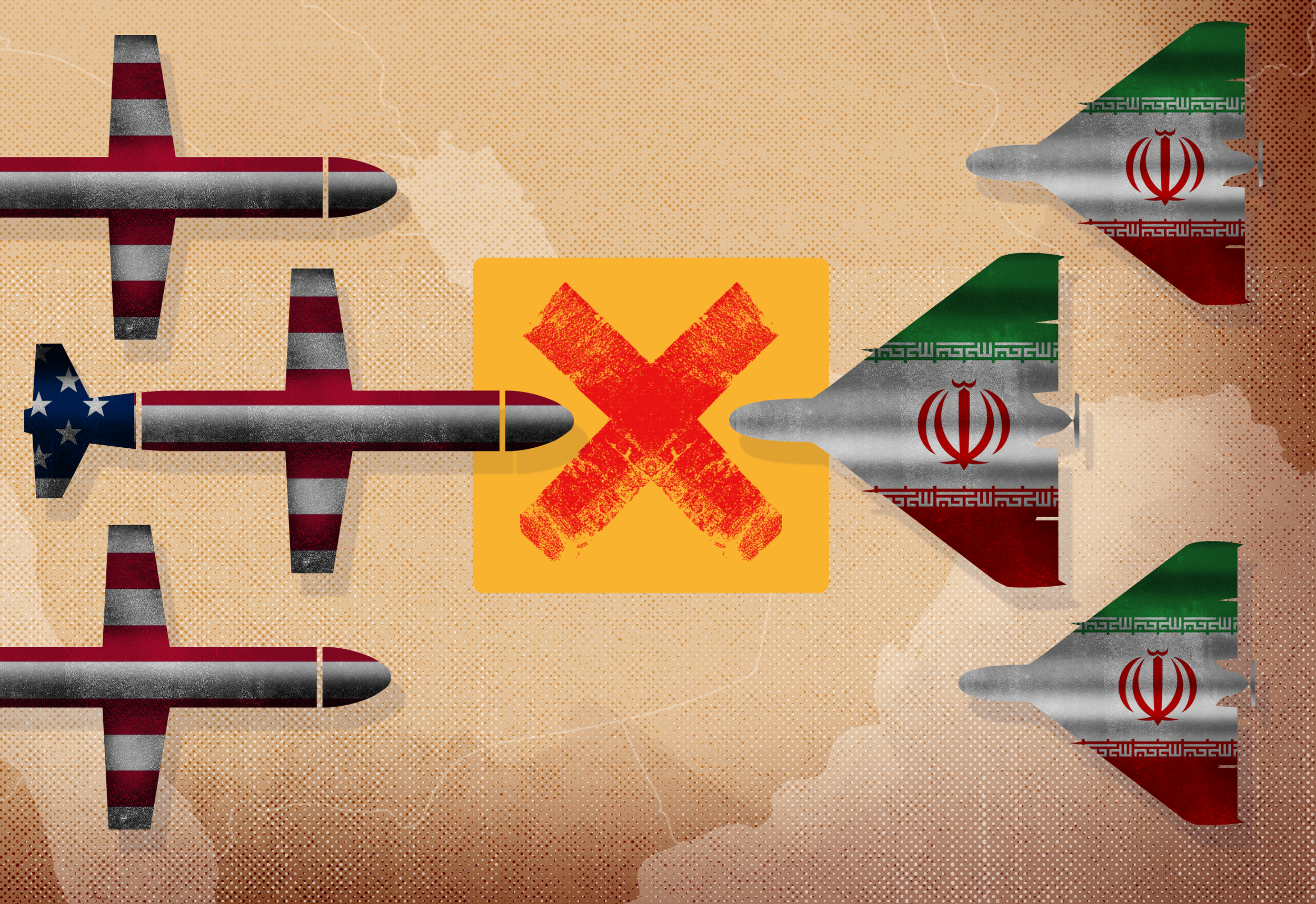
The immediate cause of the looming world depression is clear enough. The U.S. Oil War against Iran has closed off seaborne trade from the Persian Gulf region, reducing the world’s oil-export supply by 20% via the Strait of Hormuz, and another 5% through the Red Sea as a result of the Ansar Allah Yemeni fight against Saudi Arabia.
All countries need oil and gas to power their factories, light and heat their homes, produce fertilizer and basic chemicals from naphtha and sulfur. Cutting off this supply will raise prices for oil and gas, and hence for fertilizer, electricity and energy in general. That will force many companies and entire sectors to shut down as they cannot make a profit under the new price conditions. Many countries will suffer business closures and rising unemployment like that of German industry after its government bowed to U.S. pressure to stop importing Russian oil and gas in 2022. Its entire economy suffered falling GDP.
For the world’s farming sector, the oil and gas crisis will reduce the supply of fertilizer and fuel, causing crop yields to fall. Many U.S. farmers have cut back their planting, seeing that it costs more to produce crops than they can earn as prices rise for these inputs. Marketing costs also rise in response to higher diesel fuel prices and hence higher costs of trucking and railroad transport. And as prices for energy, fertilizer and food imports rise for businesses, farmers and labor throughout the world, many will be unable to pay their scheduled debt service. That will lead to defaults, distress sales and rising bankruptcy rates, followed by foreclosures and takeovers of property. These financial pressures will intensify the conflict between creditor and debtor countries as foreign investors swoop in and buy companies at distressed prices, as they did in the Asian financial crisis of 1997.
“For most countries, their deepening balance-of-payments deficits will put pressure on their exchange rates, confronting them with the choice of whether to use their limited reserves to pay for higher-priced oil and food imports or to pay their foreign debt service falling due.”
Many countries will turn to the IMF to borrow dollars to cover their deficits as an alternative to seeing their exchange rates depreciate. The problem is that IMF loans are conditional on governments reducing their budget deficits by cutting back social support such as helping families and businesses cope with the crisis and its rising debt overhead.
But cutting such public spending will be politically untenable in oil-deficit countries that are democracies. Their path of least political resistance is to suspend payment of their foreign debts to bondholders, banks and the IMF so that they can buy the food and oil that their citizens and businesses need. To save themselves from politically unacceptable domestic austerity and depression, oil-deficit countries ultimately require mutual support from China, Russia and each other to create new rules to govern debtor and creditor relationships among countries based on recognition that debts that can’t be paid, won’t be paid – headed by their backlog of dollar-denominated debts.
Negotiations to create such rules to avoid imposing widespread austerity and outright depression will revive the great 1944 debate between representatives of the United States and Britain about the structure of the postwar international financial system. At Bretton Woods, U.S. proposals for the IMF to manage the international financial system along creditor-oriented lines reflected America’s then overwhelming creditor status and its Treasury’s ownership of some 75% of the world’s monetary gold.
The British Treasury’s plan by John Maynard Keynes advocated a financial oversight institution empowered to limit the ability of creditor nations (led by the United States) to accumulate financial claims of such magnitude that they would stifle economic growth in countries running sustained trade and balance-of-payments deficits, as had occurred after World War I. Rejecting his proposal for writing down excessive creditor claims, the United States created the IMF. Its pro-creditor principles have directed countries falling into debt dependency to squeeze out revenue from their economies or sell off public assets to pay their debts to U.S. and other international banks and bondholders.
Most of the long post-1945 buildup of foreign debt is denominated in dollars, so any debt writedown today will be at the expense of the dollarized U.S.-centered international financial system. That system has “rescued” debtor countries via IMF or U.S. Treasury loans or currency swap agreements to support their exchange rates and enable them to avoid defaulting on their debts. The effect has been to subsidize an inherently untenable financial dynamic, piling debt upon debt in an exponential trajectory that increasingly exceeds the ability to be paid. The United States has further weaponized this system by making such new loans conditional on countries joining U.S. financial and trade sanctions against countries resisting U.S. foreign policy and its increasing belligerency.
The Global Majority thus faces the task of designing new financial arrangements between the governments of payments-surplus and payments-deficit countries to replace the harsh pro-creditor rules imposed by the IMF and related U.S. policy forcing debtor countries to sell off their public infrastructure, natural resources and land to pay their debts.
The underlying issue is whether governments of debtor countries will continue to serve as collection agents for bondholders, banks and rent-seeking investors hoping to privatize public infrastructure to provide countries with money to pay their foreign debts, with the governments relinquishing their ability to tax foreign-owned natural resources, subsidize public infrastructure, and use money and credit creation to promote their countries’ economic growth. This loss of sovereign control as a result of debt dependency has been an intrinsic feature of the dollar-based monetary and financial system wielded to serve U.S. interests and those of foreign investors in general.
U.S. policy is aggravating the oil crisis and world financial depression
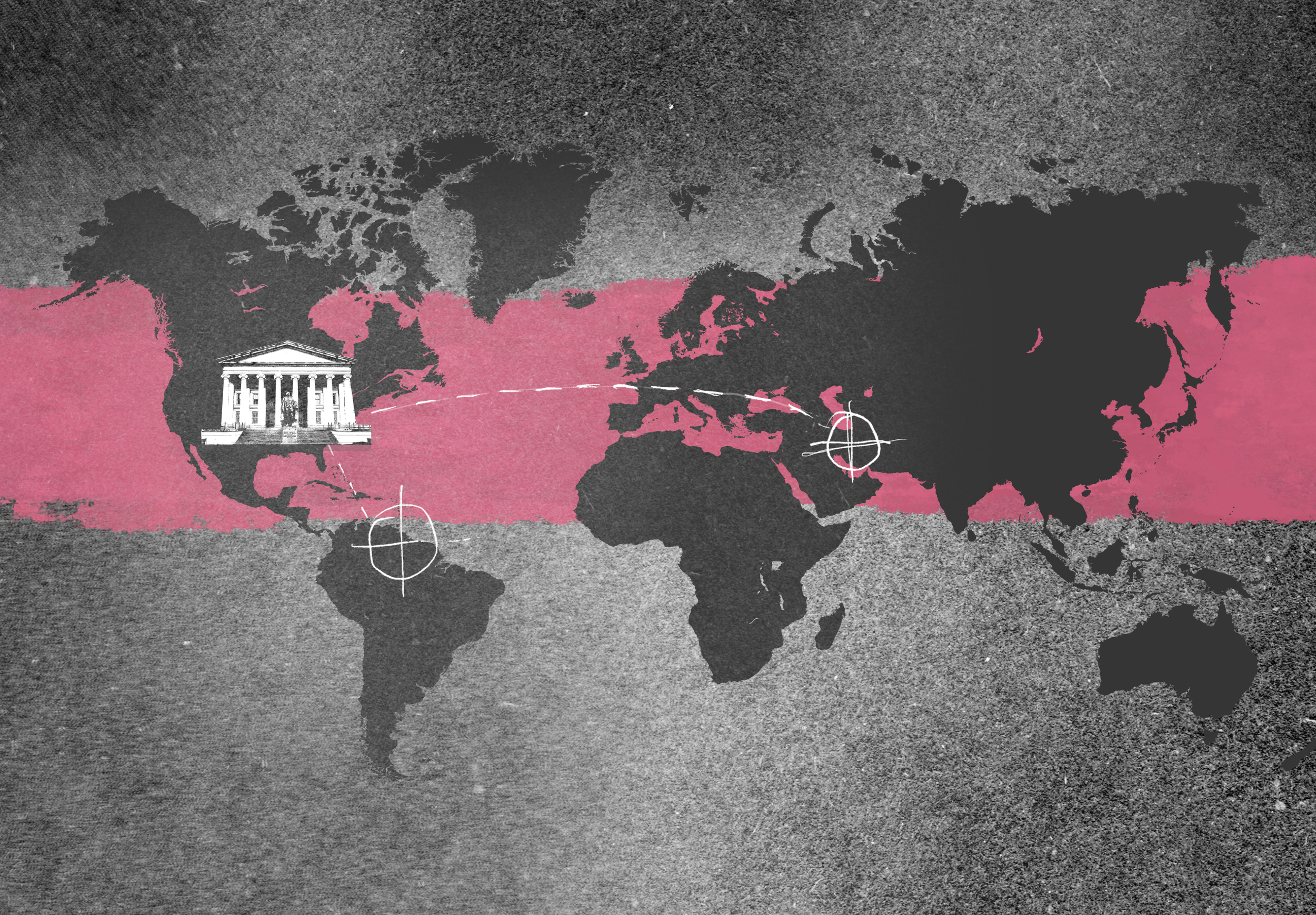
America’s National Security Strategy aims at creating choke points for the world’s trade in oil and other key necessities. Above all, it controls access to the dollarized global financial system in which foreign economies have been holding their savings and conducting their foreign trade. U.S. trade and financial sanctions, and outright military blocking of access to Russian and Iranian oil, are intensifying the oil shortage in the hope of using today’s crisis as a lever to coerce countries into obeying U.S. economic sanctions in exchange for gaining access to U.S. oil and gas, and also maintaining access to the U.S. home market for their exports.1
A backlash is now occurring as German and other European gas import prices have risen fourfold as a result of shifting from Russian gas to U.S. LNG. Rising opposition to the consequences of NATO’s war against Russia has made the ruling parties of Germany, Britain and France so unpopular that they are unlikely to be re-elected.
America’s own economy and those of its Western allies have deindustrialized and polarized as a result of pursuing the neoliberal policies of financialization and privatization. Their financial and stock-market wealth can only be sustained by tribute and subsidies from economies doing the actual production. But these productive economies and those of the West now face a world depression resulting from the closure of the Persian Gulf raising oil prices, squeezing worldwide business and family budgets and shrinking markets and employment – and hence the ability of countries to pay financial tribute to the United States.
Putting creditor interests above those of national economies as a whole has been a distinctively Western disease. Ever since ancient Greece and Rome it has caused economic polarization, impoverishment and dependency of the population at large on a narrow oligarchic class. This fate is what the Global Majority now needs to avoid by moving to a new international order in which governments restrain financial and related rentier oligarchies from impoverishing their economies on behalf of Western investors. Today’s Oil War promises to catalyze such a civilizational shift.
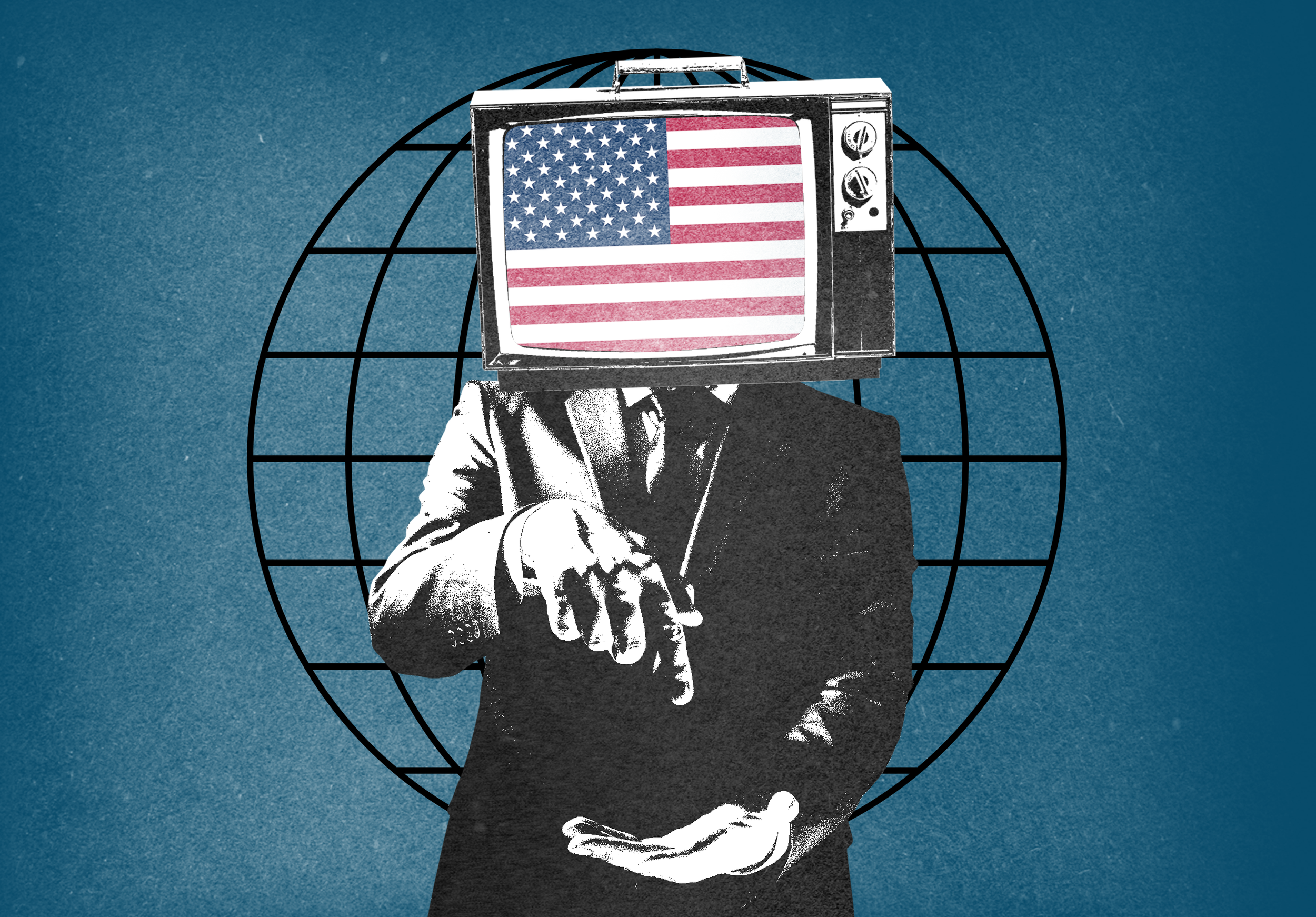
Recovery from the Oil War’s economic effects must include a debt writedown
The sharply higher prices that most countries will have to pay for their oil and food are the most immediate consequences of America’s Oil War on Russia and Iran. As noted above, many businesses will be unable to make a profit at the new price levels and face closure, and many households will be unable to pay for their living expenses without going into debt.
The most disruptive policy crisis will be in the balance-of-payments and exchange-rate pressures on the currencies of the most seriously affected oil-dependent countries. National treasuries will be called on to provide subsidies to keep households, businesses and entire sectors afloat so as not to close down and face insolvency. But such support is constrained by the fact that under current world practice, governments are obliged to give fiscal priority to paying their foreign debts instead of coping with their industry shutdowns by public spending for social support and subsidies to promote their economic recovery. Global South countries in particular already are struggling to pay their foreign debts to bondholders, banks and other creditors. If the balance-of-payments pressures imposed by rising oil import prices leads the exchange rates for their currencies to fall, this will raise their domestic currency prices to pay for their imports and already heavy dollar-debt burden.
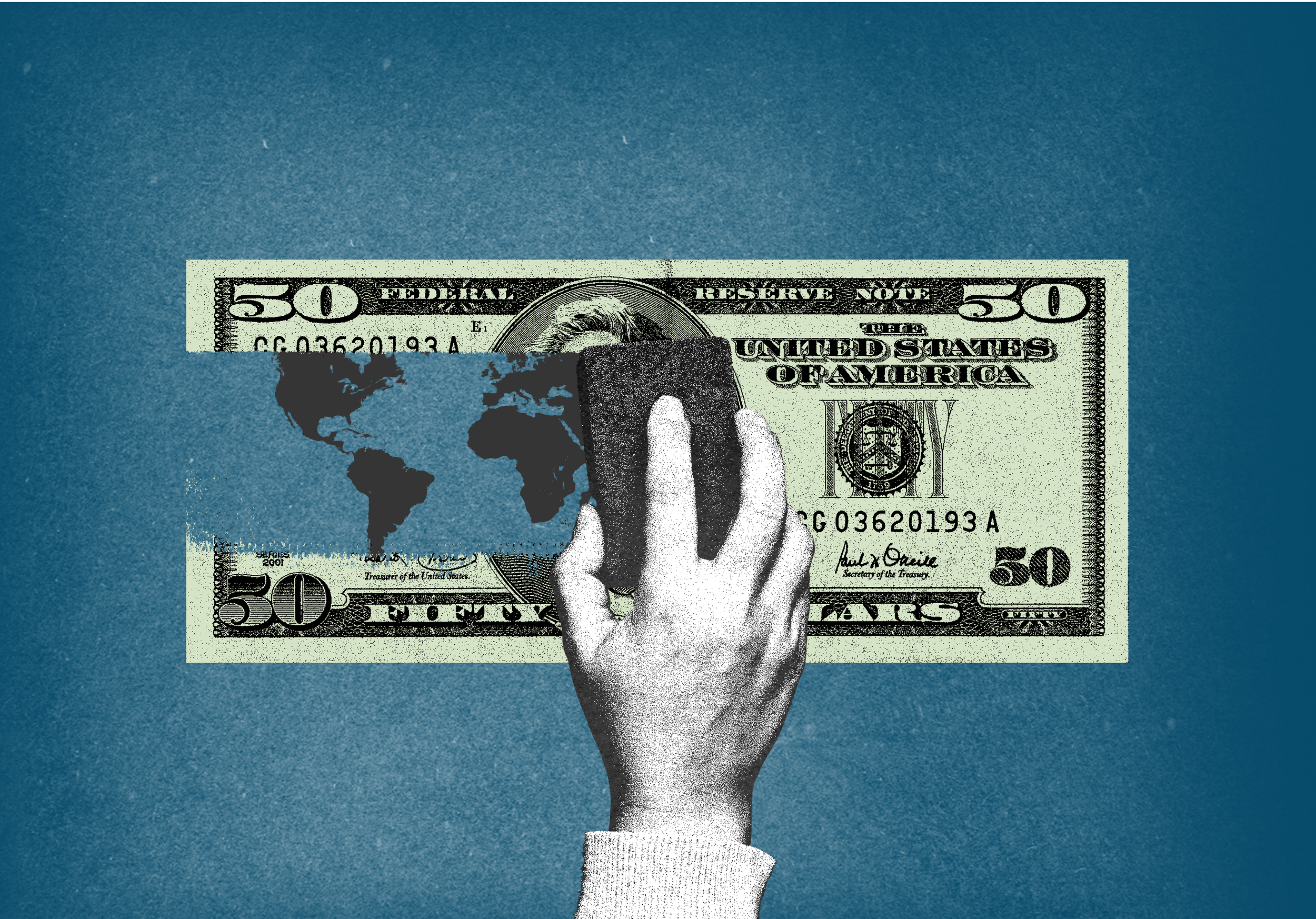
Some form of default is inevitable. The great policy question concerns who will bear the burden. Will the domestic economy be sacrificed on a cross of foreign debt and suffer a wave of insolvency, bankruptcy and foreclosures? Or will governments suspend payments to international creditors in order to protect their domestic economies as best they can? As I will discuss below, the only way to avoid a domestic depression in Global South countries is a financial Clean State: a debt writedown.
Today’s foreign debt overhang is a relic of the colonial and protectionist industrial-nation policies imposed on Global South and other governments to deter them from enacting the protectionist or socialist mixed-economy policies required to enable them to prosper and avoid foreign trade and debt dependency. Long-term world recovery will require writing off the legacy of loans that were made to finance the Global South’s chronic economic dependency without these loans being used to put in place the means of repaying them. Countries are only able to repay them by borrowing yet more money to pay their carrying charges. This is the debt treadmill that has characterized the past two centuries of North-South relations.
The needed clean slate will entail a writeoff of the bad debts owed by many debtor countries to foreign governments, the IMF and private bondholders. That aim requires avoiding mediation by the IMF and World Bank, which were founded as instruments of coercive U.S. economic policies. The IMF follows U.S. foreign policy in extending loans only to governments that agree to neoliberal privatization and reduction in social spending, forcing them to sell off their public infrastructure and natural resources to foreign investors. Debtor economies are “Thatcherized” to pay their debts by providing rent-seeking opportunities to raise dollars to support their exchange rates.
A century of U.S. support for pro-creditor rules of international finance
America’s dominant position as world creditor after World War I enabled it to dictate the conditions of peace at a series of London conferences in 1921 to implement the 1919 Versailles peace treaty. The U.S. Treasury insisted on full payment for the American arms sold on credit to the European Allies before U.S. entry into the Great War. The Allies turned to Germany and demanded reparations to enable them to meet the U.S. demands.
The sums that were imposed far exceeded the ability of either Germany or the Allies to pay. Yet the period’s moral ethic called for all debts to be paid “willy-nilly,” as Keynes put it.
“There was no calculation of how the war’s debts could be paid without pushing both the vanquished and victorious European economies into debt-strapped austerity and widespread bankruptcy, foreclosures, and ultimately political collapse.”
Pro-creditor economists such as Jacques Rueff of France and Bertil Ohlin of the United States claimed that monetary austerity was needed to make countries more competitive by lowering their wage rates (their major domestic cost of production) and exchange rates. That was to be achieved mainly by increasing unemployment, and thereby cutting imports of consumer goods as living standards fell. The stagnation resulting from the Europeans’ attempts to pay their war debts thus was deliberately imposed, and led to the Great Depression that ended up collapsing creditor and debtor economies alike, in the United States as well as in Europe.
Advocates of German reparations had rejected Keynes’s urging that they explain just how economies could pay their debts without suffering collapse and stagnation. This deliberate blind spot on the part of pro-creditor lobbyists (and indeed in the mainstream academic curriculum) with regard to the debt overhead still plagues today’s world. A brief summary of the past century’s international debt imbalance is instructive.
Germany went bankrupt in its desperate attempt to pay the unpayably high reparations debt. With much of its export industry seized by the Allies or in ruins, its foreign trade was forced into deficit and its exchange rate declined. Germany nonetheless tried to raise the dollars needed to pay the Allies by the Reichsbank selling its currency at falling prices for dollars on the foreign exchange market. The reichsmark’s exchange rate plummeted, raising import prices proportionally, and domestic prices followed suit, requiring more currency to be created to reflect the higher domestic price levels and to buy yet more foreign hard currency. The result was hyperinflation and economic collapse.2 The debt-strapped European Allies suffered their own depression as a result of trying to pay their war debts to America. France suffered hyperinflation, while British unemployment led to the General Strike of 1926.
The U.S. Treasury tried to assist the financing of the European debt burden by using its monetary inflow to lower interest rates on domestic bank loans and bonds. The policy aim was to make German bonds more attractive and thereby help payment of its reparations and the corresponding Inter-Ally debts. U.S. and other investors bought the higher-yielding bonds issued by German states and municipalities, which turned their dollar receipts over to the Reichsbank for domestic currency. The Reichsbank paid these dollars as reparations to Britain and other Allies, enabling these countries to pay their debts to the United States without suffering falling exchange rates.
The low U.S. interest rates that were encouraging this circular financial flow also fueled a domestic U.S. debt-leveraged stock market boom, which crashed in 1929.3 The crash wiped out investors who had bought stocks on credit (expecting their prices to rise faster than the interest that had to be paid). The boom and crash were international in scope, causing bankruptcies and destroying not only financial wealth but also industrial markets and employment.
By 1931 all countries had come to recognize that the peace settlement had imposed excessive creditor demands that could not be paid, and a moratorium was proclaimed both for German reparations and the Inter-Ally debts. But by that time the Great Depression was well underway. Recovery did not occur until the military mobilization and arms production needed to fight World War II.
Preparing for the coming peace as that war neared its end in 1944, the U.S. stance reflected its self-interest as the world’s major creditor, seeking to use its gold holdings to establish foreign financial and ultimately political dependency on its bankers and investors. Its diplomats had learned not to impose reparations that would prevent a postwar recovery, but still demanded pro-creditor international rules. The United States held some 75% of the world’s official gold supply and accounted for the lion’s share of world industrial production. The U.S.-designed postwar international monetary order called for balance-of-payments deficits to be settled in gold or its equivalent value. In practice this meant the dollar, which was officially convertible into gold at $35 an ounce. Countries almost immediately began running up new trade and payments deficits with the United States.
Keynes’s proposal for an alternative economic policy to that of the US and IMF
Keynes’s logic in refuting pro-creditor policy in the German reparations debate led him to warn against the general pro-creditor ideology that had insisted on collecting debt service from Germany and the European Allies at the cost of impairing their ability to sustain the investment and productivity growth needed to pay their debts.4 Acting on behalf of the British Treasury in the great 1944 debate with U.S officials as World War II neared its end, he proposed an institution to prevent debt deflation and austerity by wiping out foreign debts when they threatened to cause economic stagnation. The buildup of creditor claims would be annulled when they exceeded a degree that could not be sustained without forcing debt-ridden countries to impose destructive austerity, causing domestic collapse and a loss of their economic sovereignty.
Keynes’s International Clearing Union (ICU) would create a book-keeping system of credits and debts among its member countries, with a fiat “bancor” serving as its money-of-account.5 His logic was that the proposed IMF policy of simply providing loans to debtor countries to support their exchange rates and pay their creditors would concentrate wealth in the creditor nations, whose monetary inflows would inflate their financial bubbles. But in the end, the wealthiest creditor nations would end up with little realistic prospect of actually being repaid, because the austerity imposed by their demands for debt service would prevent payments. So writing down their creditor claims would leave them no worse off in practice.
If Keynes’s proposal for preventing excessive debt overhead had been adopted after World War I, Allied and German debts would have been written down (as they ultimately had to be) instead of leading to the Great Depression. The United States would not have had the financial inflow that inflated its stock market to a level that crashed, causing bankruptcy for its own investors and those in stock markets around the world.
But in 1944 America had no intention of relinquishing the power that its creditor status gave it. It wielded that power to reject Keynes’s proposal and insist on the IMF and free-trade rules that ended Britain’s Empire Preference trade and investment controls, turning the Sterling Area into a financial satellite of the United States.
Debt polarization between payments-surplus and deficit economies
Since 1945 the rules of world trade and payments have been designed to prevent other countries from rivaling America’s economic and financial power. As World War II neared its end, it was clear that the United States once again would enjoy postwar trade and payments surpluses, while European countries would run trade deficits. The challenge for European countries was to avoid having to slow their economies to protect their exchange rates from falling when they ran payments deficits, as had occurred after World War I. But in this they were unsuccessful. They accepted as a fait accompli the arrangements that America made first with Britain, which reluctantly surrendered to the U.S. plans.
Britain’s Treasury was especially concerned about the prospect of U.S. postwar rules of free trade aimed at preventing foreign protectionism and capital controls. Britain’s system of Imperial Preference controls obliged India and other British dependencies to keep and spend their international savings in Britain and its Sterling Area. But the United States was in the driver’s seat at Bretton Woods in July 1944, and insisted on trade liberalization that ended these Imperial Preference restrictions.
British Commonwealth members and other countries that had accumulated savings by exporting raw materials and services to the Allies during the wartime years were enabled to spend these savings mainly on U.S. exports and U.S. dollar investments. The Sterling Area became a financial satellite of the United States as it shifted to dollarized trade and economic relations.
U.S. pressure to open the postwar world’s markets to free trade and capital flows had the desired effect of making the United States the leading industrial and food supplier, as well as the main investment haven. European countries, including Britain, their former colonies and other countries began running trade deficits as they became dependent on U.S. exports. Meanwhile, American economic diplomacy promoted rentier neo-colonialism via client oligarchies and military intervention aimed at locking in dependency relationships and extracting interest and natural-resource and monopoly rents.
As Britain fell deeper into foreign debt, its weakening trade balance obliged it to impose a postwar “stop-go” policy of raising its interest rates to slow its economy whenever employment started to recover and enable its labor force to import more consumer goods. Labor became the main victim of central bank policy prioritizing foreign debt service by imposing domestic austerity to lower wage rates, with bankers claiming that this would make debtor economies more competitive and enable them to pay their rising debt overhead. The actual result was to drive Global South and other countries into trade and debt dependency and clientage to U.S. and other multinational investors and bondholders.
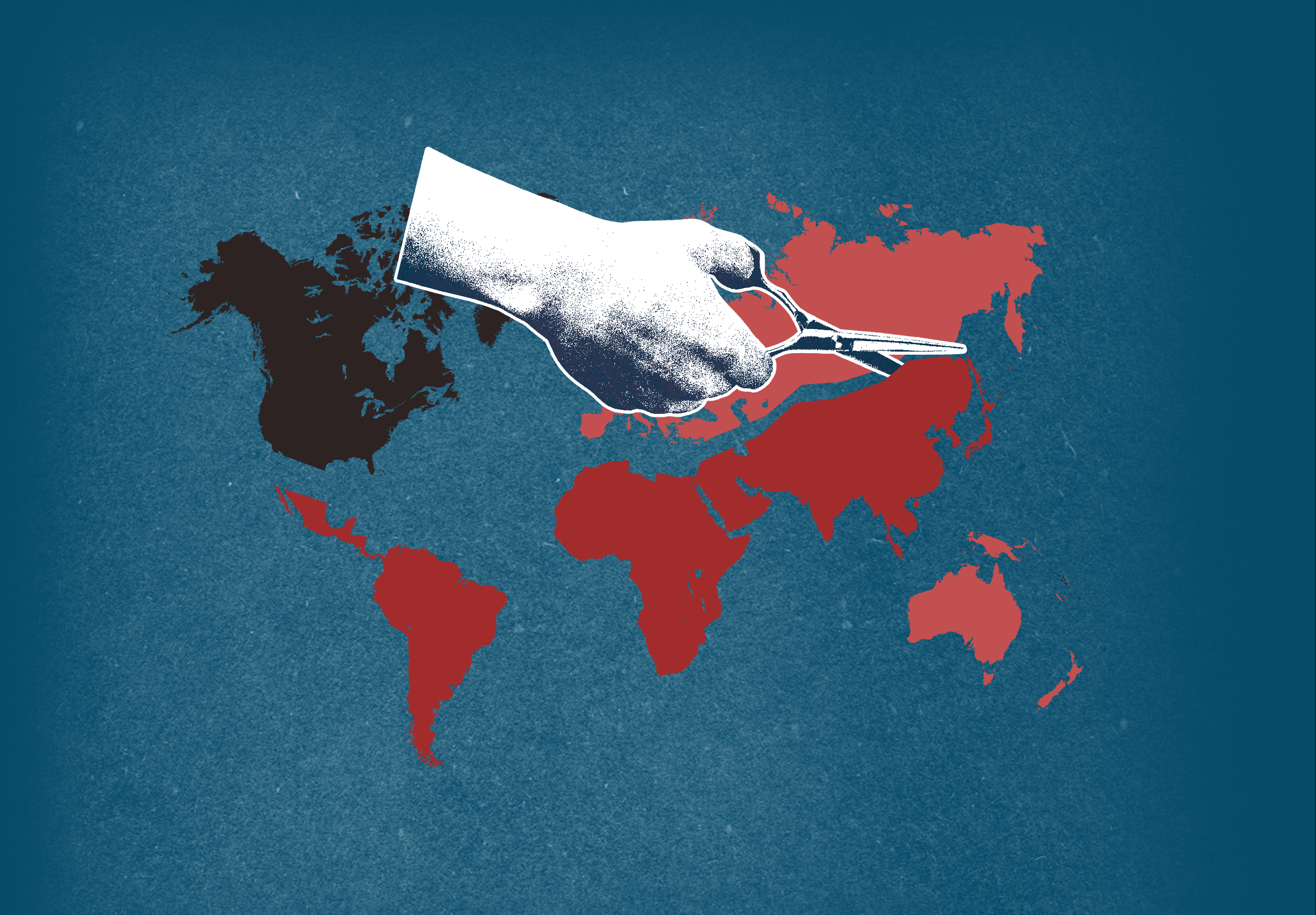
How trade dependency has led to debt dependency
In designing the IMF, U.S. officials viewed the economic problem of foreign debt simply as one of how to squeeze money from debtors and transfer assets into U.S. hands. They insisted that no supra-national regulation or adjustment would be needed to prevent debt dependency from impoverishing countries and turning them into client states. Pro-creditor ideology never has been willing to acknowledge how monetary austerity cripples the economies of debtor countries. Governments are told to cut back budget deficits, yet government budget deficits and the resulting public debt in the form of treasury bonds are what have provided money and backed bank credit in the leading Western economies ever since the Bank of England was founded in 1694 with £1.2 million in government bonds as its initial reserves backing its loans and paper money.
“Free market” opposition to government spending blocks public infrastructure investment and the subsidies needed to provide the growing home market and investment to enable debtor countries to earn the money to pay their debts. The resulting fiscal austerity forces them to sell off their public domain to foreign investors, who remit their monopoly rents back to the creditor nations. By the 1970s this policy led to the Latin American debt crisis and forced a writedown of Global South debts that was arranged not by the IMF but by the Brady Plan, negotiated by bondholders to salvage what they could.
The trade and financial diplomacy of the United States and European Union has steered Global South countries to specialize in providing raw materials and agricultural and low-wage manual labor products in an unequal exchange leading to their trade dependency and foreign debt burden. The U.S. trade polices imposed on the Global South were the opposite of the protectionist policies by which industrial Britain, Germany and the United States achieved their own industrial and agricultural takeoffs.
U.S. policy, for instance, blocked governments in food-deficit countries from developing their own agricultural self-sufficiency by subsidizing family farm production as the United States was doing (and as Europe soon would do), and using tariff protection and subsidies to help feed themselves.6 The World Bank lent to countries only to specialize in plantation crops, not family farming. It provided loans to pay foreign engineering firms to build highways, ports and other transportation infrastructure to export plantation products and raw materials, not to develop the home market. What euphemistically was called development lending in the 1960s actually aimed to lock in food dependency on U.S. grain exports, not at developing domestic self-sufficiency.7 And the IMF withheld credit from countries undertaking land reform. Nicaragua and other Central American countries introducing such reform were subjected to CIA-sponsored military terrorism that turned civic control largely over to local dictators and drug lords.
The disparity in trade and development policy that led Global South countries in particular to suffer structural trade and payments deficits had begun with their former colonial mother countries (as I will describe below), and continued under the policies of the United States and other foreign creditors. The 1940s and 1950s saw this asymmetry in trade policy persist, along with moves to thwart the domestic role of government investment and subsidies to promote economic self-reliance and sovereignty. The post-colonial countries at first financed their trade deficits by dissipating the international savings that they had accumulated during the war, as noted above. By the 1960s, and more seriously in the 1970s, they ran increasingly into foreign debt to finance their deficits.
By the 1980s the IMF was insisting that countries asking to borrow to stabilize their exchange rates had to begin selling off their public infrastructure, mainly to foreign investors. That led countries to steer clear of the IMF and its notorious fiscal austerity and related neoliberal loan conditionalities demanding privatization and kindred anti-government reforms dismantling public infrastructure ownership and preventing budget deficits from providing the economy with money. This policy demand meant that the domestic political cost of falling into deficits in trade and debt service was the requirement to impose the same neoliberal policies that were deindustrializing Britain under Margaret Thatcher and the United States under Ronald Reagan. By 2007 the IMF’s client list had shrunk to the shortest in a quarter-century after Argentina and Brazil paid off their debts to it. But the U.S. 2008 junk-mortgage and derivatives crisis created international instability that forced countries back into the IMF’s clutches
U.S. affluence by “free lunch” financing of its balance-of-payments deficits
Overseas military spending starting with the Korean War in 1950 was responsible for the entirety of America’s unbroken string of balance-of-payments deficits through the Vietnam War. These deficits were settled increasingly in gold, and forced the Treasury to end the dollar’s convertibility into gold in 1971. The war’s guns-and-butter policy raised wage levels, making the 1970s the last golden age for American labor despite the rising price inflation and interest rates.
The Carter Administration (1977-1980) coped with the deepening trade and military deficit by imposing protectionist “voluntary” quotas on imports, especially from Japan, while U.S. multinational firms began outsourcing production to Mexican maquiladoras just south of the U.S. border, as a source of lower-cost labor, and soon turned to Asia.
Over the past half-century the United States has become a high-cost economy and deindustrialized (as discussed below), running trade deficits and continuing its military spending while becoming the world’s largest debtor. But it has been immune from having to cope with the resulting payments deficits in the way that other countries do. They typically are obliged to stabilize their exchange rates by raising interest rates to attract foreign “hot money” inflows to cover the shortfall, and to reduce imports by taxing labor and industry. But the rising U.S. Treasury and other federal agency debt to foreigners does not oblige it to raise interest rates or taxes to restore balance, because this official debt is not expected to be repaid. U.S. Government IOUs are simply left to accumulate and serve as the money-like reserves of the world’s central banks.
Ever since August 1971 when the dollar ceased being “as good as gold” by being freely convertible into it, these U.S. Government IOUs have become the major vehicle for international monetary reserves. Yet foreign official holdings of U.S. government debt no longer have any counterpart in the U.S. ability to pay the enormous sums involved. There is a diminishing prospect of their ever being paid, any more than German reparations or Inter-Ally debts could be paid in the 1920s, even if U.S. officials were willing to try to make payment.
The U.S. government’s debt does bear interest charges, but this interest is simply added onto the debt balance as an accounting entry, accruing without any reference to the U.S. ability to pay it. The unique U.S. ability to run payments deficits without constraint gives its economy a virtually free lunch. It pays for its imports and overseas military expenses simply by dropping its IOUs on the world. This privilege of having its dollar debts serve as international money has made America the world’s “exceptional nation.” The value of its official debt held by foreigners is backed only by what economists call “the confidence fairy.”
But confidence in what? Confidence means a collective foreign willingness to accept in payment for their trade surpluses a rising stream of U.S. IOUs that cannot end up being paid in the form of tangible assets such as gold or a transfer of U.S. property owned abroad. This unrealistic confidence has enabled America’s payments deficits and the resulting rise in its official foreign debt to become a source of affluence for it instead of it having to tighten domestic credit and raise interest rates. Making dollar debt the monetary savings of other governments has enabled the United States to maintain its foreign military spending and high-consumption levels despite its domestic deindustrialization.
As U.S. Treasury Secretary John Connally quipped in 1971, “the dollar is our currency, but it’s your problem.” The problem is the lack of an alternative. What is catalyzing foreign moves to end this system is not only a loss of faith in America’s ability and willingness to pay its foreign debt, but the desire of other countries to make payments and hold international savings without being subject to U.S. trade and financial sanctions, especially with such sanctions being made a condition for maintaining access to the dollar-based financial system and to the U.S. market for their exports.
The U.S. economy becomes high-cost and deindustrializes
Neoliberal financial planning focuses on raising corporate stock prices by cutting long-term investment projects and research in favor of paying out profits as dividends and stock buybacks. Today’s postindustrial fortunes are acquired mainly by financial means, especially by debt-leveraged price gains in real estate, stocks and bonds, and by seeking opportunities to charge monopoly rents.
This reverses the 19th century’s aim of minimizing the economy’s overall price structure by minimizing land rent and keeping natural monopolies in the public domain so as to prevent monopoly pricing. The U.S. and most European mixed economies provided basic infrastructure services at subsidized rates instead of maximizing profits or monopoly rents. But since the 1980s neoliberal anti-government ideology has called for privatizing public infrastructure. Banks and private capital organize the financing, with their debt servicing costs, dividends, management and lobbying fees built into their price structure. This privatization and financialization has helped make the United States a high-cost economy whose loss of industrial competitiveness has prevented it from offering other countries mutual gains from trade and investment.
And not only is America’s home market growing much more slowly than those of Asia’s less neoliberalized economies, the threat of new tariffs suddenly being imposed has made it increasingly risky. The United States is left with less and less to offer foreign countries, except to refrain from creating disruption and chaos in exchange for their agreement to join in its sanctions against Russia, Iran, China and other countries that resist American hegemony.
Avoiding U.S. economic aggression by restoring open trade and financial relations
The U.S. National Security Strategy proposes to maintain foreign subsidy for America’s deindustrializing economy by weaponizing the dollar-based international financial system to continue giving it a free lunch to settle its balance-of-payments deficits in government IOUs without restraint. It also seeks to maintain its choke points on world trade by blocking trade and payments with countries that resist adopting U.S. economic sanctions and U.S. hegemony more broadly.
In an attempt to prevent Iran, Russia and pre-2026 Venezuela from being able to receive payment for their oil exports, the United States excluded them from the SWIFT bank-clearing messaging system. It also has threatened countries with confiscation of their savings in the West. In 2018 the Bank of England grabbed Venezuela’s gold on behalf of America’s hoped-for leader of a regime change. (Britain later turned this gold over to the U.S. Treasury to do with it what it wanted after Trump defeated Venezuela at the start of 2026.) And in 2022 the EU/NATO Euroclear in Brussels seized Russia’s deposits worth $300 billion, and later added insult to injury by lending the accrual of interest on the deposits to Ukraine to buy weapons to attack Russia.
Trump’s aggressive economic policies, such as his steep tariffs of April 2025 that disrupted foreign access to the U.S. market, have increased the urgency for countries to protect themselves. Most seriously, by blocking the production and export of Persian Gulf oil, America’s war to seize Iran’s oil has set the stage for a world depression on the scale of that of the 1930s. As Trump and Bessent have explained, this war and U.S. control of the world’s oil trade is needed to maintain the status of the dollar. But America’s actions to maintain its system of dollarized monetary and debt relations threaten to intensify the coming economic crisis.
The U.S. Oil War and its associated financial sanctions are what American strategists consider to be an existential attempt to wield the dollarized financial system as a coercive lever to force countries to support the U.S. economy and finance its military adventurism. Countries led by pro-U.S. leaders, headed by the EU led by NATO, are being told to sacrifice their own prospects for prosperity by succumbing to the U.S. geopolitical sanctions against Russia, China and Iran. The European Union and its foreign policy have been NATOized to replace imports of Russian gas with high-priced U.S. LNG, being told to forgo trade and investment with Russia. EU and other exporters are further directed to rely more on the debt-strapped U.S. market than on those of the more rapidly growing Asian economies, and even to relocate their own key industries to the United States in exchange for suffering only 10 to 12 percent tributary tariffs instead of tariffs so high that they would effectively result in total blockage of trade.
Countries have responded by putting alternatives in place. Foreign central banks have slowed or even stopped accumulating more dollars, and European governments now hold more gold than dollars in their monetary reserves. And Trump’s financial sanctions against Russia, Iran and Venezuela (before the abduction of President Maduro) have forced them sell their oil in non-dollar currencies headed by China’s yuan. China has enabled such international payments outside the dollar system by developing its own Cross-Border Interbank Payment System (CIPS) to replace the U.S.-controlled Western SWIFT and the associated Clearing House Interbank Payments System (CHIPS).
These preliminary steps to ending the U.S. Treasury-debt standard of international monetary reserves and America’s weaponizing of international trade and payments are initial moves toward preventing U.S. use of oil and other trade sanctions and financial choke points from causing future economic disruption. The path is being opened to create a full-spectrum set of rules to reorganize the world economy in a way that enables countries to protect their foreign trade and payments from U.S. power to block their choice of whom to deal with, what currencies to use, and where to hold and invest their international savings.
The most immediate policy aim is to prevent U.S. weaponization of the world’s financial system to disrupt the fiscal and monetary policy of other countries, particularly those that have fallen into debt dependency subject to today’s pro-creditor rules. For the time being, ironically, the transition away from the dollarized financial system will see a revived role for gold as an official international monetary asset (one among many).
Gold will play a role in the transition to de-dollarized financial arrangements
Countries recently have been investing most of their increases in international monetary reserves in gold, as well as foreign currencies such as China’s yuan and even cryptocurrency accounts. Despite the long bullionist role of gold in restricting other countries’ own creation of domestic money by requiring it to be convertible into gold, the metal will be an asset in which counties will hold their international savings and will be part of the transition to a unit of account and used as a measure of value in the book-keeping of claims and balances owed between payments-surplus and payments-deficit countries. But unlike the monetary settlements that followed World Wars I and II, gold will neither be under U.S. unipolar control nor be used as a lever to impose austerity, as it formerly did under one-sided pro-creditor rules.
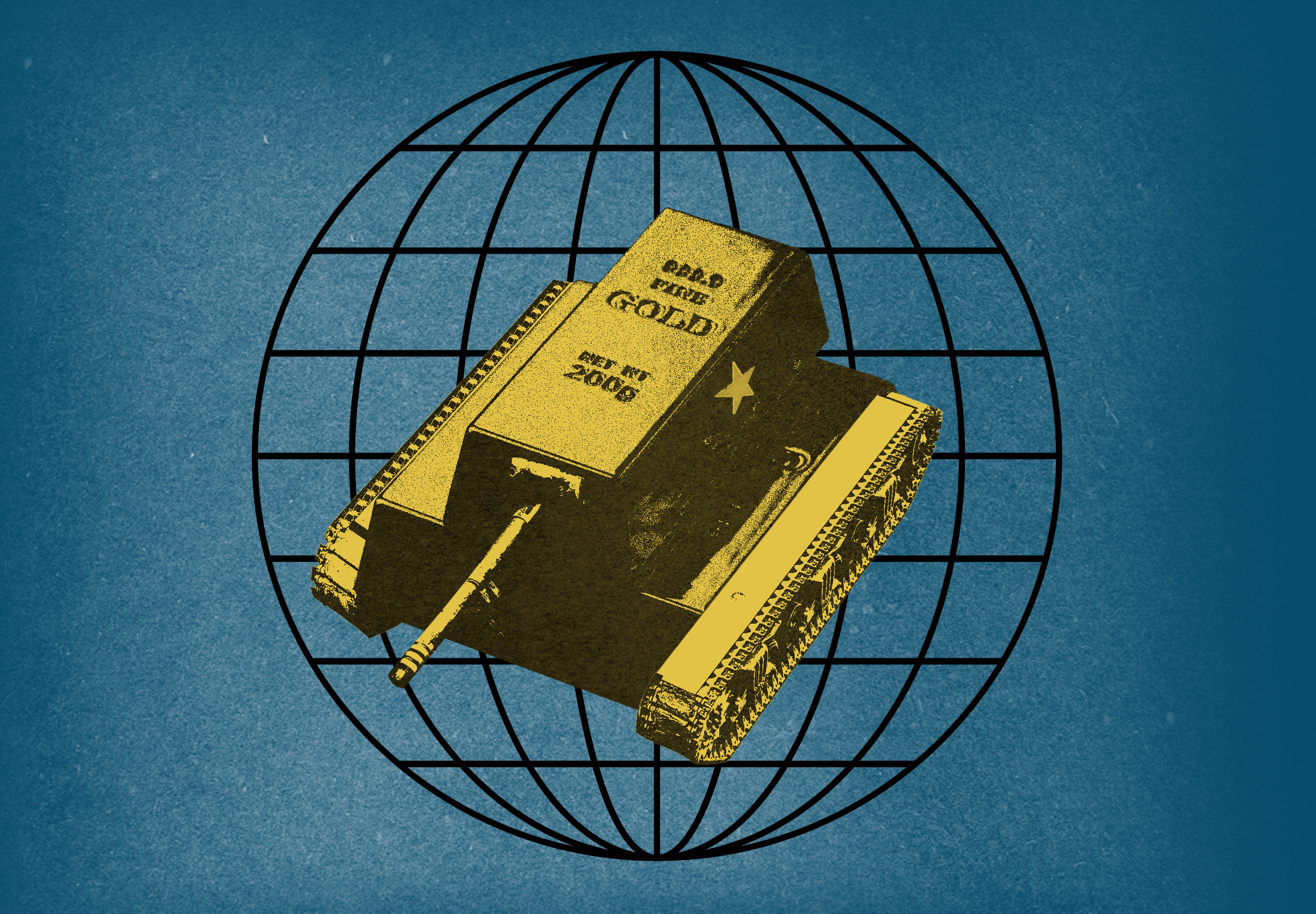
What makes bullion so attractive is that it is a pure asset. It does not yield interest, but does not run the risk of losing value in the way that falling exchange rates for debtor countries (or their outright default) will cause. This avoidance of currency risk has enabled gold (along with silver, and the dollar from 1945 until 1971) to traditionally serve as an alternative to holding money in the form of government debt, which historically has tended to build up to the point of currency depreciation and default.
The problem is that gold is not in sufficient supply to serve as the major vehicle for international savings. That makes a gold-exchange standard deflationary, causing austerity that blocks economic growth and ultimately prevents the buildup of debts from being paid. So some form of international debt-based credit is necessary to finance new investment and growth without letting the debt burden impose austerity on the credit-recipient countries that prevents them from growing and paying their debts.8 That was the problem that Britain faced in 1944, and which Keynes’s proposed International Clearing Union sought to prevent. The same underlying debt problem confronts today’s global economy as the U.S. Persian Gulf war threatens to push the world into sharply rising trade deficits and depression.
The need for debt writedowns and outright cancellations
Today’s economic crisis is not a cyclical downturn but the end of an era. It cannot be papered over with new loans to enable countries to pay their foreign debts while also financing their trade deficits for oil and food. The world’s post-1945 economic order has reached a dead end. It has reached the point that the Western economies did in 1931 when they found themselves obliged to declare a debt moratorium for Allied and German debts.
The past century has seen the United States absorb the residue of European colonialism and use foreign lending as a lever to make the fiscal policy and central banks of debtor countries serve the interest of creditors (headed by itself) instead of promoting their own domestic growth. Their backlog of dollarized debt that has accumulated since 1945 is the result of the trade deficits caused by Western policy blocking them from the fiscal reforms, government infrastructure investment and social subsidies that made industrial capitalism so successful in its 19th-century takeoff in Europe and the United States. This state of affairs has reached its political and indeed moral limit as today’s soaring prices for oil and food imports threaten to prevent Global South countries from paying their foreign debts without subjecting their economies to deepening austerity, forced asset selloffs and even perhaps starvation.
A debt writedown cancelling today’s Global South debts would wipe out the counterpart savings on the dollarized asset side of the international balance sheet. That would help wind down the financial neo-colonialism that imposes austerity on the economies administered by the compliant client oligarchies and military dictatorships which American diplomacy has sponsored. And reducing the existing debt overhang would reverse the polarization of wealth that has widened sharply since the 1980s as a result of the financial sector’s success in privatizing public infrastructure and blocking economic regulation intended to restrain rentier power.
The moral asymmetry of imposing debt liability on all countries except the U.S.
The U.S. government has effectively imposed a forgiveness of its own debts by telling countries simply to use their inflow of dollars as a means of payment for financial balances among themselves. The dollars that it spends abroad end up in foreign central banks, which recycle them to the United States by buying its Treasury bonds and other IOUs as today’s international money. These dollar claims no longer are convertible into gold at a price equivalence of $35 an ounce as they were until 1971, and since then gold prices have risen more than a hundredfold against the dollar as the metal has resurged especially in recent years as an alternative monetary and investment vehicle to U.S. official dollar debts. In 1971 central bankers complied with U.S. pressure not to buy gold at its rising market price, and had no alternative to U.S. Treasury securities in place at that time. But by accepting dollars without their former obligation to “really pay” their holders, foreign governments have suffered what economists call an opportunity cost – a lost opportunity to resist America’s notorious “exorbitant privilege” of obtaining its free lunch, not to mention the currency risk of holding an asset that will fall in price as the U.S. economy weakens.
The 55-year acceptance of the U.S. Treasury-debt standard has enabled the United States to avoid liability for its Cold War spending and neoliberal decline into industrial dependency on Asia. Yet it would be contrary to ideas of fairness and symmetry to let the United States avoid its own foreign debt liability while demanding that the rest of the world’s indebted countries sacrifice their own growth to pay foreign bondholders, banks and the IMF.
What makes today’s dollarized international monetary system so asymmetrical is that the U.S. government debt has been run up without restraint through a combination of America’s Cold War spending and neoliberal deindustrialization. But U.S. administration of the post-1945 economic order has obliged other countries to adopt trade and tax policies that have caused balance-of-payments deficits which have been financed by running up foreign debts that oblige them to raise their interest rates to attract financial inflows to prevent the foreign exchange rates for their currency from declining.
A lower exchange rate makes imports more expensive in their domestic currency, causing price inflation. In the face of having to pay rising debt service to foreign creditors, trying to stabilize their exchange rates obliges debtor countries to divert their government spending away from promoting their economic growth to obtain the dollars needed to pay their foreign creditors.
Such diversion of income from highly indebted countries to foreign bondholders has been a feature of the West’s international financial system since the creation of international banking to provide war loans to European kings in the 12th and 13th centuries, and the speculative wave of European lending to newly independent countries that started in the 1820s. Many of today’s Global South countries won their fight for political independence from the European and Ottoman empires over the course of the 19th century. Hoping to emulate the success of Britain and other European industrial nations by restructuring their economies along more productive lines, these newly independent countries engaged British, French and subsequent investment bankers to help them finance and organize the needed investment, with the countries issuing bonds and granting concessions to build railroads, canals and organize public monopolies.
Rife with fraud and insider dealing at the outset, these bond issues and grants of trade concessions led to debt pressures that had the effect of replacing the nominal political independence of these new countries with deepening financial dependency that blocked their industrial development.9 Defaults on their bond issues occurred almost immediately, because payments to foreign investors were due long before the hoped-for returns on the countries’ investments could be realized. Instead of these debts being written off as bad loans, bondholders won the support of their governments to intervene militarily and impose national monetary commissions or central banks run by the foreign creditors.
Debtor countries became financial dependencies as control by foreign bankers replaced their former colonial military control. They became fiscal states obliged to give payment of debt service priority over financing their own domestic investment and growth as their treasuries and monetary authorities acted as collection agents for foreign creditors, who secured monopoly privileges and remitted their rents home.
Foreign bankers and investors also were backed by their governments and local compliant rulers in privatizing local natural resources and their land rent, and in controlling client-country banking and credit allocation. The resulting rent extraction was at the expense of industrial and public investment in debt-dependent economies. It deepened the fiscal and financial dependency on foreign creditors and investors that has been primarily responsible for causing global economic polarization over the past two centuries.
America’s post-1945 world order intensified this priority for the self-interest of creditors, headed by U.S. banks and foreign multinational investors. The past eight decades have seen the international economy polarize between financially dependent “host countries” and a cosmopolitan U.S.-centered creditor class of investors who insist that the legacy of debt overhead be paid and continue accruing interest, even as the world enters a period of potential depression and new fiscal and financial crisis. Forcing oil-dependent and food-deficit countries to pay their foreign debts has the effect of blocking them from investing in the means to achieve self-reliance and meaningful economic sovereignty, and in the face of America’s Oil War increasing oil and food prices sharply, will cause domestic depression and perhaps even starvation for some countries, as discussed above.
Beyond the question of whether Global South citizens or Western creditors should bear the economic costs of America’s current war is the issue of who should bear the cost of loans that have been made without any realistic calculation of the ability of debtor countries to pay without impoverishing themselves (as distinct from their client oligarchies, many members of which are holders of their own national dollarized debts).
“In effect, the Western international debt system has been based on a misleading ideological deception. Instead of promoting the development of debtor countries, its aim is to place control of their government policy in the hands of the U.S. and other creditor-nation governments.”
The demand is that debts be paid without regard for the national sovereignty of debtor countries to invest in their own growth and self-reliance.
Apart from debt cancellations, what these countries need are fiscal and monetary reforms along the lines that they initially hoped to follow – the lines that promoted the takeoff of industrial capitalism: public infrastructure investment in place of privatized monopolies, with the rental value of land and natural resources as the tax base, and the creation of money and credit managed as a public utility.
The U.S.-sponsored post-1945 order has prevented Global South countries from pursuing these policies by supporting the drive by foreign bankers and investors to secure monopoly privileges and remit their rents home, while seeking to privatize natural resources and land rent and keeping banking and credit allocation in their own hands. The resulting rent extraction has been at the expense of industrial investment and the host economy’s cost of living and doing business. The rising debt overhead, along with the taxes imposed to carry it, intensified the financial dependency that, as explained above, has caused global financial and economic polarization over the past two centuries.
China’s role in the New International Economic Order
What promises to enable countries to become independent of Western financial and trade sanctions, and free from the dollarized financial system itself, is the emergence of the critical mass of China, Russia and Iran. Their broad range of energy and food production, natural resources and industrial technology, along with military power, provide the preconditions for their self-reliance and resilience from Western interference as a base for other countries to join them. That is the prospect that the Shanghai Cooperation Organization annual meeting in Kyrgyzstan and the Eastern Economic Forum a week later in Vladivostok discussed to set the stage for gaining wider support at the BRICS’ September 2026 meetings in New Delhi.
Central to this new critical mass is China’s emergence as the world’s largest industrial economy. Although its industrial socialism is called autocratic in the West, China is pursuing essentially the same policies as those which made U.S. and European industrial capitalism so successful in freeing their economies from the overhead of rentier payments to landlords, monopolists and usury-banking.10 China’s path to its industrial leadership has seen it keep finance and natural resource and infrastructure monopolies in the public domain. Its success demonstrates the superiority of its mixed public/private economy with strong public investment over today’s Western economies, whose former industrial capitalism has been untracked by neoliberal privatization into an extractive rentier finance capitalism (with American characteristics).
By providing a successful mixed-economy alternative to that of Western finance capitalism, China is a threat to U.S. hegemony within today’s Western neoliberal order. Central to China’s productivity advantage has been the People’s Bank of China, which has made money creation public in character so as to finance tangible capital formation and production. China’s accumulation of $633 billion of U.S. Treasury securities and over $300 billion in gold holdings (as of June 2026) confirm the success of the industrial focus of its money and credit creation that has made it the world’s dominant manufacturing and technology exporter, investing for the long run instead of the financial short run.
China’s aim in organizing its Belt and Road Initiative and related foreign trade and investment is to create a Eurasian land-based transportation and international port system as a win-win system of mutual gain for all participants. Its Western critics have warned that China might turn out to be as exploitative a creditor as Western economies have been by using “debt-trap diplomacy,” i.e., creditor power as a lever to pry away ownership of the natural resources and infrastructure of debtor economies.
At issue is whether international investment and inter-government credit will be equitable or predatory. That was the problem that Keynes sought to solve. His ICU was intended to avoid financial polarization between creditor and debtor economies by being empowered to oblige member governments that accumulated large creditor claims on debtor countries to write them down instead of requiring debtors to prioritize payment of foreign debt service over the domestic spending and investment needs for their economic growth.
Keynes’s principle of writing down the financial claims of payments-surplus countries – and with them, the debts of chronic deficit countries – when they exceeded the ability to be paid without crippling economic growth provides a guideline that would ensure that China and other prospective major creditors would truly share their wealth. A new economic order along these lines would prevent major creditor nations from accumulating financial claims for payment in the “Western” way, by impoverishing debtor countries and imposing dependency to gain control of the debtors’ economies.
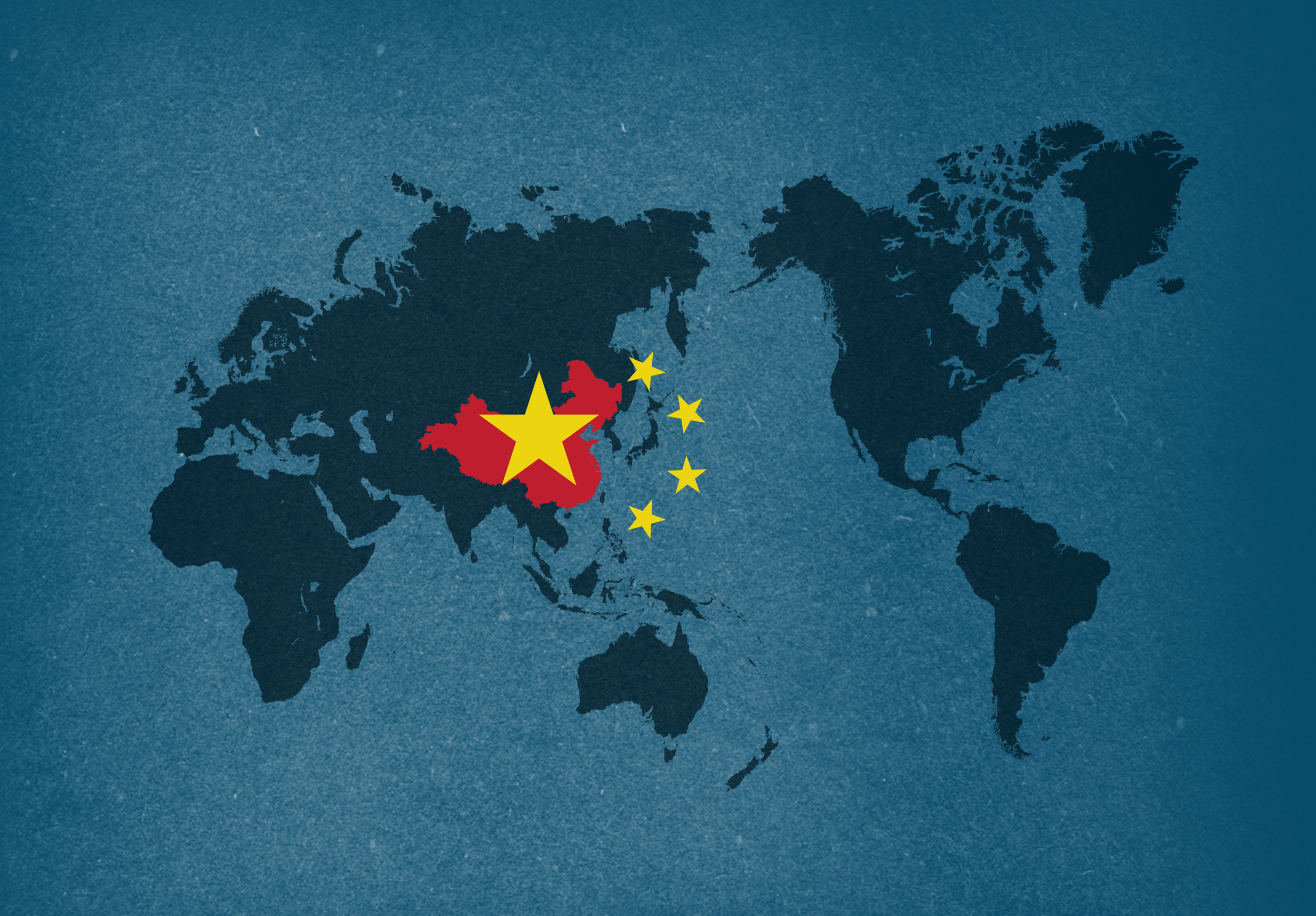
China and other nations would extend loans to cover the cost of recipient countries making tangible productive investment, organized within a system of mutual gain. This system would aim at increasing the ability of investment- and loan-recipient countries to create economic surpluses capable of financing their own rising productivity and living standards, in addition to repaying the loans. The system would see increasing trade, infrastructure and other public investment expand economies throughout Asia and the Global South as well as the world economy as a whole.
In addition to this overall rise in mutual prosperity from a more equitable and stable post-dollarized economic order, countries joining the critical mass of China, Russia and Iran would enjoy geopolitical benefits. Their trade and financial arrangements would be insulated from U.S. moves to destabilize their economies by weaponizing the dollarized system of trade and payments. And creation of an alternative to that system will diminish the ability of the United States and its allies to afford the cost of overt military attempts at coercion.
What will happen to the Western U.S. allied countries rejecting the new economic order?
The new international economic order will of course be resisted by the United States, which will strongly pressure other countries not to join it. It therefore seems likely that two blocs will co-exist for some time. One will comprise the Global Majority countries joining the new order, and the other will continue to operate within the U.S.-dollar system.
But the cost of complying with America’s confrontational demands already is weakening its alliance with NATO Europe, Japan and South Korea, because it obliges them to refrain from importing less costly energy, raw materials and industrial products, while increasing their military spending at the cost of dismantling their domestic social and economic support. In time, the U.S.-centered bloc may become concentrated in the Western Hemisphere where America’s military and economic power is greatest.
The power elites of the U.S.-centered bloc will try to preserve their financial wealth by maintaining the rentier finance capitalism that has polarized economies increasingly in their favor since the 1970s. But the internal political and ultimately financial strains of doing this will lead to local popular resistance, especially as the growing prosperity of the Asia-centered bloc attracts Western industrial and commercial interests seeking to participate in its economic success.
At some point the Western economies may face a policy crisis much like that which spurred the reforms of industrial capitalism in the early 19th century, headed by the industrial class’s opposition to rentier income as not “real” wealth but a faux wealth overhead of real estate and other property claims, monopoly privileges and financial claims for payment (what 19th-century economists called “fictitious’ or “fictive” capital). In this scenario a revival of classical political economy would take place to redefine the character of what actually constitutes a “product,” GDP and real wealth.
The new economic order provides an opportunity for today’s European and other post-industrial economies, including even that of the United States, to recover from their long detour into finance capitalism by resuming what seemed to 19th-century observers to be a natural evolution into a socialist mixed economy. They would return to the path of the industrial capitalism that achieved such great success in organizing natural monopolies as public utilities to provide basic needs at subsidized prices instead of being privatized to yield monopoly rents. And this time, Europe’s former colonial dependencies not locked into the U.S.-centered neoliberal order would pursue the same industrial strategy to build self-sustaining growing economies with more widespread prosperity.
Economies in the new order would treat their money creation and the financial system of credit allocation as the key infrastructure monopoly to be socialized so as to steer it in the public interest. Governments will create money in the same way that today’s economies do through their central banks. National governments do not need to borrow from domestic or foreign creditors or even to levy taxes to finance their budget deficits. They can simply create the money.11 But central banks or national treasuries under industrial capitalist or socialist governments in the new order will do what the Peoples Bank of China does: They will create money for the purpose of financing new tangible investment and productivity and for other socially necessary purposes, not to finance the purchase of, or speculation in, real estate, industrial assets and financial securities already in place. This would resume the practice of Europe’s most advanced industrial economies of the late 19th century, above all Germany, which steered their banking systems to finance tangible investment in new means of production and distribution, not speculation such as characterized British merchant banking and still characterizes today’s Western banking systems. Finance and banking in the new economic order would thus be socialized and industrialized to fund productive investment.
And while national governments can create their own money to finance such investment without levying taxes, there remains a strong logic for them to follow the most important guideline of the classical economists: namely, to tax the land rents of homes and commercial real estate, as well as the natural resource rents from agriculture to mining and oil, forests and other parts of the traditional public domain. Such taxation will save the economy from enriching a rent-extracting class and minimize the cost of production. This was the dream of the classical economists. They aimed at limiting industrial capitalism’s cost of production to the socially necessary cost of living and doing business, without the burden of economic rent. Such rent was deemed unnecessary and was to be either taxed away or avoided by making natural monopolies public infrastructure so as to prevent monopoly rents from being charged in the first place.
What the new economic order requires most crucially, along with de-dollarization, is a guiding doctrine akin to the effort of classical political economy to distinguish material growth in industrial capital formation from financial and related rentier fortunes that take the form of a polarizing overhead burden that all successful societies in history have sought to minimize.
Notes
India in particular is being squeezed to refrain from buying Russian oil, and U.S. policy is even threatening China’s banks and those of other countries from facilitating payments to Iran for its oil shipments.
The hyperinflations of Germany in 1921-1923 and France in 1925 followed the same pattern: First, trade and balance-of-payments deficits lead the exchange rate to decline. Then, domestic prices rise to reflect the increase in import prices (and also the contraction in domestic output). The central bank then prints money in an amount needed to transact economic activity at the higher price levels. Only in isolated cases such as Zimbabwe is a hyperinflation caused simply by domestic money creation into the economy. The typical pattern is a payments deficit caused by an attempt to pay foreign debts, leading to a decline in the exchange rate. See James Harvey Rogers, The Process of Inflation in France: 1914-1927 (New York, 1929), and Solomon Flink, The Reichsbank and Economic Germany (New York, 1930).
The same dynamic that culminated in the Great Crash of 1929 had occurred half a century earlier after the Franco-Prussian War ended in 1871. France had paid heavy reparations to Germany, whose monetary inflow fueled a speculative stock market bubble that crashed not only its own market but set off an international domino effect that included a crash of America’s own railroad bubble.
As indicated above, during the German reparations debate economists such as Bertil Ohlin and Jacques Rueff insisted that Germany’s “transfer problem” of paying creditors could be solved simply by imposing monetary stringency. My Trade, Development and Foreign Debt (Dresden, 2009) reviews how the pro-creditor insistence that austerity will enable countries to pay all their debts remains IMF doctrine in today’s world. Keynes’s analysis of the limits on how much debt service can be paid without injuring economies shaped his proposals for limiting creditor demands so as not to stifle debtor economies and force them to fall behind.
The word bancor was a combination of fiat bank money and a term for gold, as in aur or oro. In 1969 the IMF would create its own Special Drawing Rights (SDRs) on this principle of monetizing fiat credit without providing an actual currency. SDRs are based on the U.S. dollar, the euro, Britain’s pound sterling, China’s yuan and Japan’s yen.
The policies that made American agriculture so productive were grandfathered in as permitted exceptions to the free-trade rules: farm-price supports, agricultural extension services and subsidies, and import quotas blocking foreign competition. But for other countries, land reform has been viewed as threatening U.S. plantation investment in Central and South America. The United States also strongly opposed Europe’s enactment of its Common Agricultural Policy that emulated U.S. farm-support policies.
I describe this and the general U.S. strategy of pro-creditor rules leading to financial dependency in Super Imperialism: The Economic Strategy of American Empire (1972, new ed. 2021).
The need to provide such an alternative to gold and silver coinage is why bankers took the lead in monetizing public debt as paper money, starting with the Bank of England in 1694. Without such paper credit, debtor governments would have kept defaulting because there was not enough gold to finance the rising needs to pay for the increasing circulation of goods and services, not to mention war debts. Paper (now electronic) bank credit has financed a flow of debt service on the world’s exponentially expanding debt overhead.
I describe this long process in detail in The West’s Financial Takeoff: From the Crusades to World War I (Dresden, in press, 2026).
What infuriates Western critics of Marx’s analysis of industrial capitalism is his emphasis on its revolutionary aim of freeing economies from the legacy of a rentier landlord class, monopolies and usury banking. In denouncing this focus, Marx’s critics are fighting against the policy reforms advocated by Adam Smith, David Ricardo, John Stuart Mill and the entire thrust of the 19th-century’s classical political economy and its concept of a free market as being one that would be free from rent-seeking so as to minimize its cost structure and become more competitive internationally.
Europe’s international banking was based on feudal war lending and subsequent predatory 19th-century and later lending to countries that had not yet industrialized. Europe’s creditor and colonial power sought to keep them as producers of food and raw materials, hewers of wood and drawers of water instead of helping them emulate the reforms and takeoff that made European and American industrial capitalism so successful. The capitalism of these initial leading industrial powers bolstered its profits by keeping the periphery as rent-yielding fields for industrial-nation investment in foreign natural resources and infrastructure monopolies and for debt financing.
The experience of governments financing wars by creating their own money, such as the United States during its Civil War by printing greenbacks and European governments during World War I, has shown that governments do not need to borrow or even to levy taxes to finance their budget deficits.
This article was first published by The Democracy Collaborative at democracycollaborative.org
Michael Hudson is a financial analyst and president of the Institute for the Study of Long-Term Economic Trends. He is distinguished research professor of economics at the University of Missouri– Kansas City.
Hudson has served as an economic adviser to the U.S., Canadian, Mexican, and Latvian governments, and as a consultant to UNITAR, the Institute for Research on Public Policy, and the Canadian Science Council, among other organizations. Hudson has written or edited more than ten books on the politics of international finance, economic history, and the history of economic thought.
He sits on the editorial board of Lapham’s Quarterly and has written for the Journal of International Affairs, Commonweal, International Economy, Financial Times, and Harper’s, and is a regular contributor to CounterPunch and Naked Capitalism. He is co-host with Radhika Desai of the 'The Geopolitical Economy Hour' podcast, and a weekly commentator with Richard Wolff on 'Dialogue Works' with Nima Alkhorshid.
He blogs at Michael-Hudson.com.
The views expressed are his own.
Artwork by Clem Bradley