
Postponing the World’s Financial Winter - For How Long?
Iran’s MAD Standoff with the Rest of the World
By Michael Hudson
April 17, 2026
The views expressed in this article are the author’s own.
Announcing that “A whole civilization will die tonight,” Donald Trump threatened on April 7, 2026 to destroy “every bridge in Iran” and “every power plant … burning, exploding, and never to be used again.” His intention to continue committing war crimes is driving the world toward a Financial Winter as devastating as the Great Depression. Iran’s April 8 response called his bluff, laying down the terms for ending the conflict and opening the Strait of Hormuz. Oil-importing countries will need to compel U.S. and Israeli compliance with these terms in order to avoid economic crisis.
We are seeing the economic version of what the 1960s called Mutually Assured Destruction (MAD).1 The term referred to the military standoff that avoided the global Nuclear Winter that would have occurred if the world’s leading powers had used atomic weapons against each other. The possession of atomic bombs by both the United States and Soviet Union assured that they would not attack each other as long as the arms race maintained nuclear parity. The resulting balance of terror made the U.S.-Soviet Cold War relatively peaceful as far as fighting among the world’s most heavily armed adversaries was concerned. Their mutual restraint enabled America to wage its wars in Southeast Asia and Latin America without threatening world conflagration.
Today’s world is threatened with a more economic kind of global collapse. Iran is defending itself against the prospect of U.S. and Israeli military attack by threatening to destroy OPEC’s oil and gas trade if its survival as a sovereign country is endangered.
“This threat is confronting the world with a fateful choice: Either countries will suffer a deep depression if Trump follows through on his threat to destroy Iran and seize its oil – in which case Iran’s retaliation will destroy OPEC’s energy trade on which many countries have become dependent – or they must actively move to prevent the U.S. attack.”
In the 1960s it was understood that an atomic attack by either of the major powers would not be survivable by them in meaningful terms. But today’s economic version of MAD has no such restraint on America’s floundering attempts to reverse the loss of its economic power that has left it with few major levers to exert control over other countries. Its main leverage is its ability to threaten countries with economic and financial chaos, by closing off the U.S. market to their exports and by blocking their access to oil and gas from Russia, Iran and (until just recently) Venezuela in its drive to force reliance on its own energy supplies and Arab OPEC oil under its control.
This threat of trade disruption has worked best against America’s closest allies. President Trump’s “Liberation Day” tariffs of April 2, 2025 imposed exorbitant levies that Trump offered to relax on the condition that other countries sign “giveback” agreements in the form of agreeing to impose trade and financial sanctions on America’s designated enemies, headed by Russia and Iran, and to shift their oil purchases to the United States.
This is not the first time that U.S. strategists have broken the rules of international relations that America itself had put in place in 1945 to shape the post-World War II economic order. Controlling 75% of the world’s monetary gold, it dictated creditor-oriented rules of international finance, and also rules of free trade as a means of breaking up Britain’s imperial preference trade restrictions. These rules prevented other countries from following protectionist policies to protect their agriculture and industry as the U.S. itself was doing. The United States also created a global military presence, promising to protect the world against the specter of Soviet military attack and to prevent countries enacting strong government controls or socialist policies that would pose an alternative to the U.S.-backed system of international finance, trade and private investments.
But now that the United States has de-industrialized and become debt-ridden, it has abandoned and indeed reversed these rules that served it eighty years ago. What U.S. officials call national security strategy is how to recover and maintain America’s control over other countries by weaponizing the dollar-centered financial system and its foreign trade. And instead of protecting other countries and their economic sovereignty, its attempt to enforce its dominance disruptively and militarily has become a threat to the entire world’s security. And unlike the balance of power that Mutually Assured Destruction had established, most other countries have not mounted any symmetrical check to U.S. bullying by isolating themselves from America’s weaponization of its trade and financial relations.
In the present crisis Iran’s main defense to the U.S. attack has been to block OPEC oil and gas through the Strait of Hormuz, and even to threaten to directly destroy OPEC production. These acts have confronted the world’s oil-importing countries with a crisis of their economies if they do not act to counter the U.S. threat to Iran’s sovereignty, which indeed is threatening their own economic and financial sovereignty.
America’s attempts to preserve its ability to weaponize the world’s oil trade
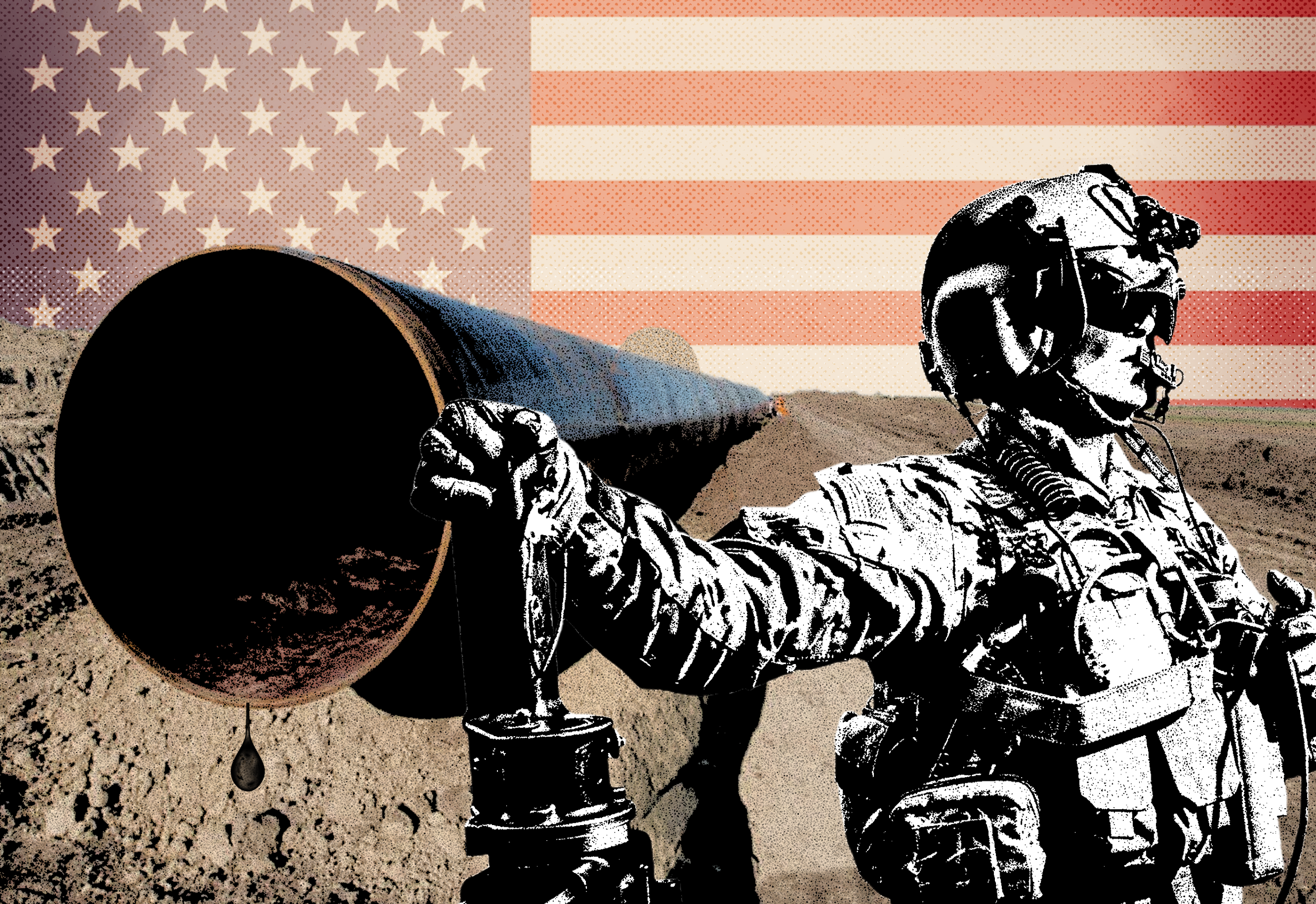
Prior to Trump’s tariffs, U.S. strategists had already used the threat of causing economic chaos by weaponizing its control of the international oil trade. Imposing trade sanctions against Iranian, Russian and Venezuelan oil producers left the United States able to deprive countries accepting its diplomacy of access to the oil and gas needed to power their factories, heat and light their homes and offices, drive their transportation, and produce fertilizer to increase their agricultural productivity. Oil became the world’s major trade choke point.
An early step in putting this control in place was the U.S. CIA’s and Britain’s MI6’s overthrow of Iran’s Prime Minister Mohammed Mossadegh in 1953 to prevent that country from regaining control of its oil. He was replaced by a brutal military dictatorship under the Shah, who protected U.S. control of Iran and its oil. After the Shia religious leadership led the successful fight to overthrow the Shah (mosques being one of the few places where public assemblies could not be prevented), the United States imposed crippling trade and financial sanctions against Iran in 1979.
Similar sanctions were imposed to isolate and injure Venezuela after its elected leaders sought to control their nation’s oil. And in February 2022 the United States imposed trade sanctions against Russia’s oil and gas exports to Western Europe and in September 2022 destroyed most of the Nord Stream pipeline. These attacks enabled America to force the former customers of Russia and Venezuela into reliance on U.S. oil and natural gas exports at much higher prices, crippling German and other European industry and chemical companies.
With Russian oil isolated by sanctions and America securing a quick military victory over Venezuela by capturing its President Nicolas Maduro and his wife on January 3, 2026, the only major source of oil to be brought more directly under U.S. control was the Middle East (now and henceforth better referred to as West Asia). Arab OPEC countries account for some 20% of the world’s oil production, 30% of its oil trade and 40% of its trade in natural gas, and also one third of its fertilizer and half of the seaborne sulfur trade (necessary to make sulfuric acid for mining extraction of ores).
In 2003, General Wesley Clark spelled out the U.S. plans to install client oligarchies throughout West Asia by conquering seven countries in five years, first with oil-producing Iraq, Syria and Libya and finally to culminate with Iran. The intention was to control their oil and put it in the hands of U.S. companies. The economies and societies of Iraq and Libya were destroyed by U.S. military intervention and its proxy army of al Qaeda’s Sunni Wahabi terrorists, who were given free rein to fight their religious war against non-Sunni populations as long as they submitted to U.S. control of the oil trade. Syria too has been destroyed and taken over by such a U.S. proxy army.
This neocon plan to control West Asia and its oil is the policy that has guided Donald Trump’s attack on Iran. His attempts at regime change by bombing civilian sites in June 2025 and organizing domestic violence by U.S.-organized protestors in January 2026 were followed by his February-April 2026 barbaric violations of the international laws of war and indeed of civilized values. He evidently was told that his wave of personal assassinations of Iran’s leaders and bombing of its schools and other civilian sites would terrorize the population and leave it prone to U.S. moves to replace the Shia leadership with a client regime under U.S. control. But the effect was just the opposite (as always is the case in nations whose sovereignty is under attack), reinforcing the population’s abhorrence of America – a feeling shared by most of the world.
Trump hoped to personally appoint the new Iranian leaders, who were to guide the country in relinquishing its oil production to U.S. companies and becoming a U.S. satellite along the lines of Saudi Arabia and the United Arab Emirates. Iran’s economy was to be closely intertwined with that of the United States, its export earnings and its monetary reserves held in the form of U.S. Treasury bonds and U.S. corporate securities.
Iran’s defense against U.S. plans to seize its oil and install a client government
Iran has spent two decades preparing a military defense against this American scenario. Openly announcing its strategy, Iran has demonstrated its ability to mount missile attacks on U.S. military bases throughout West Asia which U.S. air defenses have been unable to shoot down, despite Iran politely warning in advance just where it would hit, giving the U.S. forces time to evacuate the intended targets. Iran also has demonstrated an equally effective ability to hit Israeli targets at will, piercing the supposedly Iron Dome with a missile technology considerably in advance of that of both the United States and Israel.
Iran’s own air defenses are limited, and it always has recognized the ability of America’s enormous arsenal of missiles, artillery and airplanes to impose devastating damage on it. Its defense strategy is asymmetrical, translating the logic of mutual atomic standoff to the commercial trade sphere. It has announced to the world that if a deadly attack threatens the existence of its government, power utilities and other infrastructure, it has the capacity to impose economic chaos on other countries by destroying the oil and gas production and access to shipping of its neighboring Arab monarchies.
Both the United States and Iran have weaponized the world’s oil trade. Just as U.S. diplomacy threatens to cause commercial chaos for countries not submitting to its trade sanctions and other foreign-policy dictates, Iran seeks a similar power through its control over the oil trade through the Strait of Hormuz. This strategy confronts the world with a new choice. Most countries will suffer prolonged economic depression if they are unable to prevent the United States from attacking Iran and forcing it to resort to mutually assured destruction of the region’s oil, gas, helium and other exports. Or, countries can prosper and avoid trade interruptions by acting together to block the U.S. attacks and rejecting U.S.-sponsored economic sanctions.
Unlike mutually assured atomic destruction, Iran’s strategic threat to cause world depression is not aimed at its U.S. and Israeli attackers, because as Trump has bragged, the United States is largely self-sufficient in oil and gas, and will be a major exporter. Rising world oil prices already are creating a price umbrella for domestic U.S. oil and gas companies. Their bonanza strengthens the U.S. trade balance and its power over its European LNG customers, especially since its newly gained control over Venezuelan oil.
This increased European and other foreign dependency on U.S. oil and gas as OPEC oil supplies are interrupted should provide foreign governments with even more incentive to protect Iran from U.S. attack that aims to consolidate U.S. control over West Asian OPEC oil to strengthen America’s ability to weaponize the world’s oil supply.
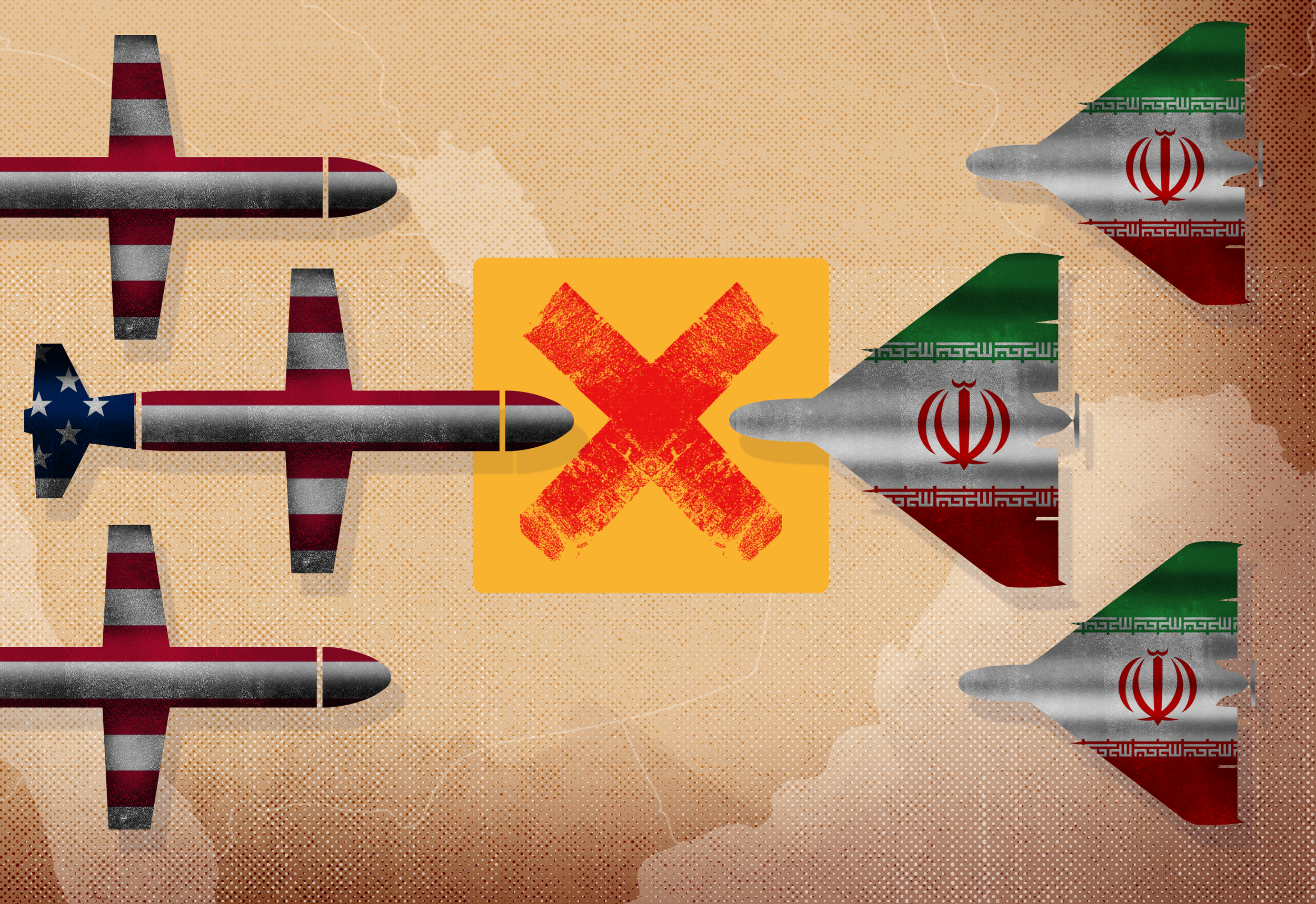
Oil-importing countries cannot stand aside passively without suffering Financial Winter
Trump has stated that opening the Strait of Hormuz to restore OPEC exports is not America’s job or even in its interest, as it is not a major customer for this oil and gas. He has criticized Europeans who are most in need of oil for not mounting their own suicidal attack on securing islands in the Strait, knowing full well from his military advisors that such soldiers would be sitting ducks for the Iranian defenses in place. Evidently his Plan B is to let the Strait remain closed, assuming that the U.S. economy will be less seriously affected than those of other countries.
Arab oil-exporting countries as well as Western governments have complained to Iran that it is unfair to make them suffer, inasmuch as the U.S. and Israeli attacks are not their war. Western Europe was not consulted, and Spain and Italy have refused to permit U.S. use of their air bases to mount attacks on Iran. Japan recently has made the same claim to be an innocent bystander.
But these countries all are part of the U.S. drive to control the entire world’s diplomacy by weaponizing (with the backing of military force) the dollar-based financial system, the oil trade and foreign access to U.S. markets and America’s control of the United Nations, IMF, World Bank and other international institutions to prevent resistance to the U.S.-centered extractive economic system. And this economic and political diplomacy is driving the world toward World War III.
Japan has promised $650 billion in free loans to the United States as the price for maintaining its access to U.S. markets – what U.S. Commerce Secretary Howard Lutnick has called “buying down the tariffs.”2 And Korea’s parliament last week approved the $350 billion extorted by Trump for its own access. There seems little ability for these sums to be paid if Japanese and Korean production of electronics and autos is disrupted by ending OPEC energy imports, yet neither country has objected to remaining a U.S. military and economic satellite. Japan is seeking atomic weapons, and its prime minister Sanae Takaishi said in October 2025 that it would become involved if war broke out between China and Taiwan.
On April 7, Iran explained that inasmuch as its Arab neighbors and other allies of the United States in the region are part of the system of U.S. control that is seeking to seize Iranian oil just as it did in 1953 when it imposed the Shah’s military dictatorship, they are legitimate targets of Iranian self-defense. Iran warned the rest of the world that if its oil production, refineries and electric power systems are destroyed, as President Trump has threatened, it will retaliate by doing the same to the Arab OPEC countries and others in the region that host US bases and have taken the U.S. side:
WARNING: From now on … we will deal with the infrastructure of the United States and its partners in the Persian Gulf in such a way that they will be deprived of the region’s oil and gas for years.
Dr. Mahdi Khanalizadeh, former director of Press TV and close to Iran’s foreign ministry, explained that this meant “ZERO TOLERANCE. Any harm to Iran's power infrastructure will bring about the termination of oil and gas exports by the southern Persian Gulf states to the world.”3
In Iran’s view, what has occurred has been a failure by the entire West to prevent U.S. and Israeli attacks on itself. The retaliatory destruction of the Gulf’s oil production will plunge the world’s economies into as serious a depression as the Great Depression of the 1930s. There are no substitutes available for oil, gas, helium, sulfur and fertilizer. Entire production chains will have to be shut down, causing unemployment and debt defaults.
The two reasons why Iran needs to control the Strait of Hormuz
The least violent way for Iran to control the oil and gas trade of its neighboring sheikdoms and monarchies is to control the Strait of Hormuz, throwing off the centuries of foreign control.4
Iranian control of the Strait, and hence its regional oil trade, is the most direct way to shut down much of the world’s energy supply. Iran hopes that the threat of doing this will lead other countries to deter U.S. forces from renewing their attempt to seize Iranian oil by force and destroy its economy. This is Iran’s MAD defense strategy discussed above.
Iran also is using its control of the Strait to charge toll fees for ships using the waterway. It has made an alliance with Oman on the other side of the Strait to split the toll fees. These fees are to serve as the immediate source of funds for Iran’s reconstruction, in view of the fact that the collection of the reparations demanded by Iran from the United States and Israel will be a time-taking process involving an international court and potentially a Nuremburg-style war-crimes trial. Iran is following the path of least resistance to obtain reparations from the collective West for the damage caused not only by the U.S. and Israeli attacks but beyond that, by the West’s unwillingness to take action to block this aggression. The toll fees will be a further cost for the failure of oil importers to stop the attacks, adding to the costs of the economic disruption caused by the shutdown of energy and other exports from the Persian Gulf.
Trump sees a silver lining for the United State in causing a world energy crisis
Trump’s televised prime time remarks on April 1 hedged against a failure to achieve peace by pointing out that an Iranian retaliation against a new U.S. attack may actually help restore America’s lost unipolar world dominance. Bragging that his war with Iran leading to a world energy and chemical crisis would leave the U.S. economy in a less desperate position, he stated that “The United States imports almost no oil through the Hormuz Strait and won’t be taking any in the future. We don’t need it. We haven’t needed it, and we don’t need it.” So he made two suggestions to other countries:
“No. 1, buy oil from the United States of America. We have plenty. We have so much.” Yet at a White House lunch earlier that same day, Trump announced that his new national budget increasing military spending to $1.5 trillion (not including the extra $200 billion add-on to replenish the arms used in his recent attacks on Iran) meant that “it’s not possible for us to take care of daycare, Medicaid, Medicare, all these individual things. They can do it on a state basis. You can’t do it on a federal basis. We have to take care of one thing: Military protection.”
“Abandoning the long-standing federal responsibility for social stability and balance, Trump is leaving local state governments to pick up the costs so that the federal budget can be devoted to military spending and rising interest payments to the financial sector, along with his tax cuts for the wealthiest Americans.”
Trump’s Proposal No. 2 was to invite European and Asian countries that depend on oil shipped through the Hormuz Strait to “grab it and cherish it. They could do it easily. We will be helpful, but they should take the lead in protecting the oil that they so desperately depend on. … Go to the straight and just take it, protect it, use it for yourselves. Iran has been essentially decimated. The hard part is done, so it should be easy.” In other words, let European armies fight to the last man in what the U.S. military has shied away from doing. Hardly by surprise, no European or Asian country accepted this invitation for their armies to be sitting ducks in a vain attempt to gain military control of the Strait in the face of Iran’s elaborate defenses.
After Iran called Trump’s bluff to attack its economy, Trump sought to cover himself by promising a new attempt at negotiation to avoid a resumption of hostilities. But Vice President Vance simply demanded Iranian surrender under the guise of negotiating the U.S. demands that it not develop an atomic bomb or even enrich its uranium. When the charade broke down on April 12, Iran’s government summarized the resulting stalemate:
The American enemy, which is vile, wicked and dishonest — attempted to achieve on the negotiating table what it could not achieve through war.
Among these demands are handing over enriched uranium and opening the Strait of Hormuz without confirmed Iranian sovereignty over it.
Iran has decided to reject these terms and continue the sacred defense of its fatherland by any means necessary, military or diplomatic.
The central aim of Iran’s 10-point plan to end the war is to guarantee that Iran will not be attacked again. The only way to assure this is to remove all U.S. military bases in the region. In the absence of voluntary U.S. withdrawal, this will require driving them out by force. The largest U.S. military bases are Israel and America’s equally terrorist Sunni Wahabi jihadist army in Syria.
Beyond the problem of America’s military bases is the fact that the entire region has become economically and politically linked to the U.S. economy. It is an investment outlet for Saudi Arabia, the UAE and other Arab sheikdoms (and their wealthy elites) to hold dollarized savings. These states also have become hosts for U.S. information technology companies to use their low-priced local energy to power the AI installations of Amazon, Microsoft, Meta, Google and other major companies, in which OPEC investors themselves hold large financial stakes.
These interconnections have tied the fortunes of the Sunni monarchies to U.S. investment and financial markets, leading them to side with the United States in its war against Iran. Iran has insisted that in order for U.S. political, financial and military influence over OPEC countries and other oil exporters to end, the economic linkages such as investment of OPEC foreign reserves and national sovereign wealth funds in U.S. bonds and other financial securities must be wound down, along with OPEC hosting of U.S. information technology companies and other investments and U.S. military bases in their countries.
The opposition between U.S. control and the rest of the world’s liberty
Looking only to its own interests, the United States views economic success by the most rapidly growing and successful economies, above all those of China and its neighboring Asian countries, as a threat to its own security. U.S. policy thus imposes sanctions and makes other attempts at injuring sucheconomies in the hope of bringing them and their leading industries under its own control. More broadly, U.S. policy has sought to maintain world dominance by destroying whatever assets it cannot control and monopolize for itself, from oil and food crops to information technology and alternatives to the dollarized international monetary system.
The blatant openness of America’s attempt to regain its former dominant power is made explicit in its December 2025 national security strategy.5 Any pretense that it is protecting freedom of world trade and capital movements in an environment in which all countries relate as equals has been dispelled by the U.S. war against Iran. With maintaining the ability to control other countries' access to oil being a long-standing strategic tool of U.S. foreign policy, the United States is aiming to confiscate Iran’s oil because that oil and its export trade is not under U.S. control.
“The war against Iran has shown the Arab OPEC countries that instead of protecting them against attack, the United States is seeking to consolidate its control of their oil, just as it has done with Venezuela’s oil.”
The U.S. plan is to defeat Iran and consolidate its control over West Asia’s oil trade, having already seized the oil of Iraq, Syria and Libya. And it hopes that mounting an attack to end Iran’s control of traffic through the Strait of Hormuz will prevent Iran from gaining the power to block the Gulf oil trade and the related U.S. economic and financial symbiosis with the region’s Arab OPEC monarchies.
This U.S. fight over Iranian and neighboring oil is creating chaos for countries dependent on this oil, and threatens to cause a global economic and Financial Winter as already described. Donald Trump has acknowledged in the past few days that this crisis will leave the United States less injured than most other countries. An immediate effect will be to increase America’s dominant role as an exporter of LNG and oil.
Iran’s government recognizes that its struggle to free itself means freeing its region from the U.S. drive for control. That will be a long-term project, and one that is beyond the ability of Iran to resolve by itself. A lasting resolution will require a restructuring of the world’s geopolitical relations. That first requires a decision by the Global Majority in Asia and the Global South, and perhaps even Western Europe, to stop the escalating U.S. war for control of oil.
Iran’s strategy to resist what Trump acknowledges to be a civilizational threat to Iranian existence is to show the world that it will not permit itself to be isolated and defeated while other countries stand by passively and permit its destruction. As already discussed, Iran has announced that it will retaliate by stopping all of its neighboring OPEC oil and gas production and trade. That will cause the global Financial Winter described above. As Alastair Crooke has expressed the Iranian position, it has forced the world’s oil-consuming nations to choose between “Prosperity For All or Prosperity For None.” The choice is between “Security For All or Security For None” if its and the rest of OPEC’s oil export capacity is blocked or destroyed.
The world has reached a turning point that is ending the U.S.-centered world order created in 1945. The revulsion against the U.S. and Israeli attack on Iran (and on Gaza, the West Bank, Syria and Lebanon) has had the effect of elevating global awareness of the need to resist this literal attack on civilization.
This aggressive U.S. trade, financial and military policy is forcing the world to reinvent a new system of international relations of a scale as large and far-reaching as that put in place under American direction in 1944-1945. The United Nations Charter aimed to cap a long civilizational effort to establish international law based on national sovereignty free from foreign interference. But the United Nations had no enforcement power, and Western countries permitted the United States to create today’s world crisis.
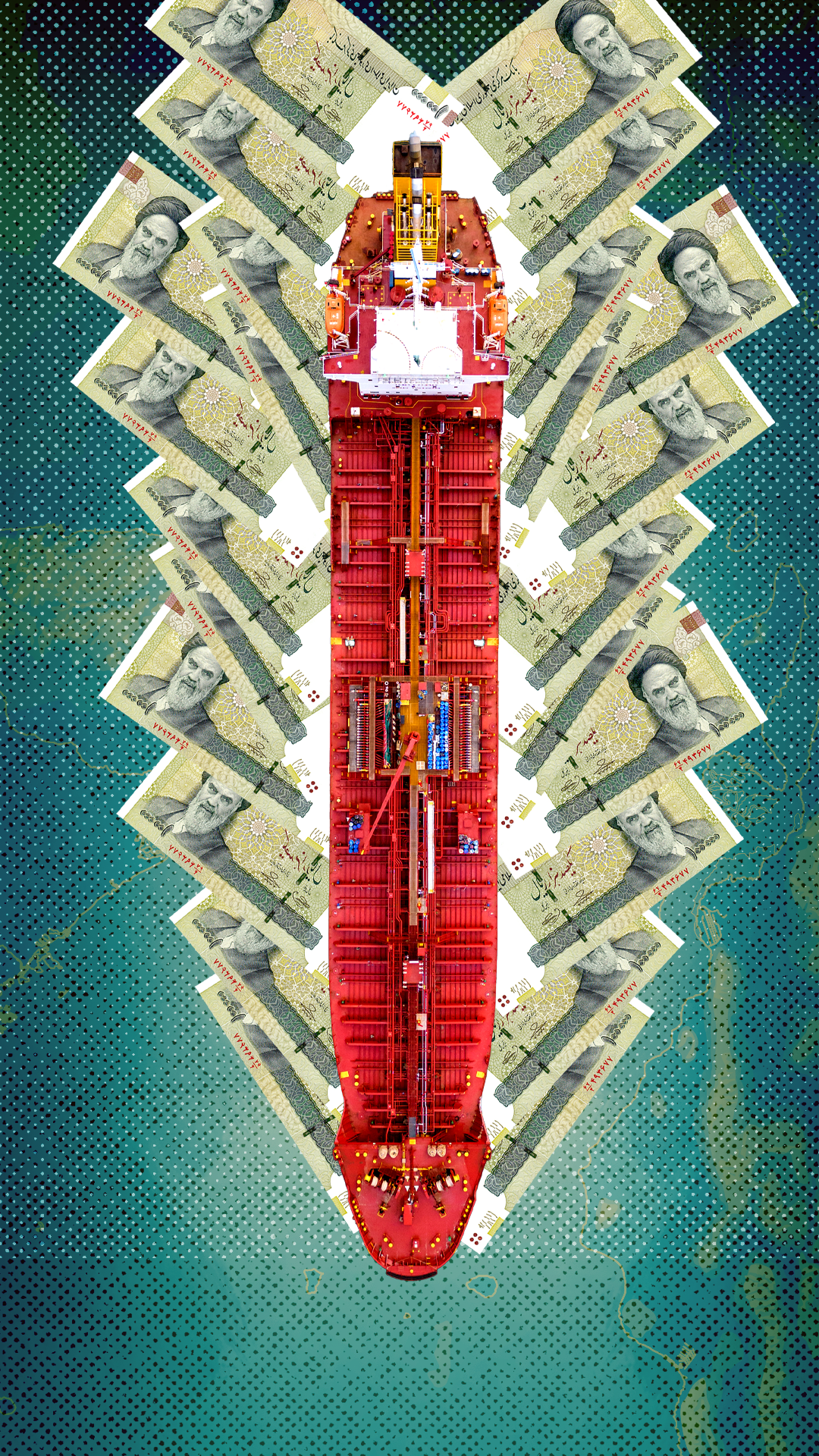
Iran’s heroic resistance has made urgent a discussion about how to reshape the world order free of U.S. interference. The only way such reshaping can be successfully achieved is for non-Western countries independent of the United States to act in concert. An alliance of countries with a critical economic mass is required to create the capacity for its members to be politically and financially independent of the U.S. economy. Only such a critical mass can secure peace.
The fight must primarily take the form of creating new international institutions. The world needs to replace America’s increasingly adversarial economic and geopolitical control with a multipolar set of institutions ranging from a reformed (or alternative) United Nations to replacements for the IMF’s dollarized international financial system and the World Bank with its neoliberal privatization philosophy. The policy aims also must include an unwinding of the post-colonial legacy of Western investment in the world’s national raw materials patrimony (with its tax-avoidance accounting manipulations) and the shackles of dollarized debt that has accumulated as a result of the West’s neoliberal policies enforced by the IMF and World Bank, backed by U.S. military force and covert domestic political interference.
Creation of a new international order will require not only new alternatives to the United Nations, IMF and World Bank, but also to the International Court of Justice to convene a new Nuremburg-style trial to prosecute the U.S. and Israeli lawbreakers responsible for having created the current crisis.
By acting as a major catalyst for reshaping the international order, Iran has made itself a world power – not a major military power, or even an economic power as an investor nation or market, but a moral and political power pushing the world to create an alternative international order. The emerging Global Majority is destined to be led by China, Russia and Iran providing the core for a region-wide self-sufficiency in Asia and the Global South, so that countries in these regions no longer need to depend on the U.S.-centered West for their energy, fertilizer, chemicals, credit and other essentials.
To the United States, the threat is that foreign sovereignty and economic self-sufficiency may reduce its ability to force other countries to pay it financial tribute and subordinate themselves politically. Instead of providing security and rules encouraging worldwide prosperity as promised in 1945, the United States has become the main object of chaos. And just as its 1945 version of security aimed at U.S. world economic control, so does its rule of chaos. The result is a crisis of civilization’s ability to protect itself against the American drive for control and the foreign tribute that goes with it.
President Trump is literally bragging about his ability to commit the grossest war crimes by threatening to destroy Iran’s civilization while focusing U.S. military attacks on civilian areas more than military targets, as if to show how immune the United States is to international law as it pursues its strategy of economic dominance at other countries’ expense. The fight is not a clash of civilizations, much less one of American or even Western civilization against that of Asia. It is a fight of barbarism against the basic principles of civilization itself.
Notes
The terminology was coined by Don Brennan at the Hudson Institute in 1962 and Herman Kahn elaborated it that year in Thinking About the Unthinkable.
Leo Lewis and Demitri Sevastopolo, “The country that can’t say no to Trump,” Financial Times, August 10, 2026. It cites one professor as commenting that “It’s turning into a bad, almost abusive relationship. The more Japan tries to please, the worse it is treated.”
https://x.com/Khanalizadeh_IR/status/2041465405680517303, April 7, 2026, @Khanalizadeh_IR.
Iran joined with Britain’s East India Company in driving the Portuguese out of the region in 1622, leaving Britain in charge of Oman on the facing side of the Strait to control the trade route to India, along with the Dutch. Oman had been a regional power in medieval times, but became a British protectorate in 1891.
I describe this national security strategy in “Today’s Global Choice,” Democracy Collaborative, February 27, 2026.
This article was first published by The Democracy Collaborative at democracycollaborative.org
Michael Hudson is a financial analyst and president of the Institute for the Study of Long-Term Economic Trends. He is distinguished research professor of economics at the University of Missouri– Kansas City.
Hudson has served as an economic adviser to the U.S., Canadian, Mexican, and Latvian governments, and as a consultant to UNITAR, the Institute for Research on Public Policy, and the Canadian Science Council, among other organizations. Hudson has written or edited more than ten books on the politics of international finance, economic history, and the history of economic thought.
He sits on the editorial board of Lapham’s Quarterly and has written for the Journal of International Affairs, Commonweal, International Economy, Financial Times, and Harper’s, and is a regular contributor to CounterPunch and Naked Capitalism. He is co-host with Radhika Desai of the 'The Geopolitical Economy Hour' podcast, and a weekly commentator with Richard Wolff on 'Dialogue Works' with Nima Alkhorshid.
He blogs at Michael-Hudson.com.
The views expressed are his own.
Artwork by Clem Bradley