
The Imperial Objectives of America’s Oil War
From Venezuela to Iran
By Michael Hudson
August 6, 2026
The views expressed in this article are the author’s own.
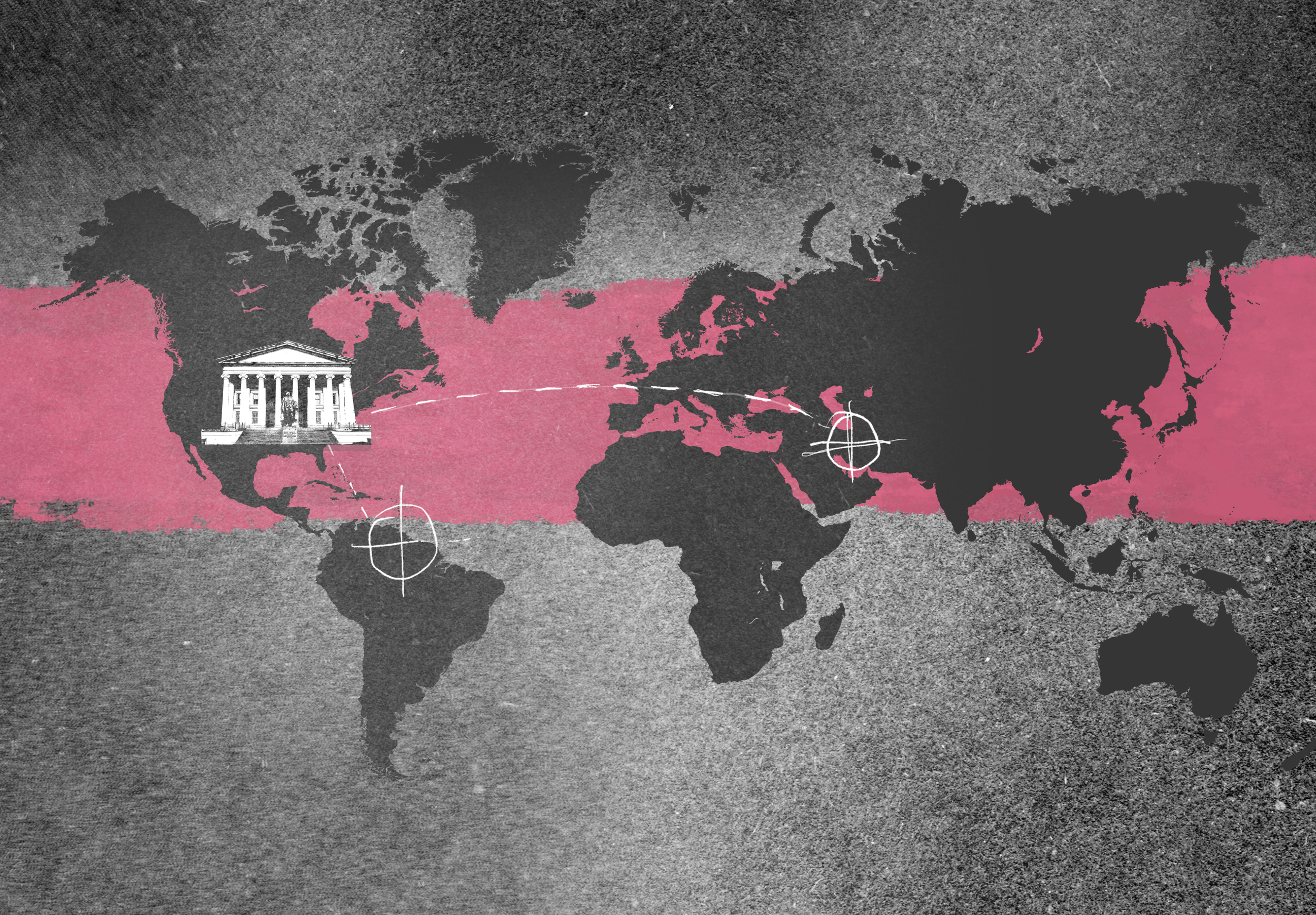
American officials are remarkably straightforward in describing their strategy to maintain U.S. imperial power. “Dollar dominance is essential,” Treasury Secretary Scott Bessent stated on June 24, 2026 in a television interview. The reason why the United States imposed trade and financial sanctions on Venezuela, he explained, was that it was “selling discounted oil to China and not getting dollars.” A country that did not price oil in dollars and invest the proceeds in dollar accounts was a threat to the U.S. ability to maintain the dollar’s central role in the world’s financial system, the main source of American affluence.
The U.S. wars against Venezuela, Russia and Iran have aimed at forcing them to price their oil exports in dollars and, just as important, invest the proceeds in U.S. financial markets or use them to purchase American products. Since the U.S. invasion and kidnapping of President Nicolás Maduro on January 3, Bessent pointed out, “[t]he new Venezuela is invoicing in dollars that are coming back onto (sic) the dollar system. … And now, the dollar is going to be the centerpiece of their trade.”1 Trump bragged in a January 7 Truth Social post that “Venezuela is going to be purchasing ONLY American Made Products with the money they receive from our new Oil Deal. These purchases will include, among other things, American Agricultural Products, and American Made Medicines, Medical Devices, and Equipment to improve Venezuela’s Electric Grid and Energy Facilities. In other words, Venezuela is committing to doing business with the United States of America as their principal partner.”
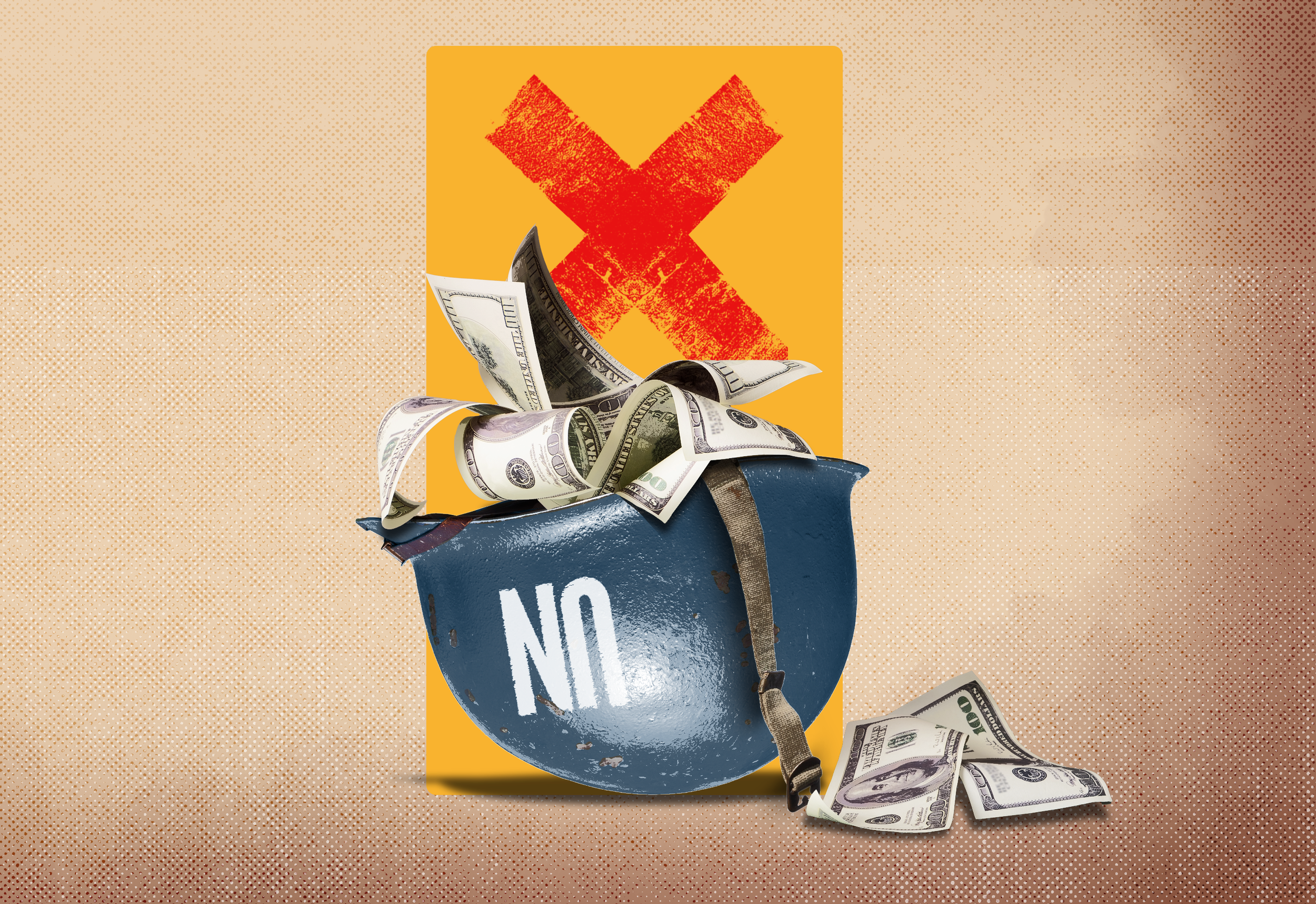
That same day President Trump said that he had charged the Treasury account in which Venezuela’s oil export income was kept with reparations to reimburse the United States for the military costs involved in kidnapping Maduro and overseeing a regime change. Indeed, he bragged that he had recovered these costs “28 times,” thereby “making a lot of money” on the “48 minutes to win that war.” A Financial Times report has calculated that based on historic price patterns, the value of the oil that Venezuela had “shipped since January … to be over $13 billion,” yet the Venezuelan government website “to track the revenue from US-run oil sales … has only one entry – a transfer of $300 million in March.”2 This is only 2½% of Venezuela’s exports kept by the U.S. occupiers since the regime change.
The terms imposed on Venezuela provide a model for U.S. plans for Iran, Bessant announced in his interview. “We’re seeing in the Iranian negotiations, the Iranians will be invoicing in dollars.” One week earlier, on June 17, President Trump had signed a Memorandum of Understanding with Iran, promising that the United States would start returning some of the over $100 billion in savings that the United States and its allies had confiscated. (A payment of $12 billion was widely cited.) But making use of the U.S. bait-and-switch privilege, Bessent explained that any return of funds was to be subject to U.S. oversight. His Treasury Department would have “people sitting in Doha overseeing that, how the money is allocated, and a very large percent of it will go to buy U.S. foodstuffs and medicines. So we will be recycling the money back into U.S. products, but it will be overseen by Treasury.” This conditionality overrides Iran’s freedom of choice.
Bessant went so far as to anticipate that “when the Russia-Ukraine conflict ends, … Russia will want to come back in the dollar system,” despite having suffered the EU’s confiscation of $300 billion of its deposits in the Eurobank clearing system. The deciding factor would be U.S. military power and trade sanctions forcing Iran and Russia to capitulate to Venezuela-type terms of surrender. “I think we should not be shy about flexing where we have advantages and where we have advantages, share with our allies and push back … on those who are not aligned with us.”
Venezuela was not given any choice. It was invaded and its president imprisoned in solitary confinement in America. Its oil production was seized and its revenues were confiscated. A Department of Energy Fact Sheet provided the details of U.S. plans to spend the tributary payments that can be extracted from Venezuela, presumably a model hoped to be imposed on Iran and Russia:
The United States government has begun marketing Venezuelan crude oil in the global marketplace for the benefit of the United States, Venezuela, and our allies. …
All proceeds from the sale of Venezuelan crude oil and oil products will first settle in U.S. controlled accounts at globally recognized banks …
These funds will be disbursed for the benefit of the American people and the Venezuelan people at the discretion of the U.S. government.
The only oil transported in and out of Venezuela will be through legitimate and authorized channels consistent with U.S. law and national security.3
These predatory policy dictates serve as a warning to the rest of the world of the need to act together for mutual protection from U.S. coercion.
Bessant paid the usual lip service in claiming that the breadth and liquidity of U.S. capital markets would lead foreign countries to want to remain in the dollar-based financial system. But that isn’t why Venezuela is now using the dollar, and it is unlikely that either Iran or Russia will be willing to take the risk of using it again.
U.S. war to defeat Iran and confiscate its oil revenue
Locking in control over OPEC countries and drawing them into its own economy has long been a U.S. objective. When the 1973 war between Egypt and Israel led Saudi Arabia and other OPEC countries to impose an oil embargo against the United States and other supporters of Israel, President Richard Nixon “seriously contemplated using military force to seize oil fields in the Middle East during the Arab oil embargo … if tensions between Israel and its Arab neighbors continued to escalate after the October 1973 Mideast war or the oil embargo did not abate.”4
Later in the 1970s, Richard Perle and other Zionists associated with Democratic Senator Henry Jackson’s hawkish circle organized a symbiotic relationship with Israel to back it as a proxy army against OPEC countries and their Muslim neighbors. This relationship steadily increased to the point where General Wesley Clark criticized it as resulting in a Zionist hijacking of U.S. policy, writing that in 2001 a Pentagon officer showed him a plan to conquer seven Muslim countries in five years, starting with Iraq and proceeding to Syria, Lebanon, Libya, Somalia and Sudan, with Iran being the ultimate prize.5
Already in Trump’s first administration he had criticized America’s spending on foreign wars, yet dreamed of being a great empire builder himself. He simply hoped to make America’s wars affordable by forcing other countries to bear the cost of U.S. military bases on their territory. He especially focused on the Arab OPEC countries. In April 2018 he stated that they were “immensely wealthy” yet “wouldn’t last a week” without U.S. protection, and therefore should pay for it.6 And in a September 20, 2018 posting on Twitter he followed up by proposing to make OPEC oil exporters pay the cost of U.S. arms spending and military bases in their countries. These countries, he pointed out, “would not be safe for very long without us, and yet they continue to push for higher and higher oil prices!” On September 25 he stated outright that “they must contribute … to military protection.” In his present second administration he has used a similar rationale for withdrawing U.S. troops and financial support from NATO Europe.
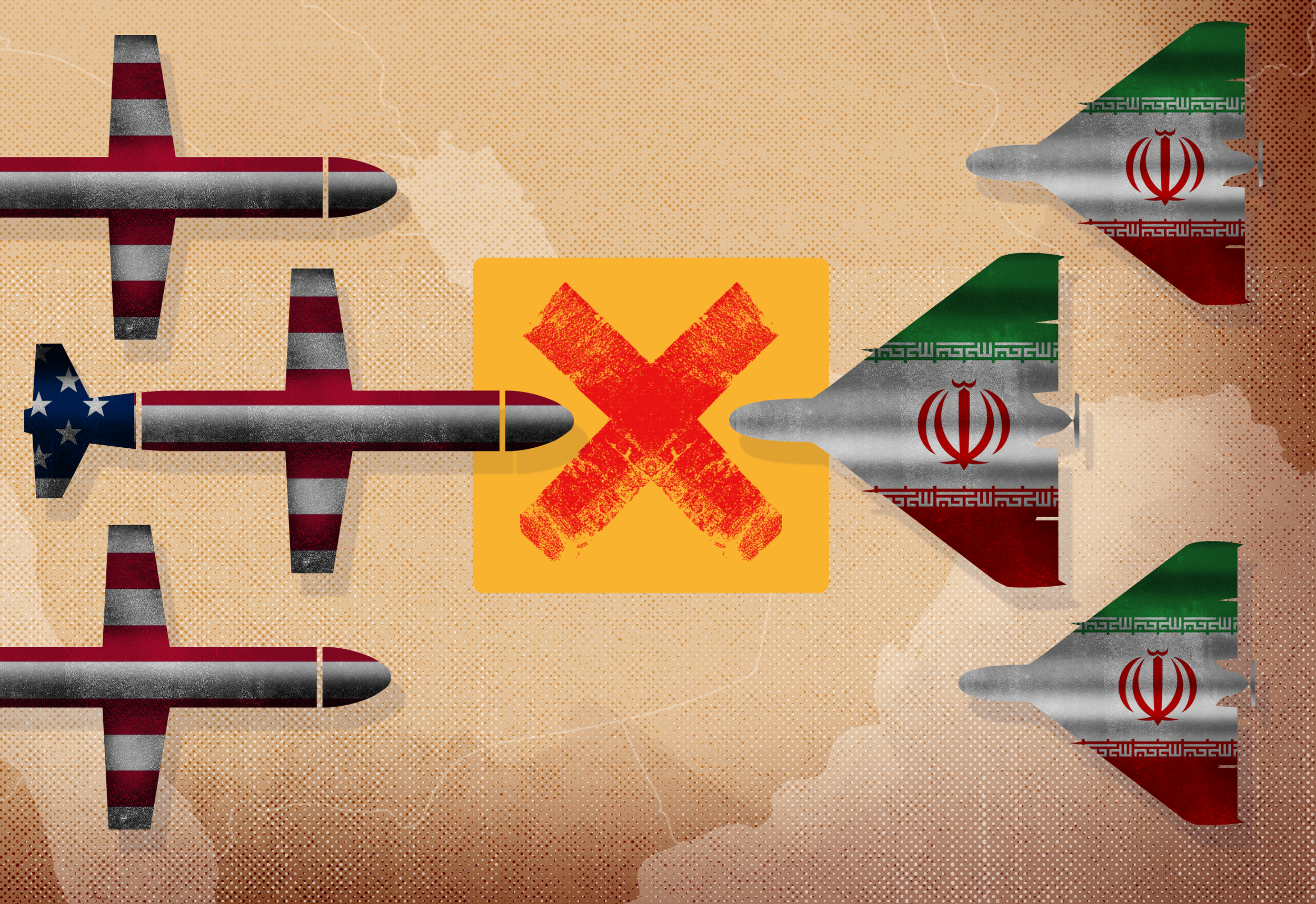
Trump launched his 2025 war against Iran on June 13 with a surprise attack on Iranian nuclear sites and military defenses. Iran’s counterattack shocked the U.S. military by destroying the large U.S. air base in Qatar and other U.S. bases in the region. Iran also devastated Israel’s port of Haifa and other major targets, and bombed oil and gas production facilities in the Arab OPEC countries from whose U.S. bases attacks had been launched.
The war lasted for twelve days. By June 24 it was clear that Israel would be destroyed if Iran continued to bomb it, and Qatar mediated a ceasefire. But fighting continued on a low level as the United States and Israel violated the ceasefire from the outset. The United States rebuilt its military presence by December, and on January 22, 2026, Trump announced that an armada led by the U.S. aircraft carrier USS Abraham Lincoln was on its way to the Persian Gulf.
The ships arrived on January 26, causing Saudi Arabia to worry that it would suffer fresh damage if it let U.S. bombers use its military bases for a renewed attack on Iran. On January 27, “Crown Prince Mohammed bin Salman [MBS] told Iranian President Masoud Pezeshkian that Riyadh will not allow its airspace or territory to be used for military actions against Tehran,” hoping to resolve matters by negotiation.7
But on February 28 the United States and Israel launched a new wave of attacks that became a 40-day campaign, whose first aim was to force a regime change in Iran. Israeli airstrikes assassinated Supreme Leader Ali Khamenei and other senior Iranian officials. A repetitive U.S. attack killed 120 children and another 36 civilians at the Minab school, and bombing the Lamerd sports hall in southern Iran killed members of a women’s volleyball team. Ignoring or ignorant of the experience of populations rallying to support their leaders in the face of civilian bombings such as those during World War II by Britain and the United States against Hamburg and Dresden and the German bombings of London, the U.S. evidently hoped to make the Iranian population desperate enough to stop the bombing of its civilians by putting a pro-U.S. government in place.
A Kurdish attack was to have been coordinated with a U.S.-sponsored color revolution, using some 6,000 Starlink terminals linked to Musk’s satellite system. Bypassing the internet, they were immune from Iran’s ability to simply turn it off to prevent such mobilization plans. But there was no Kurdish attack, and Iran was able to disrupt Starlink and use military signal detection to track down the Starlink terminals, arrest their operators and close down the bank accounts that had funded them.8
Iran then devastated U.S. military bases throughout the region, and struck Haifa and other Israeli sites. Oil production facilities, refineries, fuel depots, ports and American private investments were hit, especially in the Emirates, which were the most active supporters of the U.S. attacks. On March 1, Iran bombed Amazon’s Web Services cloud data centers in Bahrain and Abu Dhabi (the UAE’s largest emirate), and an Oracle center in Dubai. On March 2 and again on March 18 and 19 it destroyed Qatar’s LNG production facilities, which accounted for a third of the world’s helium trade.
Matters escalated further on March 27, when Iran launched missiles and drones against Israel, and also hit the large U.S. Prince Sultan Air Base in Saudi Arabia, wounding at least 17 American personnel. The U.S. and Israeli military bombed numerous targets in Iran, focusing on its nuclear facilities. That led Iran to announce on March 31 that it would “target American companies, including Microsoft, Google, Apple, Meta, Oracle, Intel, HP, IBM, Cisco, Dell, Palantir and Nvidia.”9 And when the Oil War later heated up, Iran destroyed Amazon’s remaining data centers in Bahrain on July 21 and 24.
“Iran’s almost daily retaliation and closure of the Strait of Hormuz shut down the region’s oil exports, threatening to create a worldwide crisis by cutting off some 20% of the world’s oil trade.”
That prospect led Trump to press for a ceasefire on April 8. Iran’s Supreme National Security Council announced that “The enemy, in its unjust, illegal, and criminal war against the Iranian nation, has suffered an undeniable, historic, and crushing defeat.” But on April 13 the U.S. negotiators interpreted the ceasefire agreement’s wording to imply an Iranian surrender. Trump imposed a naval blockade on all shipping to and from Iranian ports, including its loading station on Kharg Island in the Strait of Hormuz.
Iran announced on April 17 that it would open the Strait as part of an Israel-Lebanon ceasefire agreement. But the U.S. blockade of Iranian trade continued, leading Iran to close the Strait the next day, explaining that if it could not export its own oil, it would close down the entire Strait for everyone. The Gulf’s oil exports and also its imports of food and other supplies thus remained cut off. Tankers and other ships were trapped for months.
Oil exporters and importers both were confronted with a choice between sitting by and permitting the United States to consolidate its control over the world’s oil trade and the dollarized financial system to weaponize in its own interest, or support Iran’s interest in freeing trade in its oil (and that of other West Asian producers) from U.S. trade and financial sanctions.
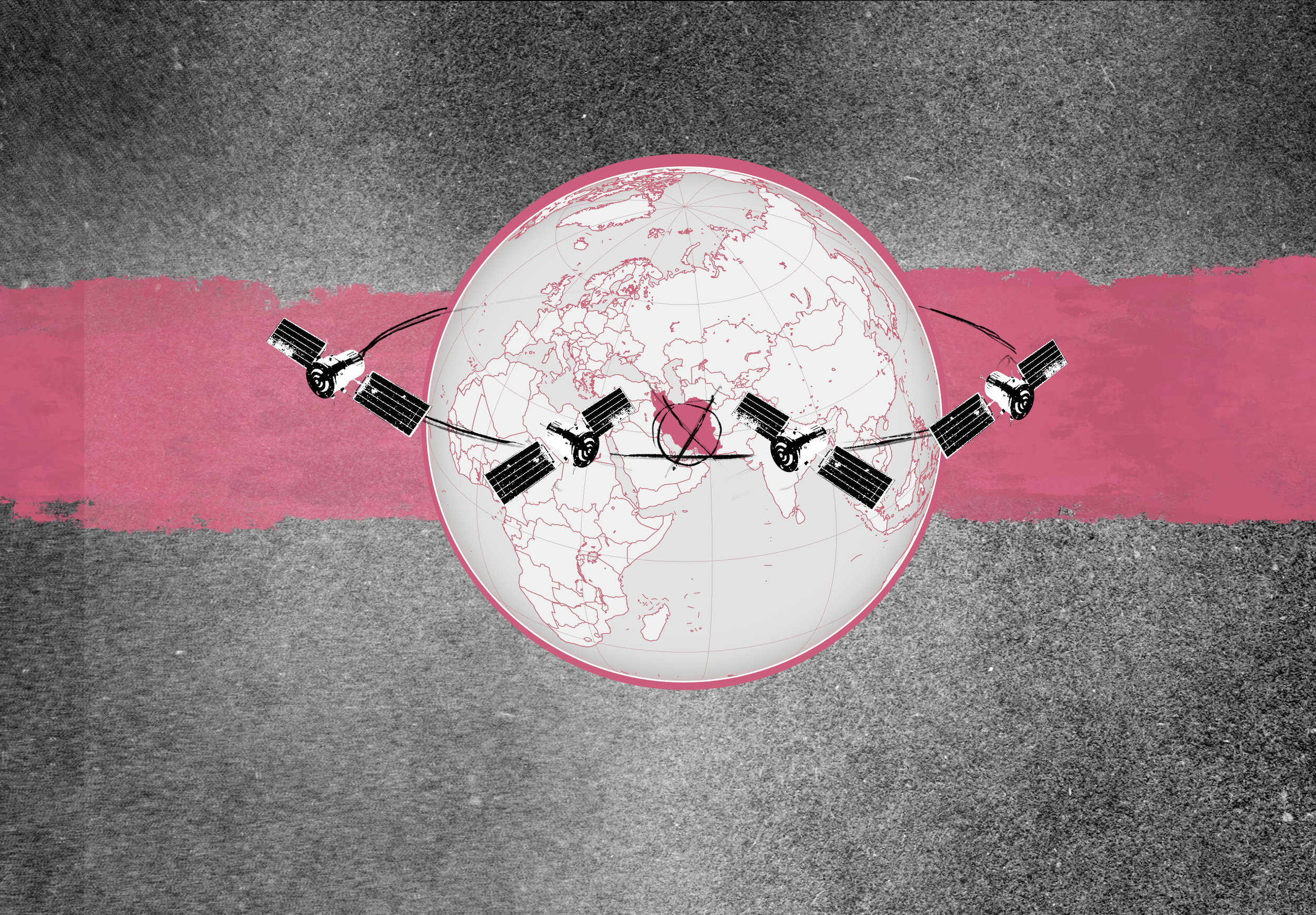
The Saudis block U.S. plans to renew its war on Iran
On May 3, Trump responded to the politically unpopular rise in U.S. gasoline prices by announcing Operation Project Freedom to send warships to guide tankers through the Strait of Hormuz. Iran and Saudi Arabia saw this as a U.S. plan to resume bombing Iran, prompting Iran to counterattack against the region’s countries hosting U.S. military bases. But Saudi Arabia refused to let the U.S. military use its air space or airports. As a recent Saudi article explains:
Saudi Arabia suspended US military authority to operate from Prince Sultan Air Base, grounded all 43 American warplanes stationed there, and closed Saudi national airspace to Operation Project Freedom within hours of President Trump announcing the operation on social media on May 3, 2026. The announcement came without prior consultation with Riyadh, Kuwait City, or any Gulf partner… 10
The article describes Saudi Arabia’s rationale for the grounding as defensive. Having spent years repairing Sunni-Shia tensions with Tehran, it wanted to avoid “becoming the launchpad for another major regional war.” Iran’s March 27 attack on its Prince Sultan Air Base had demonstrated that hosting U.S. combat operations turned Saudi territory into a target, whose U.S. defenses were ineffective against Iran’s missiles.
Closing Saudi air space grounded planes for four days, “the first time any country hosting US forces has physically stopped an active American military operation on its own soil in the post-Cold War period.” Trump phoned the Crown Prince MBS on a daily basis trying to persuade him to reopen the runways. Failing to succeed, Trump threatened on May 7 to cut off U.S. support for the Patriot PAC-3 and THAAD air-defense interceptors that the Saudis had bought to protect themselves from Iranian or other foreign attack. On May 8, Saudi Arabia reversed its closure of U.S. bases.11
To mollify Trump, MBS agreed on May 13 to buy $142 billion of U.S. arms – the largest single arms purchase agreement in U.S. history. That gave Trump something to brag about, but the fact that U.S. production capacity for these weapons is so limited means that actual delivery and payment for these sales will be stretched out over many years.
Iran’s counterattacks force Trump to recognize the failure of U.S. attack plans
The war came to a head on June 11. Iran retaliated against U.S. air strikes and blockade of its oil exports by tightening its closure of the Strait of Hormuz and launching drone attacks on Bahrain and other Gulf sheikdoms to show that contrary to the U.S. promise that its military bases would protect Arab host countries from attack, these bases had made them targets. The Emirates, which had taken the strongest anti-Iranian position and tied their fortunes most closely to the U.S. economy, suffered the heaviest damage.
The United States had announced already in January that it would withdraw from its military bases in the region by yearend, relying instead on bases in Israel and the Indian Ocean. Trump resorted to making large threats to convince Iran to capitulate, and Bessent warned that when the United States conquered Iran, the Treasury would confiscate its oil production and deposit the export proceeds in a U.S. bank account, just as it had done in the cases of Iraq and Venezuela. It would debit Iran for all the damage that America claims the country “inflicts on our allies in the Gulf … with funds extracted from Iranian Accounts.” And upon defeating Iran, he threatened, “Any tolls paid to the Persian Gulf Strait Authority [PGSA] will be offset by funds extracted from their accounts. Every attack Iran launches will only deepen the economic and financial consequences it faces.”12
The United States played for time as it tried to negotiate a ceasefire. Rising gasoline prices were cutting into consumer budgets turning voters against the war.
“Opinion polls showed a steady decline in Trump’s approval rating and rising opposition to his war. He repeatedly voiced his fear that he might go down in history with a reputation like that of President Herbert Hoover for presiding over a depression.”
An Iranian oil cutoff could be made up for a few months by releasing oil from the National Petroleum Reserve, but if the Persian Gulf trade were not soon resumed there would be a supply crisis. Despite the United States being a net oil exporter, it needs to import substantial crude oil from abroad, especially the heavy or “sour” oil (from 0.5% to 2% sulfur) that is obtained mainly from Saudi Arabia. U.S. oil fields produce mainly “sweet” low-sulfur oil, but U.S. refineries require this heavier foreign oil to produce diesel fuel for trucks and ships, and kerosene for aircraft. Airlines throughout the world were cutting back their flight schedules and raising ticket prices to reflect the higher fuel costs. And domestic trucking relying on diesel fuel threatened to be interrupted, causing production shutdowns and work stoppages.
While wanting a ceasefire to mitigate the threats of economic collapse and domestic popular opposition to rising gasoline prices, Trump repeatedly stated his hope that his military could conquer Iran and grab its oil to restore normalcy. Iran saw its own advantage in using a ceasefire to rebuild its economy and defenses. Both sides therefore were willing to negotiate a ceasefire to prepare for a later battle.
The ambiguous and deceptive June 17 Memorandum of Understanding
The two sides reached an agreement in principle on June 12, and a Memorandum of Understanding (MoU) between the United States and Iran was signed electronically on June 17 by President Trump (visiting in Versailles at a G7 meeting), Iran’s President Masoud Pezeshkian and the Pakistani mediator. Its 14 paragraphs seemed to grant the key demands that Iran had been making all along, headed by its insistence on a return of its savings that the United States and its allies had confiscated (Paragraph 11), Iranian administration of traffic through the Strait of Hormuz (Paragraph 5), removal of the U.S. naval blockade of Iran and of U.S. forces from its proximity (Paragraph 4), a waiver of oil sanctions (Paragraph 10) and an Israeli ceasefire and withdrawal from Lebanon (Paragraph 1).
The MoU’s penultimate Paragraph 13 sought to prevent Trump from using the red herring of Iran allegedly seeking an atom-bomb as a deal-breaker by stipulating that: “After signing this MoU, and subject to the beginning of the implementation of paragraphs 1, 4, 5, 10 and 11 of this MoU and the continuing implementation of these measures, the Islamic Republic of Iran and the United States of America will start negotiations regarding the final Deal exclusively on the other paragraphs,” including Paragraph 8 reaffirming that Iran “shall not procure or develop nuclear weapons.”
While Iranian officials declared the MoU to be a victory, U.S. hard-liners in Congress and the press accused Trump of giving in to Iran’s demands. But it would be an Iranian victory only if the United States intended to comply with the MOU’s terms, and its diplomacy is known for being non-agreement capable. U.S. officials interpreted the MoU’s terms much more narrowly than Iran had understood them. Before the MoU’s official signing, on June 12, Vice President J. D. Vance characterized the negotiations from the U.S. perspective as ones in which “We fundamentally have all the cards here. We don’t have to give the Iranians anything if they don't make the commitments that we want long term on the nuclear program.”13 Trump and other U.S. officials would keep citing this U.S. demand and Iran’s alleged attempts to build an atom bomb as a red-herring excuse to delay any compliance with the MoU until such time – indefinitely in the future – that Iran would dismantle all nuclear research, even for medical and other civilian uses.
During the ensuing month it became clear that Trump never intended to meet the terms of the MoU but was aiming all along to impose U.S. control over the Strait of Hormuz (and indeed all of the Persian Gulf economies). The United States failed to return any of Iran’s savings, and its navy had been working since April to circumvent Iran’s control of the Strait by steering shipping to sail closely within Oman’s territorial waters under its own arrangements, not those of Iran.
The MoU’s Paragraph 1 called for“the immediate and permanent termination of military operations on all fronts, including in Lebanon.” But the United States made no serious effort to stop Israel’s bombing and ground offensive against the mainly Shia population in the south. Its army moved up to the Litani River, which Israel’s first prime minister, David Ben-Gurion, had advocated should be the northern border of Greater Israel.
“Iran could have complained at any time that the continuing Israeli attacks on Lebanon invalidated the ceasefire, but at least it was able to export its oil (mainly to China), rebuild its monetary reserves and recover from the U.S. and Israeli military destruction.”
And for Trump, gasoline prices retreated and the stock market boomed, enabling him to claim that his war against Iran was not creating the inflation and economic squeeze that critics had forecast. But for the MoU itself, the United States made little follow-through on Paragraphs 1, 4, 5, 10 and 11, the five conditions cited as being the key to the ceasefire. It did cease attacking Iran and lifted its naval blockade, temporarily waiving its oil sanctions against Iran to enable it to export its own oil through the Strait of Hormuz. But there was no return of any Iranian savings held in the Emirates or elsewhere, nor any hint of a plan to provide funding to rebuild Iran. And Trump repeatedly threatened to use devastating force against Iran if it did not agree to the narrow U.S. reading of the MoU’s terms.
Trump’s plan to conquer Iran and seize its and other OPEC oil revenue
Already in President Trump’s first administration he had spoken of shifting the cost of U.S. military spending onto local countries hosting U.S. bases. So it is not surprising that he soon pressed for the United States to administer trade through the Strait of Hormuz to enable it to charge tolls to reimburse itself for the military costs of U.S. protection against Iran, denying Iran any power to impose tolls or indeed to receive any return of its savings from countries that wanted to keep these funds as reparations for themselves.
Trump also revived his demand that the Arab OPEC countries should pay the United States for the costs of waging its war on Iran, singling out Saudi Arabia.14 This was the same argument that he had been making regarding NATO and Asian countries that hosted U.S. military bases.15 That aim shaped his approach to the MoU’s stated terms.
For Iran, the ceasefire was to start with a show of good faith by U.S. allies beginning to return to Iran some payment on the $100 billion in foreign deposits that U.S. officials had directed their allies to confiscate:
11. The United States of America undertakes to make fully available for use the frozen or restricted funds and assets of the Islamic Republic of Iran upon the implementation of this MoU. The United States of America and the Islamic Republic of Iran will mutually agree on the procedures related to the release of these funds during the negotiations. Such funds, either retained in the original account or transferred, shall be made fully usable for payment to any ultimate beneficiary designated by the Central Bank of the Islamic Republic of Iran. The United States of America undertakes to issue all necessary licenses and authorizations accordingly.
The sum of $12 billion was widely discussed, and later $6 billion, but Abu Dhabi rejected Iran’s claim for payment, and Bahrain also refused to release any Iranian deposits, keeping them as reparations for the damage that Iran had caused by retaliating to the U.S. attacks and their own active aggression. There was some talk of just $3 billion being released by Qatar, but nothing came of it.16 The United States made no effort to obtain payment for Iran, and Trump added his own aggressive condition (described below) that any such payment would have to be spent entirely in the United States.
The problem confronting Iran is the same as that faced by Russia, whose $300 billion of deposits in the EU’s Euroclear system in Brussels was seized in February 2022. EU officials are now seeking to turn this money over to Ukraine as reparations for Russian’s special military operation to protect the Russian-speaking Donbas from Ukrainian ethnic cleansing attacks against their civilian population and infrastructure. The EU plan was for Ukraine to use this money to keep attacking Russia and its oil and refinery production. The U.S. stance toward seizing Iran’s oil and national savings thus was quite similar to its plans for Russia, as Bessent had made clear in his interview cited at the start of this paper.
In a June 20 bluster three days after signing the MoU, Trump repeated his hope to make OPEC pay the United States for all its military costs of acting as the region’s peacekeeper and indeed to make the United States the party that would be imposing tolls on trade through the Strait of Hormuz instead of Iran being permitted to impose such tolls or even administrative fees:
There will be NO TOLLS in the Hormuz Strait for 60 days during the Cease Fire Period, and there will be NO TOLLS after the 60 day period has expired, unless they are imposed by and for the United States of America … for services rendered as the Guardian Angel to the countries of the Middle East for purposes of both past, present, and future reimbursement of costs.17
Trump then stated that any of Iran’s confiscated savings that might be released to it would be subject to conditions that would deprive it of sovereignty over how to spend the funds. “The Money and/or Sanctions that the U.S. Treasury is releasing goes into escrow, controlled by the U.S.A., and will be used for the purchase of food and medical supplies, exclusively from the United States, including Corn, Wheat, and Soybeans from our great American Farmers.”18 This is precisely the way that Trump had appropriated Venezuela’s oil export earnings for U.S. use.
Not only were Iran’s savings not being returned – or to be returned with a loss of sovereignty – there was no hint of the plan to provide funding to rebuild Iran as contemplated by the MOU’s Paragraph 6. It called for the United States to work with its Arab OPEC allies to arrange at least $300 billion to rebuild Iran, not just from the 2025-2026 warfare but from the 46-year economic devastation caused by the U.S.-backed trade and financial sanctions imposed since the Shah was overthrown in 1979.19
The failure by the United States and its allies to return any of Iran’s confiscated savings showed that the only way that Iran could obtain payment for these savings (and for reparations) was to levy toll fees on shipping through the Strait of Hormuz as part of the administration that Paragraph 5 granted it, but Trump was now claiming to deny Iran even that.
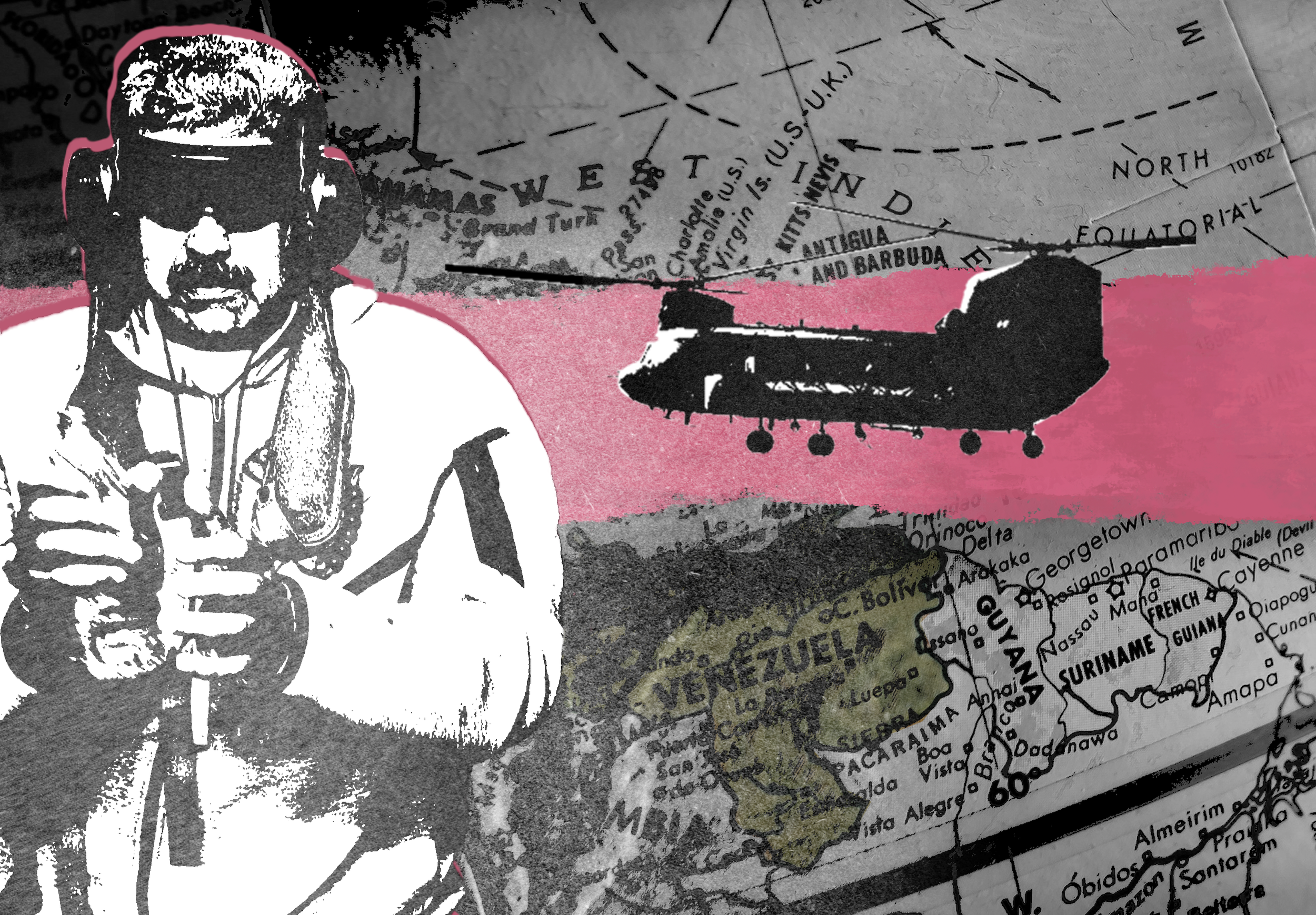
Iran’s plan to charge transit fees on shipping through the Strait of Hormuz
Iran planned to use its privilege of administering transit through the waterway as a step to prepare the path to charge transport tolls when the 60-day ceasefire period was up. But the U.S. negotiators interpreted Paragraph 5 of the MoU so narrowly as to nullify Iranian authority. Its wording required Iran to “make arrangements using its best efforts for the safe passage of commercial vessels, with no charge for 60 days only, from the Persian Gulf to the Sea of Oman, and vice versa.” There was no mention of any role for the United States to play.20
Iran viewed the wording as putting it in charge of shipping arrangements for the entire Strait of Hormuz – “from the Persian Gulf to the Sea of Oman.” This normally would include procedures requiring ships to register their ownership, destination and cargo, and to keep their radio transponders turned on to confirm their position and route.21 But Trump rejected all such arrangements, insisting that there must not be any charge for oversight procedures. And as mentioned above, since April the U.S. Navy had been guiding ships through Oman’s territorial waters on the southern side of the Strait of Hormuz opposite Iran, “under a quiet arrangement with commercial tankers [that] turned off their transponders to avoid detection by Iran as they crossed the Strait of Hormuz.”22 This circumvented Iranian authority, evidently in preparation for the United States to claim that Iran’s authority under Paragraph 5 did not apply to Oman’s territorial waters.
This legalistic U.S. view, together with its navy rehearsing by guiding ships closely along Oman’s coast, showed that the United States never intended to give Iran meaningful control of traffic through the Strait. And just as the U.S. Navy had been killing fishermen in Venezuelan waters, it was soon bombing Iranian fishing boats and other craft, with no warning or attempt to question or inspect them, merely on the suspicion that they might possibly belong to Iran’s military and threaten this shipping.
At issue was who would control trade through Hormuz beyond the 60-day ceasefire and hence be in charge of imposing the tolls that now seem inevitable. Iran would use them to rebuild its economy. Trump had announced his hope to take them as payment to reimburse America for the cost of its military presence in the region, past, present and future.
Charging access fees for ships was an ancient Persian privilege before the Gulf was taken over by European colonial powers. Turkey levies tolls on trade through the Bosporus, as do Egypt and Panama on their canals.23 But U.S. officials argued that Iranian tolls would conflict with the UN Convention on the Law of the Sea (UNCLOS) defining international waters as toll-free. Iran points out that it has not ratified that convention and considers itself not bound by the relevant part of it, notwithstanding Oman being a signatory.24
Iran claims that America’s unprovoked attacks in violation of international law have made the UNCLOS rules for toll-free trade anachronistic. It therefore claims the right, “in accordance with established principles and rules of international law,” to prevent “the transit of vessels belonging to or associated with the aggressor parties and those participating in their acts of aggression.”25
The war correspondent Elijah Magnier has summarized Iran’s argument that international law permits states bordering the seas to take appropriate steps to protect themselves: “From the Iranian point of view, the US-Israeli war changed the legal, military and political environment of the Strait. Washington and Israel used force against Iran without legitimate international authorisation, militarised the surrounding waters, threatened Iranian sovereignty, and then expected maritime traffic to continue as if nothing had happened.”26
The U.S. war on Iran thus calls for a higher law than UNCLOS, which the U.S. Navy has made a dead letter in any case by wantonly killing Venezuelan (and Columbian) fishermen without any attempt to identify them, inspect their boats or to take them prisoner and without any cause except to claim that they might perhaps be carrying drugs.27 NATO countries have attacked Russian oil tankers in the Baltic and elsewhere in the U.S.-backed attempt to block all trade in oil not under its control. From Iran’s perspective, Magnier followed up his logic, the U.S. aim for the MoU was simply to secure a “pause to recover its military position, refill its strategic oil reserve, weaken Iran’s leverage in Lebanon, reassert control over Hormuz, and then return to pressure from a stronger position without fully lifting sanctions or releasing Iran’s frozen assets … and exclud[ing it] from the management of the Strait that borders its own coastline.”28
In attempting to prevent Iranian control of the Strait, the United States is defending Oman’s administrative control over its territorial waters. Paragraph 5 of the MoU does stipulate that “The Islamic Republic of Iran will conduct dialogue with the Sultanate of Oman, to define the future administration and maritime services in the Strait of Hormuz, in discussions with other Persian Gulf Littoral States, in line with applicable international law and the sovereign rights of coastal states of the Strait of Hormuz.” Omani officials announced their opposition to Iran charging a transport fee based on the tonnage and valuation of the oil being shipped, but have acknowledged that some transit charges seem inevitable for insurance, protection and basic administration to maintain the waterway.29
What makes Paragraph 5 so important is the conflict between two opposing objectives. On the one hand is Iran’s administration of transit through the Strait of Hormuz with the aim of obtaining reparations for the property destroyed by the unprovoked U.S. and Israeli bombings (and indeed for its confiscated savings and the damage caused by the 46 years of trade and financial sanctions against it). On the other hand is the broader U.S. global objective of control of the oil trade and dollarization, subordinating both Iranian and Arab OPEC interests to this objective which is at the root of its Oil War.
In view of the legalistic problems and inevitable delays in trying to collect reparations from the United States and Israel, Iran intended to use its control of the Strait to re-impose transit fees after the MoU’s 60-day transition period. Iran has estimated that its tolls would yield $40 billion a year. The charges would be an expense for its neighboring OPEC countries to pay out of their export income, perhaps by raising their oil prices, in which case the cost would be borne by oil-importing countries, in effect for not having acted to stop America’s attacks on Iran and blockage of its trade.
At issue on the broadest international level is whether the United States will control OPEC’s oil trade and dollarize it for its own financial benefit (and specifically for its military spending), or whether Iran (and Russia and other countries) will be free to control and sell their oil and keep their sales revenue in currencies and financial markets of their own choice to promote their own national development.
For Iran, there will be Persian Gulf oil exports either for all or for none, open oil trade for everyone or no trade at all. Control of the Strait gives it this power.
Trump’s plan to cover the costs of his war by America imposing its own tolls
The MoU’s first U.S.-ceasefire violation occurred on June 25 after Trump claimed that Iran had no right to interfere with ships it had not authorized to sail close to Oman. Iran launched a drone strike against a ship that had followed that route. The United States attacked Iran, and both sides traded fire for two days.
Reviewing U.S. “provocations designed to challenge Iran’s authority,” Larry Johnson explains that: “On July 6-7, Iran struck at least three commercial vessels in/near the Strait of Hormuz who tried to circumvent the PGSA [Persian Gulf Strait Authority] protocols.” The United States responded by launching “attacks on Iranian positions along the Strait of Hormuz. Iran responded by launching attacks on US targets in Kuwait and Bahrain,” which had participated in the attack.30
Iran’s stated aim of obtaining $40 billion annually from tolls on the Strait of Hormuz provided Trump with the opportunity he had been waiting for to make Arab OPEC countries bear the cost of his war with Iran. In a July 13 Truth Social post he announced a renewed blockade against Iran and said all other vessels passing through the Strait of Hormuz must pay the United States a 20% toll on the value of their cargos. The United States, not Iran, was to be the recipient of shipping tolls, while Iran itself was to be blockaded to prevent its own exportation of oil through the Strait from Kharg Island and other depots:
The Hormuz Strait is OPEN, and will remain OPEN, with or without Iran. We are reinstating the THE IRANIAN BLOCKADE, so named because it is only stopping Iran’s ships or customers from entering or leaving. All other countries will have fair and open use of the Strait.
The U.S.A. will be, from this point forward, known as “THE GUARDIAN OF THE HORMUZ STRAIT,” but as such, and as a matter of FAIRNESS, will be reimbursed, at the rate of 20% on all cargo shipped, for any and all costs necessary to do the job of providing safety and security to this very volatile section of the World. The process and formation will begin immediately.
Iran’s Foreign Minister Abbas Araghchi announced that Trump was “absolutely right” to reject the idea that UNCLOS forbid any such charges. Insisting on Iran’s right to levy such tolls on ships using the Strait, he was glad to grant that “Whoever provides secure and safe passage of commercial vessels through the Strait of Hormuz should be compensated for this service.” He pointed out that “Iran has always been the GUARDIAN of the Strait and will remain so FOREVER. 20% is of course too much. We will be fair,” charging nowhere near the rate of about $15 per barrel that Trump wanted.31
In a television interview later in the day, Trump defended his claim for tolls:
We’re going to keep the strait and we’ll probably run it. We’ll become the guardian of the straight. Maybe we’ll call it the guardian angel of the strait and we should be reimbursed for that. … we’re going to be reimbursed because the other nations are very wealthy, they’re on our side, and we can’t be expected to do that for nothing, unlike we had for many years.
… we guarded the strait for 50 years, more, and we never got paid for it. … we guarded it for nothing and now we’re going to guard it and we’re going to get paid for guarding it, a lot of money. But we just want to be reimbursed for doing all of this, for putting our people in danger.32
Secretary of State Rubio warned Trump not to pursue his claim for tolls, pointing out that this endorsed the right in principle for Iran and other states to impose tolls on their own neighboring international waters.33 Trump retracted his statement the next day:
I have decided to replace the 20% United States Reimbursement Fee with Trade and Investment Deals that the various Gulf States will be making into the United States. Those Investments will be MASSIVE… 34
Trump thus found a logic to realize his long-term dream of obtaining a share of OPEC oil-export revenue. Instead of charging a 20% fee for transport through the Strait of Hormuz, he would impose a “voluntary” workaround by extracting a similar magnitude of payment from Saudi Arabia, Kuwait, the UAE and other local monarchies for protecting them from Iranian drones and missiles. This protection shakedown did not leave a legal opening that Iran could use to charge its own tolls. In an Oval Office press conference he elaborated on the workaround:
… it was never fair to me that we would be guarding the strait we basically don’t take anything – we don’t need the oil at all. It wasn’t important for us, but it was important for allies. … I was called by different people, different countries, kings and emirs and all of the people that we all know and we all love … and they said, we’d love to do it a different way. We’d love to invest in the United States with billions and billions of dollars … we would like to invest tremendously in the United States as opposed to charging a fee.
And I like that, actually, because I don’t think anybody should be able to charge a fee for strait or for any other strait relationship in … other sections of the world. … But we were doing it as a reimbursement. The Gulf states are going to invest a tremendous amount of money into the United States, and that was very satisfactory to me. I think it's actually much better.
… And this way there’s no fee. I don’t like the concept of a fee, but at the same time, it's not fair that we’re protecting this strait for the entire world, for China and everyone. I don’t mind protecting it for China, I don’t mind protecting it for anybody, but it’s unfair that we’re not somehow compensated. And we’ve been doing this for many years. It's bothered me for – 25 years ago it bothered me. During my first term, I was doing things like, you have to invest in the United States. … by doing it that way, there’s no fee. They’re investing and they’re getting a return on their money, and it’s good, but they’re going to be making massive investments into the United States, and I like that much better.35
Trump’s plan was for the U.S. military to defeat Iran and force a reopening of the Strait in exchange for a promise by the Arab monarchies to invest or spend hundreds of billions of dollars of their export proceeds in the United States. His deal-making maneuvering confirmed that he never had intended to let Iran put in place procedures to administer trade through the Strait of Hormuz that would have formed the basis for Iran to extract tolls or charge any other fees on which Trump had set his sights – and that he never intended to help arrange with Arab OPEC countries to return any of the $100 billion in Iranian savings that had been confiscated. The fighting resumed on July 18, and as it heated up on July 24, Trump announced in a 5AM Truth Social post that “until further notice, from this point forth, any and all damages done to Ships, Cargo, or anything related thereto, will be paid for by Iranian Money that the United States has in its possession, and controls.” And of course there would be no $300 billion investment in rebuilding the economy of an Iran not under U.S. control.
“Trump’s dream had been to repeat in Iran the victory that he claims to have achieved in Venezuela.”
He would install a client regime that would pay compensation to the United States for the cost of its military weaponry and related efforts involved in the U.S. attack. Iran was left to conclude that the MoU had all been a charade, enabling Trump to gain time to reorganize his military plans and tighten his alliances with the Sunni rulers. On July 19 it formally suspended the MoU as a result of the U.S. violations of its terms.
The choice confronting OPEC countries: to ally with the United States or Iran
Iran’s alternative to U.S. hegemony goes far beyond driving America’s military bases out of the region. These bases already have been destroyed, and their role has been moved to the Indian Ocean and Italy. The remaining relationship that Iran finds it necessary to end is the reliance of Arab oil producers on U.S. financial markets and business partnerships. This economic symbiosis has tied them to the United States and its policy dictates dating back to the 1974 “petrodollar” agreements to recycle their oil-export revenues to U.S. bond and stock markets and to purchase U.S. arms.
This recycling already has slowed down in recent years as OPEC countries embarked on enormous capital investment to create luxury real estate and related projects at home. The Emirates created a world airline and made themselves a major international flight-capital center and even a sports center for international events. And the AI revolution’s demand for electricity to power its data centers has led Bahrain and other Persian Gulf countries to host such AI centers for Amazon, Google, Meta, Microsoft and other U.S. information technology companies that have moved their operations to where energy is more readily available than the United States.
Trump has sought to intensify these mutual investment linkages by locking Persian Gulf monarchies into support for his war against Iran by offering leading U.S. technology in computer chips for the Emirates and nuclear reactors and uranium refinement for Saudi Arabia. In exchange for the Emirates promising to invest $1.4 trillion in the United States, he removed “limits on large U.S. companies including Microsoft and OpenAI that have planned data centers in the country. … The greater chip access could be worth billions of dollars” for “coveted artificial-intelligence chips after aiding America in recent months by carrying out dozens of airstrikes against Iran.”36 Understanding that countries’ hearts and political ties tend to follow where their money is, Iran’s IRGC (Islamic Revolutionary Guards Corps) announced that: “We will raze to the ground the most valuable assets of American companies in all countries that host US bases.”37
Trump’s bargaining to secure a tighter alliance with Saudi Arabia escalated on July 22 when the U.S. Department of Energy approved joint U.S. investment with it to build its own nuclear reactor and refine its own uranium – precisely what Trump had insisted that Iran could not do, claiming that any enrichment is inherently military. He tried to assuage Israeli protests the next day by insisting that Saudi Arabia would have to join the Abraham Accords recognizing Israel.38 But official Saudi policy insists that no such accord can be signed without a Palestinian state being created. That of course is no longer feasible, given the genocide and property destruction that has occurred in occupied Palestine.
Saudi officials protested that no such condition was included in the contract signed between the Ministries of Energy of both countries. Trump’s proclivity for resetting contracts reminded the world of what has made the United States the world’s “exceptional nation.” It is immune from the world’s rules of conduct regarding official agreements.
Iran’s response in the face of Trump’s attempt to lock its Sunni neighbors into an alliance for mutual military support is to break their linkages with the U.S. economy and its associated foreign policy. The long-term Iranian argument is that the fortunes of these countries can grow most rapidly and securely by supporting Iran’s principle of open trade in oil and the sovereign right to invest the proceeds wherever they wish.
The Oil War is existential for the United States as well as for Iran
Trump’s Oil War is as existential for U.S. hegemony as it is for Iran’s survival against Trump’s threats to destroy it and impose a client regime along similar lines to what he claims to have achieved in his victory over Venezuela. For the United States the Oil War against Iran – and Russia and Venezuela – was not a war of choice. It was a desperate move to maintain its world oil monopoly as a chokepoint, hoping that this could enable it to remain a global rentier economy obtaining from abroad the affluence that it no longer is producing at home.
Toward this end the United States treats countries as enemies if they assert their sovereignty and refrain from joining its sanctions against countries whose policies conflict with U.S. dominance and weaponization of the world’s oil trade and dollarization of its monetary relations. Sovereignty for other countries is viewed as a threat to America’s own national economic security, its debt-leveraged stock- and bond-market wealth and the financial tribute that enables it to impose coercive military and political power.
The aggressive U.S. actions against Russia, China and Iran for asserting their own sovereignty has driven these countries together and accelerated their common efforts to create an alternative basis for their trade and monetary relations.
“Their efforts are catalyzing a global fracture that has been long in the making, but which only today has the critical mass that countries have needed to achieve independence from U.S. control.”
The economic protection that China, Russia and Iran are offering to the rest of the world is based on an alternative payments system to avoid dependency on the U.S. dollar, which has been turned into a chokepoint posing the risk of asset seizure such as Russia and Iran have suffered. International savings and monetary systems need a different financial system and operating philosophy than that of the austerity programs of the IMF and privatization policies of the World Bank. U.S. diplomacy created these institutions in 1945 under its own control to serve its dominant creditor and export power at that time. Their administration has been a major factor retarding public investment in infrastructure and social spending throughout countries obliged to submit to the conditionalities that they attach to their lending. The potential for creating a New International Economic Order (to use the phrase popular in the 1970s) with its call for a multipolar body of international law and organizations not subject to U.S. veto, obstruction and control is what makes today’s U.S. Oil War against Iran, Russia and Venezuela civilizational in scope.
The creation of an alternative system enabling mutual gains from trade and financial relations and replacing the current U.S. win-lose extractive tributary system would be an existential challenge to U.S. affluence. That is why U.S. diplomacy is fighting against any such alternative system, and why, for the rest of the world, the U.S. policy imposed on Venezuela at the start of 2026 threatens to be imposed on Iran, Russia and other countries if they do not join together to support the principle of national economic sovereignty for all and organize political and military protection to prevent the U.S. weaponization of world relations.
The world already is faced with having to suffer the deepest depression since the 1930s as a result of America’s Oil War interrupting the global trade in oil, fertilizer and related commodities. That collateral damage is the price that is to be paid for not having already acted against the regime of U.S.-sponsored trade and financial sanctions aimed at harming countries that do not join its increasingly predatory foreign relations.
“The current international rules and global administration have been hijacked by America’s narrow and nationalistic meddling and violation of the sovereignty of other nations.”
Seeing that there are no international vehicles with the present power to impose reparations on the United States and its allies, Iran’s imposition of tolls on Persian Gulf oil trade is its only foreseeable way of recovering damages – not directly from the United States or its allied attackers but from the world’s oil consumers.
One of the great challenges is to create an enforcement power against lawbreakers of UN rules. Only such means of enforcement can ensure genuine national sovereignty and rules for open international trade and investment. Protection of national sovereignty was considered to be a guiding principle of civilization and its law of nations from the Westphalian peace of 1648 through the United Nations Charter. That principle is being blocked by America’s insistence on being permitted to act as “the exceptional nation” not bound by the rules of international law. Its demand for veto power and its covert bureaucratic maneuvering in any international organization that it joins has blocked the effective functioning of the United Nations and other global institutions. A systemic restructuring of these institutions, including a reconstituted international court of justice, is thus needed to end subservience to what has become a threat to the principles of civilization.
The leading requirements of a reformed international order would include rules to protect seaborne trade from U.S. attempts to create choke points, and inter-governmental rules to achieve what Keynes sought to ensure in his 1944 proposals as an alternative to the IMF backed by U.S. planners. What is needed are rules and arrangements to prevent debt dependency and impoverishment by imposing anti-government and anti-labor privatization and monetary austerity such as are currently imposed by the IMF and related U.S. foreign policy. The initial stage of such arrangements no doubt will be based on a combination of gold and foreign-currency swaps, with a new kind of international bank creating its own electronic balance-sheet claims and obligations among creditor and debtor countries.
The next report will review how the consequences of today’s U.S. Oil War and the world depression that it has made inevitable are likely to be as broad in scale as the ending of European monarchies after World War I and of British and other European overt colonialism after World War II without freeing economies from financial debt and trade dependency encouraged by the U.S. supported world order at that time.
Addendum
On July 31, 2026 the Moon of Alabama website published the following news selections documenting just how extreme U.S. moves to monopolize control of the Strait of Hormuz and also to impose financial sanctions intended to confiscate and injure Iran will be. These plans stand as a warning to other countries having the temerity to exercise their own sovereignty independent of U.S. policy:
“A Qatari tanker passing taking the Iranian channel through the Strait of Hormuz was a quite hopeful development for energy markets. The first Qatari LNG shipment in three weeks has successfully passed through the Strait of Hormuz along an Iranian-designated route with Tehran’s authorization, Fars news agency reported.
“Three weeks ago, following a US violation of a memorandum of understanding, Tehran mandated that all maritime traffic through the Strait require Iranian approval.
Fars said that the Qatari tanker presented clear identification data and adhered to the Iranian-designated route, allowing it to sail smoothly through the waterway. … The U.S. though, despite being an ‘ally’ of Qatar and Pakistan, did not like the precedence … The U.S. has blocked a Qatari LNG tanker from continuing to Pakistan simply because it used the Iran-designated safe corridor, and not the US-backed one. In consequence the Strait is again closed.”39
Another citation describes how, “In response to repeated inquiries, we would like to reiterate that due to continued aggressive actions of U.S. forces in the region, passage through the #Strait_of_Hormuz is not feasible. Once stability is restored, all requests will be reviewed and permits issued progressively.
– “The IRGC announces it targeted a convoy of tankers being escorted by the U.S. Navy through the Strait of Hormuz. Two of the violating tankers were struck, and four others turned around immediately. The convoy attempted to use the illegal route near Omani waters this morning. The IRGC says Iran continues to exercise full authority over the Strait of Hormuz, and that no vessel may pass without permission from the Persian Gulf Strait Authority.”40
Iranintl published a statement, “US searching worldwide for Iran-linked assets.”
“Scott Bessent said Friday that the United States was searching worldwide for assets linked to Iran’s government, adding that recovered funds would go to Iranians and Americans harmed by Tehran. ‘It has been a privilege to be a part of, as we’ve gone from Epic Fury to economic fury, to constrict, on your orders, the Iranian regime’s financial tentacles all around the world,’ Bessent said during the televised Cabinet meeting at Camp David.”
“On your orders, we are searching for their assets all around the world,” he added.
Notes
“CNBC Transcript: U.S. Treasury Secretary Scott Bessent Speaks with CNBC’s Joe Kernen on ‘Squawk Box’ Today,” CNBC, June 24, 2026
Geoff Dyer, Chris Cook and Ana Rodriguez Brazon, “The US has collected about $13bn of Venezuela’s oil money. Where is it?” Financial Times, July 24, 2026, citing Trump’s statements on Instagram, June 24, 2026. The FT report adds that U.S. officials claimed that $3 billion had been transferred, but could provide no confirming data. Also, “The estimated oil revenues figure does not include income from mining exports, some of which is also being collected by the administration.” However, for claims that the United States “has been paying 97.5% of [Venezuela’s oil revenue] into the Venezuelan treasury within one week of receipt. 2.5% of it has been retained by the US Treasury as a ‘fee,’” see Craig Murray, “Narratives of Moral Conflict: Karim Khan and Delcy Rodriguez,” Sovereignista.com, July 28, 2026. If that is indeed the case, then Trump’s statement simply reflects his intended plans for economic conquest.
“FACT SHEET: President Trump is Restoring Prosperity, Safety and Security for the United States and Venezuela,” U.S. Department of Energy, January 7, 2026
Lizette Alvarez, “Documents Show U.S. Considered Using Force During Oil Embargo,” The New York Times, January 1, 2004. The declassified British report dated December 12, 1973 “warned in their assessment that any occupation of Saudi Arabia, Kuwait and Abu Dhabi might have to last as long as 10 years. The use of force would also anger and alienate Arab countries and irritate the Soviet Union.” While Iran under the Shah continued to supply oil to the West, Saudi Arabia was treated as the main opponent – a fact that remains in the lingering resentment of today’s Saudi leaders regarding their relationship with Israel and the West. With regards to the Arab oil embargo, as I discuss in “Venezuela’s Oil Seizure: Weaponizing the World’s Oil Trade is the Bedrock of the U.S. Rules-Based Order,” The Democracy Collaborative, January 2026, OPEC countries “reached an arrangement with U.S. officials to invest their export earnings by purchasing U.S. Treasury and corporate securities and bank deposits – being told that not doing so would be considered an act of war against the United States. The result was creation of the petrodollar market that became a pillar of the U.S. balance of payments and hence of the dollar’s strength.”
Wesley Clark, Winning Modern Wars: Iraq, Terrorism and the American Empire (New York, 2003)
“Trump: ‘Immensely wealthy’ countries must pay for US protection,” Al Jazeera, April 25, 2018
Jaidaa Taha, “Saudi won't allow airspace to be used for military action against Iran, crown prince says,” Reuters, January 27, 2026. Maha El Dahan, “UAE bars use of its airspace for military action against Iran,” Reuters, January 26, 2026, cites a Quincy Institute report that “all four major GCC military partners had signaled privately they would not allow their airspace for strikes on Iran… but only Saudi Arabia and Kuwait followed through when the operational moment arrived.” The UAE’s statement may have been a false assurance to Iran in view of its obvious support for the U.S. attacks, and its demand for reparations for Iran’s counterattack.
Alexander Ward and Robbie Gramer, “U.S. Smuggled Thousands of Starlink Terminals into Iran After Protest Crackdown,” Wall Street Journal, February 12, 2026, and “Iran blocks accounts of Starlink users as crackdown continues,”Iran International, March 26, 2026
Dennis Murphy, “Why Iran targeted Amazon data centers and what that does – and doesn’t – change about warfare,” The Conversation, April 1, 2026. In a follow-up attack on July 24, 2026, “Iran's Islamic Revolution Guard Corps (IRGC) announced on Friday that its forces have destroyed the remaining building of an Amazon company data center and a large ammunition depot at a US base, as part of ongoing operations against American military assets in the region.” “IRGC finishes off Amazon data center, says US fatalities in hundreds,” Almayadeen, July 24, 2026
Abdul Mohammed, “Riyadh grounded the warplanes – Washington grounded the alliance,” House of Saud, July 5, 2026. This semi-official Saudi site made these details public only in early July to provide the essential context for what happened. The article highlights the statement by MBS that “Israel ‘definitely’ now represents the primary regional threat to Saudi security.”
The article reports that Kuwait also cut off US access to its military bases and airspace on May 3, “and lifted restrictions on May 8 – the same day as Saudi Arabia – suggesting active coordination between the two capitals rather than independent decisions.”
On X (formerly Twitter) @SecScottBessent, June 11, 2026. This was two weeks before his CNBC interview cited above.
Merve Aydogan and Rabia Iclal Turan, “Vance claims US ‘has all the cards’ in deal with Iran,” Anadolu Agency, June 15, 2026. Vance’s statement rejected Paragraph 13 of the MoU stating that negotiation concerning Iran’s nuclear program would not start until the key economic terms of the agreement had begun to be implemented. Vance accused “The Iranian media, especially the hardline media” of talking “a lot about what they get without talking about what they give.” And the U.S. interpretation of the MoU’s terms enabled it to postpone any compliance indefinitely. Claiming that the U.S. bombing had destroyed Iran’s military and opened the Strait of Hormuz, Vance asserted that “we have incredible economic leverage over them that we didn't have a year and a half ago.”
See footnote 6 above. Trump no doubt was especially resentful of Saudi Arabia’s refusal to let U.S. aircraft use its military base to bomb Iran. The Saudi foreign minister pointed to Qatar as the party that should pay. Trump evenhandedly sought to make all foreign countries pay.
A 2019 Rand Corporation commentary describes his arguments along this line. “In January [2019], President Trump put wealthy countries that host U.S. military forces ‘under notice’ that they need to ‘pay the cost of this protection.’ In February, the United States reached a one-year cost-sharing deal with Seoul. South Korea agreed to pay $920 million to help cover the cost of keeping 28,500 U.S. troops in the country – $70 million more than the 2018 tab. The latest rumor is that the Trump administration will demand that all countries where U.S. forces are based agree to a ‘Cost Plus 50’ formula. This would require host nations to subsidize the entire cost of the U.S. military presence – and pay an additional 50 percent of that amount.” Stacie L. Pettijohn, “‘Cost-Plus 50’ Explained,” Rand, March 15, 2019
The Qatar funds had been transferred from South Korea, which had frozen payments for Iranian oil under U.S. direction. The Biden Administration had negotiated a prisoner exchange with Iran in exchange for $6 billion being transferred to Qatar in September 2023, but then directed Qatar to re-freeze the money after Hamas tried to defend Palestinians against Israeli attack, holding Iran responsible as sponsor of Hamas. For details on the U.S. double-cross see “U.S. makes deal with Iran to swap prisoners and release $6 billion in frozen money,” PBS News, September 11, 2023, and “U.S. and Qatar agree to prevent disbursal of recently unfrozen Iranian funds,” Associated Press, October 13, 2023. The ground thus had been prepared to hold Iran responsible for all the damage caused by Hamas or Hizballah against Israel. This blocked any return of its money.
Donald J. Trump, Truth Social@realDonaldTrump, June 20, 2026. In a Fox News interview the next day, June 21, Trump threatened Iran that: “If you close the Strait of Hormuz, you won’t have a country. You won’t even be able to return to your goddamn country.” The Iranians refused to meet further with the U.S. team, remembering Trump’s assassination of Qasem Soleimani just as he arrived in Iraq on January 3, 2020 to negotiate a relaxation of tensions in the region, followed by killing Supreme Leader Khamenei on February 28, 2026 and on March 17, 2026 the negotiator Ali Larijani in a targeted bomb attack launched in the middle of negotiating a peace. It was dangerous to serve as a negotiator with such a serial killer.
Telegram, Middle East Observer, June 23, 2026, escalating Bessent’s June 11 threat to impose reparations debt on Iran to be paid to the United States and its allies (implicitly including Israel).
But Vance had said at the outset, in his TV interview with CNBC on June 12, cited in the Anadolu Agency’s report in fn 13 above, that the reconstruction funding called for in Paragraph 6 of the MoU would come from regional investors only if Iran “ends their nuclear program, ends their enriched stockpile of material and is really open to an inspections and enrichment regime that gives the American people confidence they're never going to have a nuclear weapon.” In other words, not in the foreseeable future.
Lawrence Norman, Benoit Faucon, Rebecca Peng and Shelby Holliday, “Clause In U.S.-Iran Pact Is At Center of Fight,” Wall Street Journal, July 10, 2026, quoting a U.S. diplomat pointing out not only that “The paragraph says nothing about the U.S. making [its own] arrangements for the safe passage of vessels,” but that the U.S. navigation effort coordinated by the Navy “has largely happened at night, with ships turning off their automatic identification systems while a U.S. destroyer stays in radio contact with the bridge and the shipowner’s operations center.”
In the reading by the national security commentator Larry Johnson, Sonar21.com, June 28, 2026: “The MoU gives Iran the sole responsibility for making arrangements for the ‘safe passage of commercial vessels’ through the Strait of Hormuz. … the US accepted Iran’s language and Iran will insist there is no compromise on its sovereign right to manage traffic flow through the Strait.”
Edward Wong, Michael Crowley and Eric Schmidt, “How Trump Failed to Gain Command Over the Strait,” The New York Times, July 13, 2026, adding that “The military offered some air cover in case Iran attacked, as naval officers directed the vessels over the radio to hug Oman’s coast, opposite Iran’s shore.”
أخبار آسيا(informal), X (formerly known as Twitter), @Khabar_AlYawm July 24, 2026 (translated from Arabic). As Iran’s Foreign Minister Abbas Araghchi has spelled out: “Egypt charges between $200,000 and $700,000 for each Suez Canal crossing; and this amount may exceed one million dollars for large container ships or oil tankers. Turkey imposes passage fees in the Bosphorus Strait. Canada imposes fees for using the St. Lawrence Seaway. Panama collects fees ranging between $100,000 and $450,000 for each crossing; the cost of crossing for large ‘Neopanamax’ category ships through the Panama Canal reaches $500,000. The United States also imposes fees for using the St. Lawrence Seaway. Nevertheless, Iran has refused – for decades – to impose any fees for passage through the Strait of Hormuz, and has made transit free! It has done so despite all the smear campaigns, sanctions, and isolation it has faced. And with all this, do you expect me to believe that Iran is the ‘villain’ in this equation?” These charges by Turkey, Egypt and Panama were grandfathered into international law under the UNCLOS treaty, so the principle is not universal. Turkey has increased its transport fees through the Dardanelles on July 1 each year since 2022 (by 15% in 2026).
Mohammad Yousef, “Does Iran Possess the Right to Close the Strait of Hormuz under International Law?” International Law Blog, April 6, 2026, notes: “Iran signed UNCLOS in 1982 but has never ratified it. Upon signature, Iran declared that the transit passage regime is not customary international law but a ‘package deal’ applicable only among UNCLOS parties.”
Najmeh Bozorgmehr and Andrew England, “How far will Iran go for the Strait of Hormuz?,” Financial Times, July 17, 2026, report that around 2011 Ayatollah Ali Khamenei asked his military advisors to prepare a plan to close not only the Persian Gulf but also “the Sea of Oman, Red Sea and even the Eastern Mediterranean” in case of an existential war emergency. This response has long been known to be Iran’s ultimate means of protection against a U.S. or other foreign existential attack threatening to destroy it.
Elijah J. Magnier, “Hormuz After the War: Iran’s New Price for Safe Passage,” June 26, 2026, and his discussion with Nima R. Alkhorshid on Dialogue Works, June 30, 2026.
“Talking about international law during wartime is a joke.,” commented Iran’s Deputy Foreign Minister, Kazem Gharibabadi, on July 15, 2026. “They are the ones who attacked us. They can’t come teach us about international law.”
Elijah J. Magnier, “Washington Wants the Old Hormuz Back. Iran Will Not Allow It,” July 10, 2026
Vivian Nereim, Farnaz Fassihi and Erika Solomon, “After U.S.-Iran War, Oman Said to Propose Hormuz Fee Plan,” The New York Times, June 30, 2026, reported that “Iran and U.S.-allied Oman are moving forward with plans to collect payment for ships transiting the Strait of Hormuz, despite public American objections, according to an Iranian official and four diplomats with knowledge of the matter. … shipping companies would pay service fees to use the strait.” But Oman is not a neutral state. It hosts a U.S Navy logistics base at the Port of Duqm and has allowed the navy to protect convoys through its territorial waters.
Larry Johnson, Sonar21.com, July 12, 2026: “It is Ground Hog Day in the Strait of Hormuz … Again!”
Seyed Abbas Araghchi @araghchi on X, July 13, 2026
Roll Call,“Interview: Donald Trump Calls In to Fox News’ Fox & Friends for an Interview – July 13, 2026.”
A month earlier Rubio had stated, on a visit to Abu Dhabi, that “No country is allowed to charge tolls or fees on an international waterway. That’s existing international law.” See Michael Crowly and Edward Wong, “In Middle East, Rubio Says ‘No Country’ Can Charge for Hormuz Traffic,’” The New York Times, June 23, 2026. But see Trump’s comments on Truth Social on June 20 above (fn17) saying that the only tolls on traffic through the Strait would be those “imposed by and for the United States of America.”
Donald J. Trump, Truth Social @realDonaldTrump, July 14, 2026. He insisted that “the Strait of Hormuz is open to ALL ship traffic except for Iran,” which would be subject to “a FULL Blockade, but only on Ships coming to and from Iranian ports, or carrying anything have to do with Iranian cargo.”
“Remarks: Donald Trump Holds a Bilat with Ali al-Zaidi of Iraq in the Oval Office – July 14, 2026,” Roll Call
Eliot Brown, Amrith Ramkumar and Rebecca Ballhaus, “U.A.E. Rewarded With Coveted AI Chips for Supporting U.S. War in Iran,” Wall Street Journal, July 16, 2026
“IRGC claims strikes on US drone depot and AI hub in Bahrain,” RT, July 17, 2026
Donald J. Trump, Truth Social @realDonald Trump, July 23, 2026
Al Mayadeen English, X (formerly known as Twitter) @MayadeenEnglish, July 30, 2026, noted by MenchOsint @MenchOsint
PGSA | نهاد مدیریت آبراه خلیج فارس, X (formerly known as Twiter), @PGSA_IRAN July 31, 2026
This article was first published by The Democracy Collaborative at democracycollaborative.org
Michael Hudson is a financial analyst and president of the Institute for the Study of Long-Term Economic Trends. He is distinguished research professor of economics at the University of Missouri– Kansas City.
Hudson has served as an economic adviser to the U.S., Canadian, Mexican, and Latvian governments, and as a consultant to UNITAR, the Institute for Research on Public Policy, and the Canadian Science Council, among other organizations. Hudson has written or edited more than ten books on the politics of international finance, economic history, and the history of economic thought.
He sits on the editorial board of Lapham’s Quarterly and has written for the Journal of International Affairs, Commonweal, International Economy, Financial Times, and Harper’s, and is a regular contributor to CounterPunch and Naked Capitalism. He is co-host with Radhika Desai of the 'The Geopolitical Economy Hour' podcast, and a weekly commentator with Richard Wolff on 'Dialogue Works' with Nima Alkhorshid.
He blogs at Michael-Hudson.com.
The views expressed are his own.
Artwork by Clem Bradley