
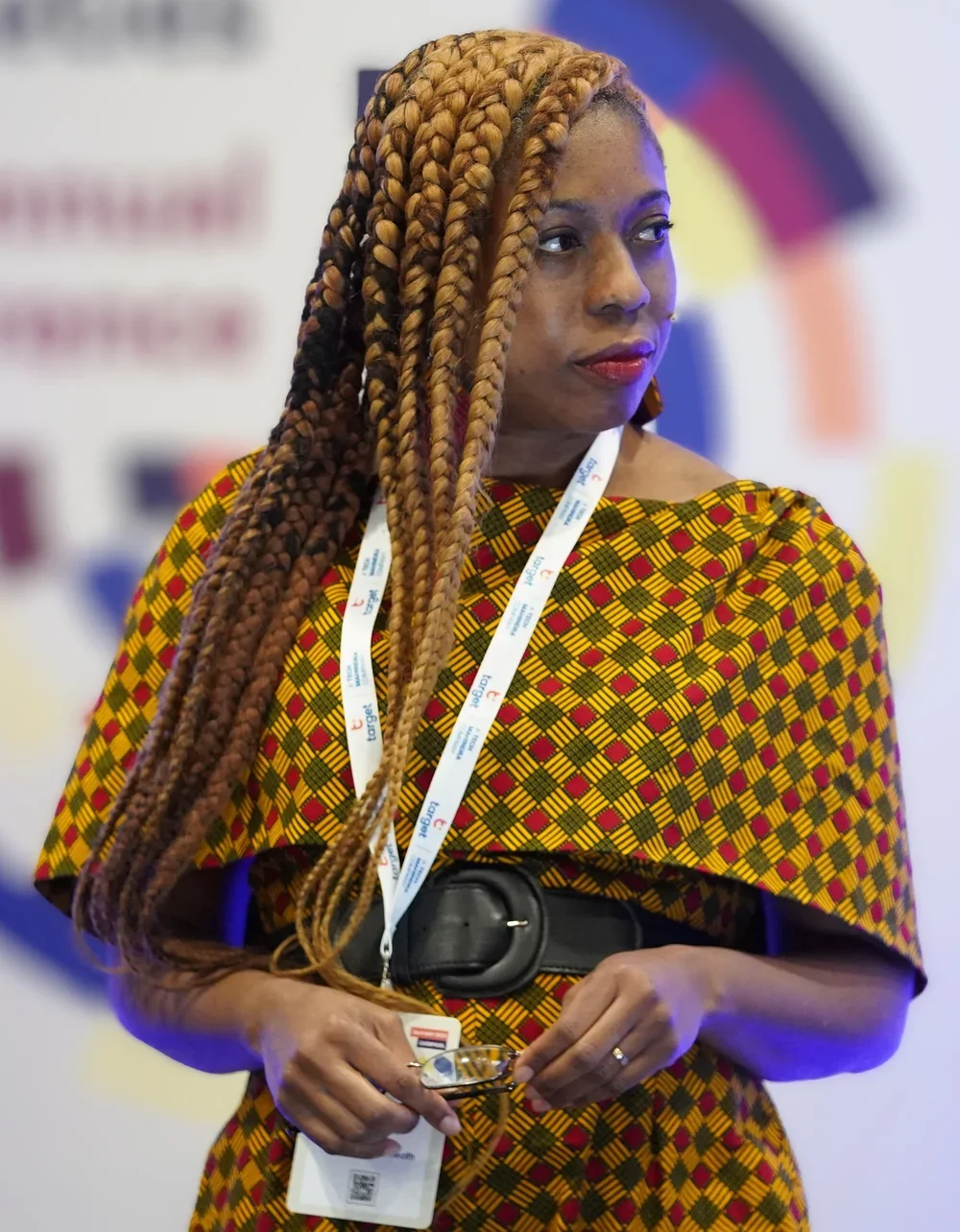
Erel Onojobi
Visiting Fellow
Erel Onojobi leads Power to Prosper, a Black-led Community Wealth Building program working across the United Kingdom to build greater community ownership and control of land, property, finance, enterprise and local economic resources. Over the last three years she has been testing what it takes to build community wealth in practice, putting organizing, relationships and community leadership at the center of the economic work.
As Power to Prosper moves into their next phase, Erel is visiting the United States in October 2026 on a Visiting Fellowship with The Democracy Collaborative.
She wants to learn from the much longer history of Black Community Wealth Building in the United States: how communities have built and sustained institutions and assets, moved from organizing into ownership, accessed and structured capital, and grown without losing community control. She is particularly interested in what has endured, what has failed, and what this experience can teach Black British communities about building the financial and institutional infrastructure for Black community wealth at a much greater scale in Britain.
Erel is particularly interested in learning from Black communities and organizations with a longer history of building economic power, ownership and institutions, often in difficult political and economic conditions.
She is aware that there will be different experiences in each place she visits, so the following questions are intended as prompts for conversation rather than a formal questionnaire.
Questions Erel hopes to explore:
What has actually enabled Black communities to build and hold wealth and economic power over the long term? What have been the most important institutions, forms of ownership and organizing strategies?
What came before the economic institutions? What role did organizing, relationships, leadership, political education, culture and a belief in what was possible play in creating the conditions for Community Wealth Building?
How have communities moved from organizing and campaigning into actually owning things? What does it take to make the transition from community power and participation into ownership of land, property, businesses, capital and other productive assets?
Where has the money come from? How have Black communities accessed the patient and risk-tolerant capital needed to build and acquire assets, and what have you learned about philanthropy, public money, community finance and institutional investment in doing this?
What needs to change about the financial system itself? What assumptions about risk, return, scale and who is considered “investable” continue to prevent institutional capital from supporting Black community ownership? What should we be asking institutional investors to do differently?
How do you build an ecosystem rather than a collection of good projects? How have organizing, land and property, finance, enterprise, procurement, workforce and political power been connected, and what institutions or relationships hold that wider ecosystem together?
How have you grown without losing community control or the radical intent of the work? What happens as organizations become larger, attract institutional money or work more closely with government? What protects ownership, accountability and purpose over time?
What hasn't worked? Which approaches have failed, stalled or produced less community ownership and economic power than expected? What would you do differently now, and what should those of us building this work in Britain avoid repeating?
What is particular about Black Community Wealth Building? How have the history and continuing realities of racialized extraction shaped the institutions, strategies and forms of ownership that Black communities have built? What is lost when that history is removed and Community Wealth Building becomes a more general economic development framework?
What should we in Britain learn from this longer history? What have Black communities in the United States already learned that we do not need to discover all over again, and what cannot simply be transplanted because the political, financial and racial contexts are different?
Across all of these questions, Erel is particularly interested in the relationships between power, ownership and wealth: what it takes not simply to improve economic outcomes in Black communities, but for communities themselves to own and control the assets, institutions and capital through which wealth is created.
Contacts