
UK Index: The system is failing consistently, predictably, and by design
June 9, 2026
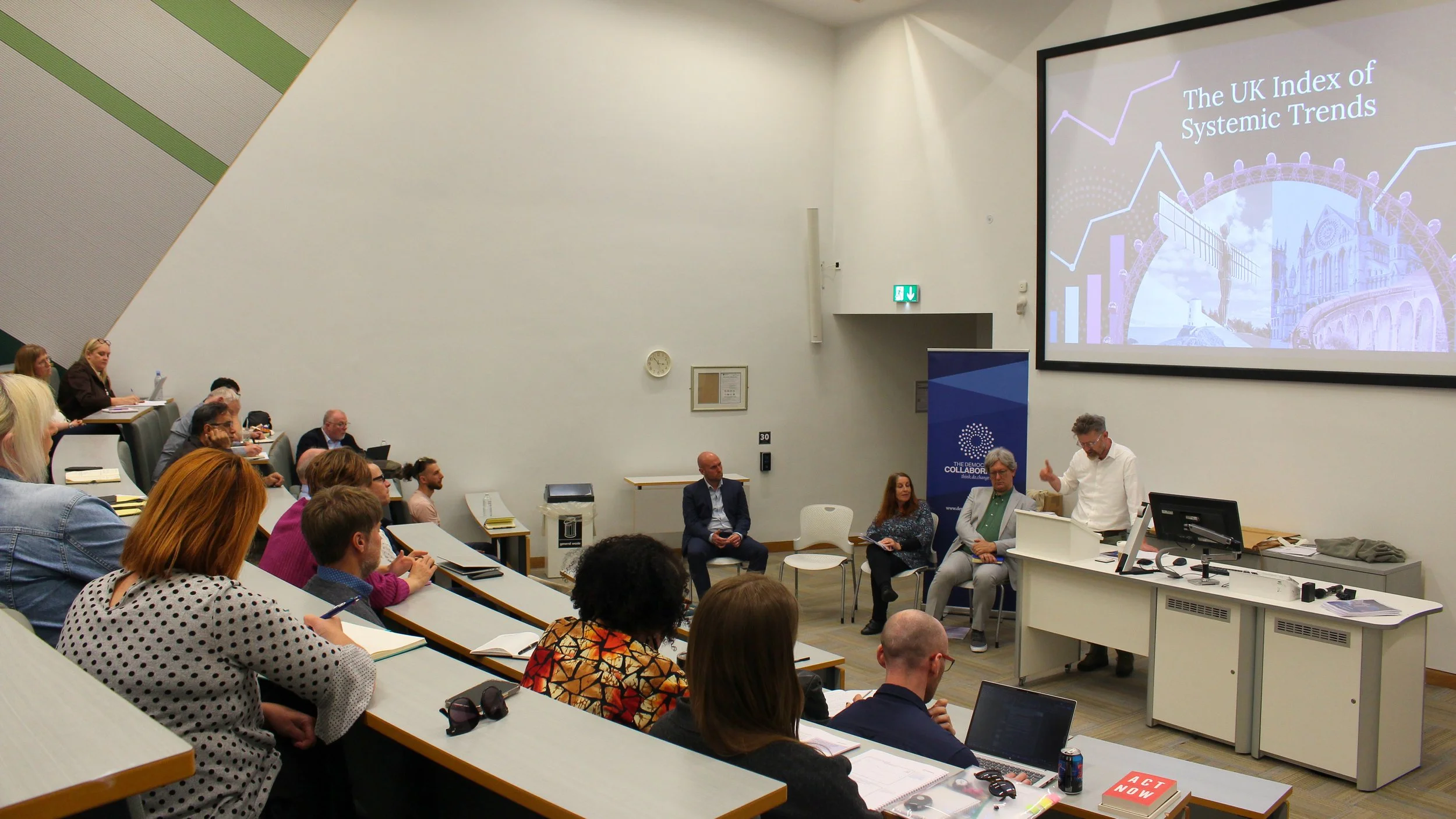
TDC Global Lead for Community Wealth Building Neil McInroy was one of the speakers at the launch event for the UK Index of Systemic Trends at Northumbria University, Newcastle, on June 5. The following text is an adapted version of his speech.
Let me start plainly. This is a systemic crisis, not a policy blip.
What the UK Index of Systemic Trends shows is not a mere difficult period, nor a policy failure, not even a series of crises. It shows us that the system is failing consistently, predictably, and by design.
Across the board, the indicators are flashing red. The “warning lights blinking fiercely.” And we need to be honest about what that means. This is not drift, this is the longstanding direction.
And unless we change that direction, the outcomes will not change.
If we look some of the fundamentals
We have stagnant growth — around 0.8% per person
Child poverty rising — over 30%
Housing pressure at historic highs
Deep regional inequality
These are not isolated. They are produced by a system organized around extraction and concentration of wealth, power and a prioritizing capital over place, labor, communities and people. And crucially these trends persist regardless of who is in UK government or No. 10.
However, we did not create the Index just to describe the pain. We brought this evidence together to show the depth of change required, so we can alter our direction of travel and avert us from the hapless, moderate tinkering around the edges.
We need to clear that the handful of reformist social policies won’t do it. Neither will an old set of warm words from middling centrist politicians. Politicians who say they wish to breaking with neoliberalism, followed by no meaningful follow-through.
Those warm words are pathetic enough. But even more egregious when we situate these longstanding systemic failures alongside this era-defined by climate breakdown, geopolitical fragmentation, technological disruption, and global economic restructuring.
And in the face of that, our Index is telling us that the UK economy lacks fundamental resilience.
“Our UK system is not designed to absorb any more shocks. Indeed, it is brittle, over-exposed to global capital, under-rooted in place, with weak democratic foundations, and a hollowed-out productive base.”
Now, in that context, let’s cast a withering look at prevailing local, regional, and national economic policy responses. Despite the longstanding crisis they are is still operating with an outdated and limp playbook.
Growth growth growth - is the knee-jerk mantra of the politician, even though we have barely had any for years.
Let’s attract investment - they say, only for it to disappear when public sweeteners go.
Trickle down and trickle out economics doesn’t work - we hear, whilst they lay down the red carpet for big capital and finance.
And let’s be clear, the imperative of big finance is wealth torrenting upwards to them, and offshored bank accounts. The mainstream policy is faced with a systemic decline that it merely manages, as many of our citizens get repeated kicks in the groins politicians vainly try to soften.
Big hearty plates of corporate wealth, but we grub around for crumbs with policy-chasing global capital opportunities that run faster than they can ever run.
And this takes us deeper still. Because this is not just an economic crisis. It’s a democratic one. People are getting turned off politics. Low turnouts and apathy. A vote means sommat, but we all know it cannot meaningfully shape ownership, capital flows, or the purpose of the economy
And we also need to acknowledge something else: There is a profound inertia at the heart of the UK state. A kind of Westminster gravitational pull - sluggish, gloopy, and resistant to change. And an Establishment that, frankly, looks back more than it looks forward, seeks to preserve more than it creates, and works to protect more than it dares to prospect.
The scale of change required is simply not matched by the pace or ambition of response, and that inertia becomes not just frustrating but deeply dangerous. Across the UK people know and can see the political haplessness. They experience the social pain and hardship. They are in a condition not of their own making. They are blameless. And when in pain, you just want out of that situation quick. You look for the easy way out. You look for simple answers.
And ready and waiting are a rising troop of far-right activists and complicit political parties who seize on that pain. An evil low-life who blame the poor, demonize those on welfare, migrants, or anyone that is an easy target. And its purpose? The pursuit of power, a deflection from the actual causes, and their own privilege and opportunism.
However, across these islands, we are seeing a response emerge. The rise of civic nationalism in Scotland, Wales, and Ireland. And demands of more power to English regions. This reflects a growing demand for control, voice, and a different economic future that Westminster is no longer offering
In Scotland, in particular, that is being expressed economically. Scotland has taken Community Wealth Building seriously embedding it in national policy and legislation as part of a wellbeing economy approach.
And that matters. Because it shows that where democratic ambition grows, economic thinking begins to shift too. The constitutional question across UK, including in England, is increasingly an economic question —who owns, who decides, and who benefits.
This is where Community Wealth Building comes into full view. Because it is not just a policy, it is a systemic response.
So where the system is brittle, CWB builds resilience. Where it extracts, CWB retains. Where it concentrates, CWB distributes. Where it disempowers, CWB democratizes. Community Wealth Building is where economic reform meets democratic renewal.
“The Democracy Collaborative’s role is clear. We are not just diagnosing this system. We are helping build the next one: a democratic economy, where wealth is widely owned, power is shared, and economies serve people, place, and planet. And we do that through a process of evolutionary reconstruction: Building. Scaling. Connecting.”
A political economy for the Next System. Building until it becomes the norm.
So where does this leave us? The UK Index shows us a system in decline. But more than that it shows us a system that lacks the resilience needed for the future.
So I’ll end with a plea for realism, not delusion. What we have in the UK Index is a fixed pattern not a short-term blip. And with that pattern we can’t rely on the same playbook, we can’t trust that growth will somehow trickle, that capital will somehow behave differently next time, that mild reformist redistributive policy is the fix. That is not realism.
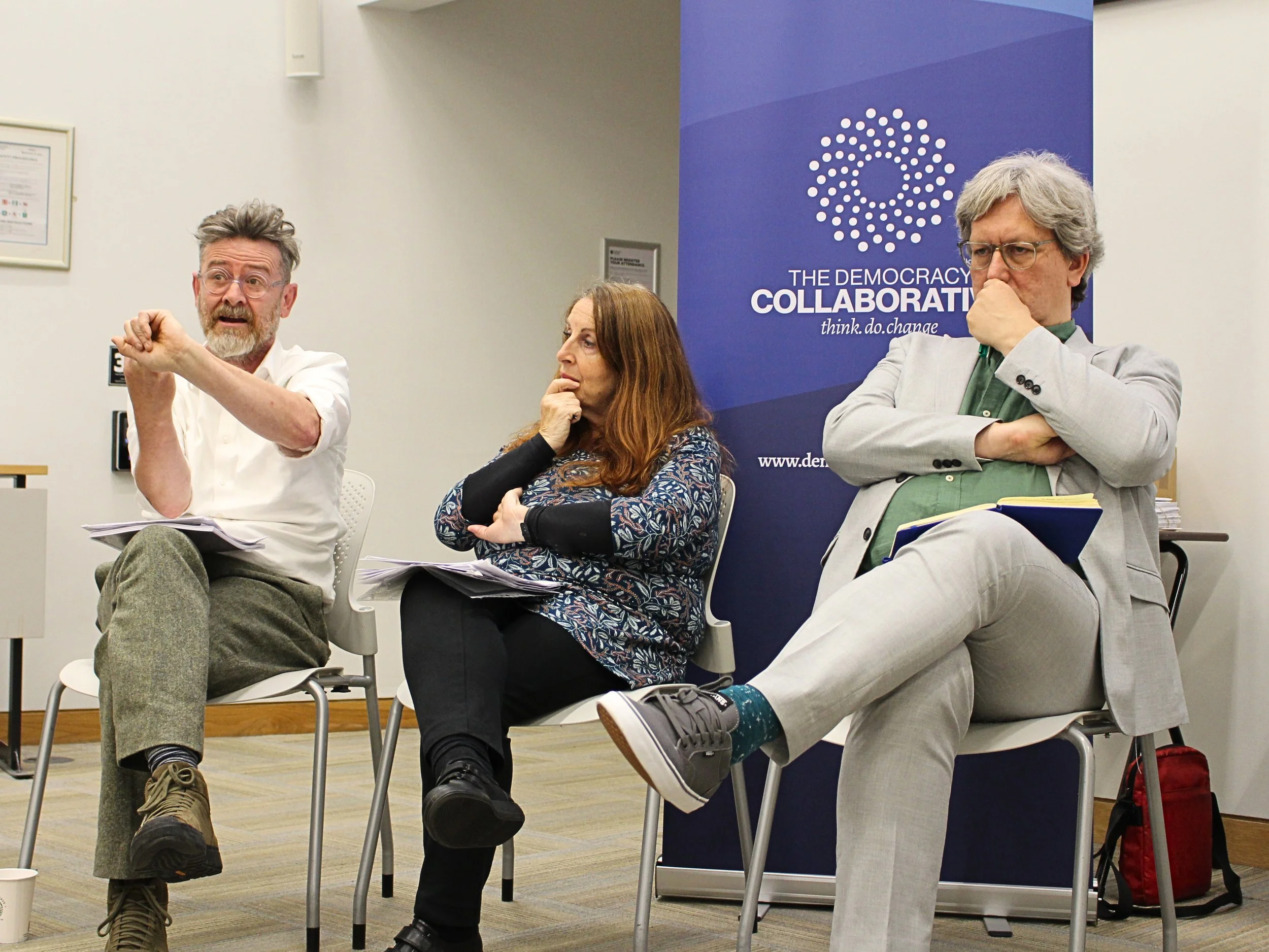
That is what myself and my TDC colleague Joe Guinan have dubbed a “delusional moment”. A delusion that we can manage systemic failure with marginal change. A delusion that the same structures that produced extraction will somehow produce inclusion. A delusion that democracy can survive when it is absent from the economy itself.
So we have to try something altogether different, or risk giving up the country to a Trumpian far-right. And here is the rub: Systemic change will take time but we know what that ‘something’ is. There is no secret sauce. It is in plain sight. And so we come back to first principle.
A systemic crisis demands systemic response. That means a fundamental democratic and economic shift:
From extraction to retention
From concentration to distribution
From footloose capital to rooted wealth
From distant control to democratic ownership
From brittle growth to resilient local economies
It means recognizing that ownership matters, that control matters, and that place matters. It means building an economy where people are not just participants but active decision-makers.
And that is why ideas such as Community Wealth Building matters. Because this is not about mere policy adjustment. It is about systemic change.